
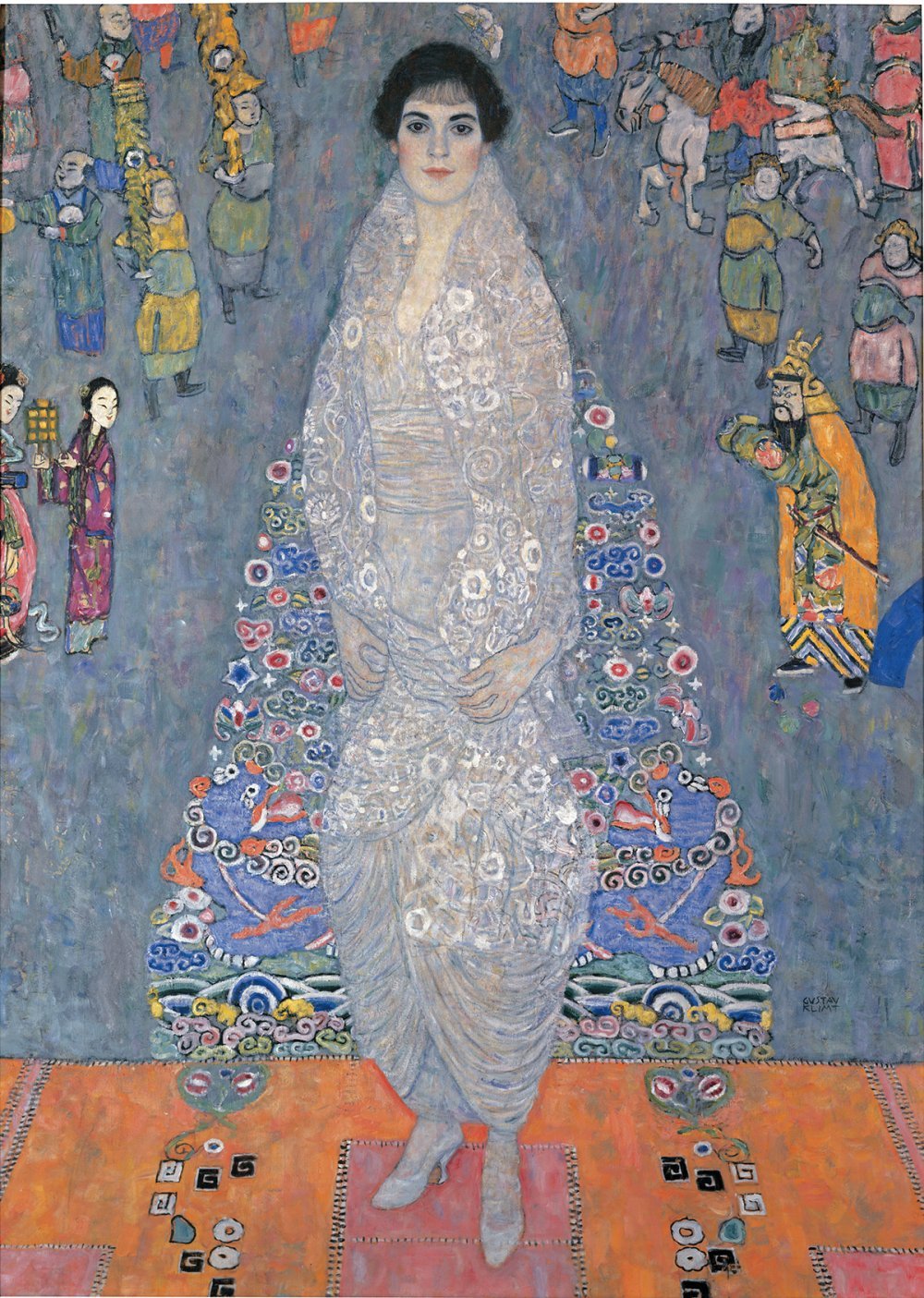
When Sotheby’s New York unveiled Gustav Klimt’s Portrait of Elisabeth Lederer this November, even seasoned collectors sensed that the evening would mark a turning point. The painting, unseen for generations and long discussed in hushed tones among curators, immediately radiated an air of rarity that only great rediscoveries possess. By the time the bidding reached its thunderous conclusion, the portrait had soared to a staggering $236.4 million, establishing a new benchmark for modern art. What emerged was not simply a sale, but the coronation of a work whose magnetism had been building in silence for decades.
A Star of the Lauder Legacy
The picture was the shining jewel of the late Leonard A. Lauder’s formidable private collection, a treasury of artworks valued at more than $400 million. Lauder acquired the Klimt in the early 1980s after it resurfaced from the shadows of twentieth century upheaval and kept it in exquisite seclusion for more than forty years. Its return to the market was historic in itself because only two Klimt society portraits remained in private hands, and this was the more enigmatic of the pair. Sotheby’s had quietly suggested it might exceed $150 million, but collectors recognized it as something far rarer, a masterpiece with the mystique of a lost chapter.
The portrait’s new status places Klimt on the highest tier of the global art market, surpassing Warhol’s Shot Sage Blue Marilyn and rising above Klimt’s own 2023 auction record for Lady with a Fan. With this sale, Klimt enters territory once considered reserved for the most exalted names in art history.
A Portrait Suspended in Time
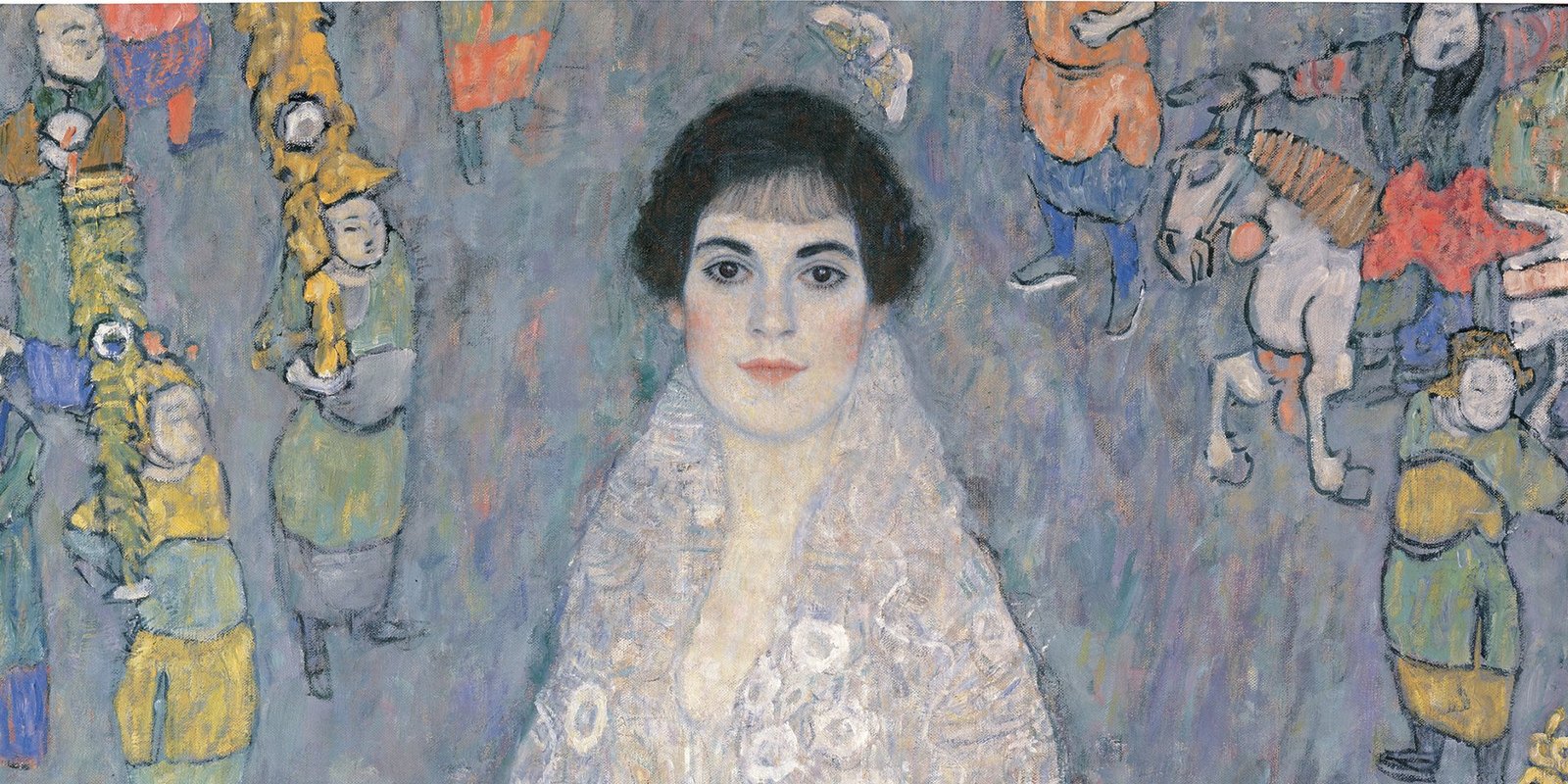
At nearly two meters tall, Portrait of Elisabeth Lederer conveys a sense of stillness that feels almost cinematic. Klimt paints the 20 year old heiress not as a typical Viennese socialite but as a figure paused between reality and myth. Her white silk robe, shimmering with blues and pearlescent tones, surrounds her like protective casing that suggests a state of transformation.
Unlike the gold saturated icons of Klimt’s early prime, this late portrait glows with subtler and more enigmatic riches. What it lacks in metallic drama, it compensates for with psychological depth. The focus shifts from ornamental brilliance to an inward luminosity shaped by the calm intensity of Elisabeth’s gaze.
A Language of Symbols
The painting’s decorative intricacy initially appears as Klimt’s signature ornamental flourish, yet closer analysis reveals a careful fusion of symbolic vocabularies. One group of motifs originates in East Asian art, a long standing fascination for Klimt fueled by Viennese collections of Chinese and Japanese textiles. Dragons and curling waves animate Elisabeth’s robe, their forms adapted from imperial artworks that traditionally signify power and celestial authority. Their slow spiral around her figure lends her an aura of quiet sovereignty.
A second visual language exists in miniature. Scattered among the larger motifs are delicate ovals, loops, and concentric circles that resemble microscopic structures. These echo the visual patterns Klimt encountered through friendships with leading scientific figures in Vienna. He was known to attend lectures on anatomy and cell theory, and their influence emerges here as soft biomorphic hints.
These intertwined systems of meaning, one drawn from ancient mythology and the other from emerging scientific imagery, create a portrait that reflects both heritage and biological mystery. The interplay gives the canvas an unusual intellectual depth and a resonance that extends beyond aesthetics.
A Life Entwined With the Canvas
The portrait becomes even more compelling when considered alongside Elisabeth Lederer’s later experiences. Born into a prominent Jewish family, she faced increasing danger as antisemitic laws tightened in Austria during the late 1930s. In an extraordinary act of self preservation, Elisabeth claimed that Gustav Klimt was her biological father, a fabrication her mother supported in an official affidavit. Authorities accepted the account, a decision that profoundly improved Elisabeth’s prospects during a period of extreme peril.
Viewed through this lens, Klimt’s portrayal of her as a figure emerging from transformation acquires striking emotional weight. The symbolism of rebirth and self invention woven into the canvas seems to foreshadow the reinvention she would one day attempt in real life.
A Vision of Metamorphosis
When one steps back from the intricate details, the entire composition begins to resemble a moment of metamorphosis. Elisabeth’s elongated posture, poised and slightly weightless, evokes the form of a winged creature preparing for flight. The silk train behind her can easily be interpreted as wings on the verge of opening. Klimt, always alert to the expressive potential of the female figure, achieves here a quiet yet unmistakable representation of becoming.
This transformative quality is likely what captivated bidders most. The portrait stands at the intersection of imperial glamour, modern symbolism, psychological nuance, and personal mythology. It becomes richer with each extended look.
Three Klimts, One Unrepeatable Auction
The atmosphere surrounding the sale was intensified by the presence of two additional Klimt paintings from the Lauder collection.
Blumenwiese (1908) was estimated above $80 million and offers a tapestry of jewel toned flowers that captures the summer landscape of Attersee in Klimt’s most luminous style.
Waldabhang in Unterach am Attersee (1916) carried expectations above $70 million and portrays the gentle slopes and lakeside houses of Klimt’s final summers with tranquil modernist clarity.
Helena Newman, Sotheby’s chairman of Impressionist and Modern Art, remarked that presenting three museum quality Klimts at once was an exceedingly rare opportunity. Collectors understood immediately that the event represented a moment unlikely to repeat in their lifetimes.
A Work That Transcends Price
Although the $236 million figure commands global attention, the deeper significance of Portrait of Elisabeth Lederer lies in its extraordinary capacity to bridge eras and narratives. It connects imperial Vienna with the turbulence that followed, the private decades in Lauder’s collection with its dramatic reappearance, and the inner life of its subject with the shifting ideas of identity and transformation. The work expands each time one encounters it and reveals a new layer of meaning with each return.
More than an auction triumph, the painting stands as a testament to Klimt’s late mastery. It unites science and myth, ornament and introspection, elegance and psychological complexity. Its spell does not derive purely from rarity but from its uncanny ability to feel alive and continually unfolding.
Written By: Lydia Kelly
Published: 11th December 2025