
Luxury is often treated as the opposite of rational finance. Jewelry in particular is framed as emotional, symbolic, and detached from measurable value. Yet certain objects quietly defy that distinction. Over decades, a small number of luxury goods have demonstrated an ability to retain value, signal stability, and function as informal stores of wealth. Among them, the Cartier Love bracelet stands out as one of the clearest examples of how sentiment, when paired with discipline, can produce something that behaves remarkably like a financial asset.
Design Permanence as a Foundation of Value
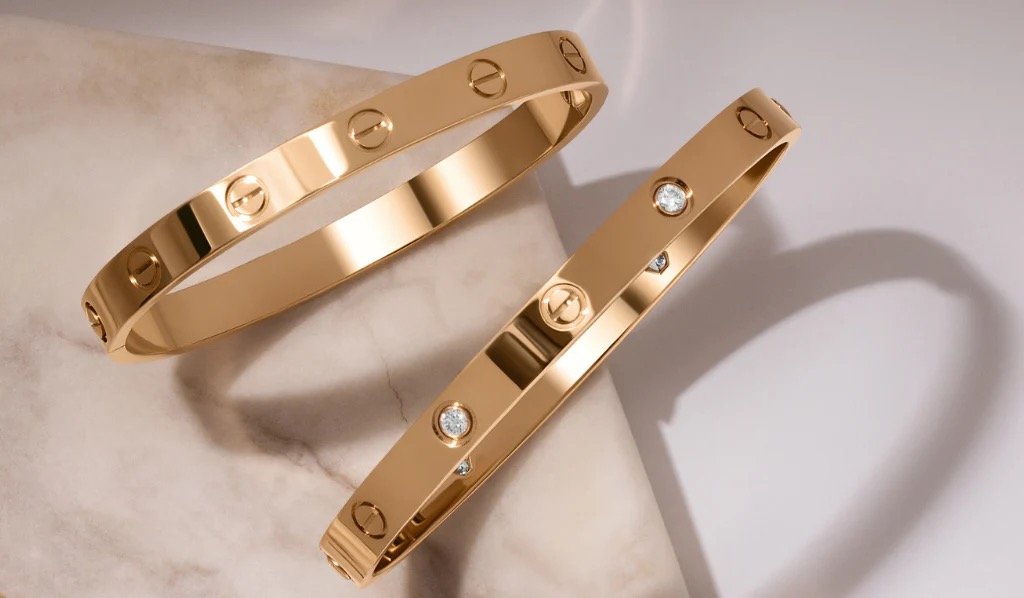
The Love bracelet was created during a period of cultural upheaval when traditional ideas of commitment were being questioned and redefined. Its design responded not with ornamentation but with structure. An oval bracelet secured by screws and fastened by another person, it framed commitment as intentional, mutual, and controlled. The aesthetic was deliberately minimalist, allowing symbolism to carry the weight rather than decoration.
Equally important was Cartier’s long term refusal to redesign the bracelet in response to changing tastes. Its proportions, materials, and surface treatment have remained nearly unchanged for decades. Crafted in solid gold or platinum, the bracelet avoided hollow construction and trend driven detailing. This physical and visual consistency allowed it to resist aesthetic aging, which is essential for any object expected to hold value across generations. Permanence, rather than novelty, became the bracelet’s most powerful feature.
Pricing Discipline and Artificial Scarcity
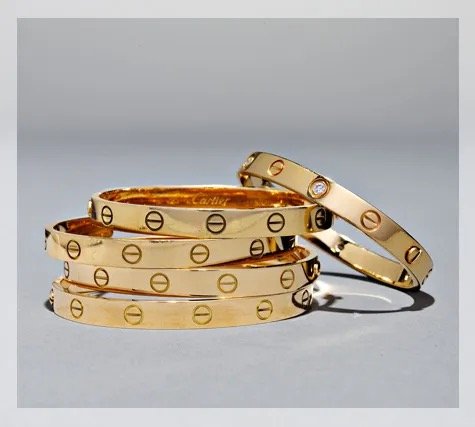
The Love bracelet’s asset like behavior is inseparable from Cartier’s control over pricing and supply. The brand does not discount the bracelet, nor does it license or meaningfully dilute the core design through excessive variations. While different metals and diamond settings exist, they reinforce rather than undermine the identity of the original piece.
Cartier also raises prices consistently, often annually and frequently above inflation. These increases are normalized rather than justified, training consumers to expect appreciation rather than depreciation. As a result, older Love bracelets often resell at or near their original purchase price. Buyers are insulated from post purchase erosion, reinforcing confidence and encouraging long term ownership. This pricing discipline mirrors the behavior of strong currencies and blue chip assets, where stability itself becomes a source of value.
Cultural Capital and Emotional Lock In
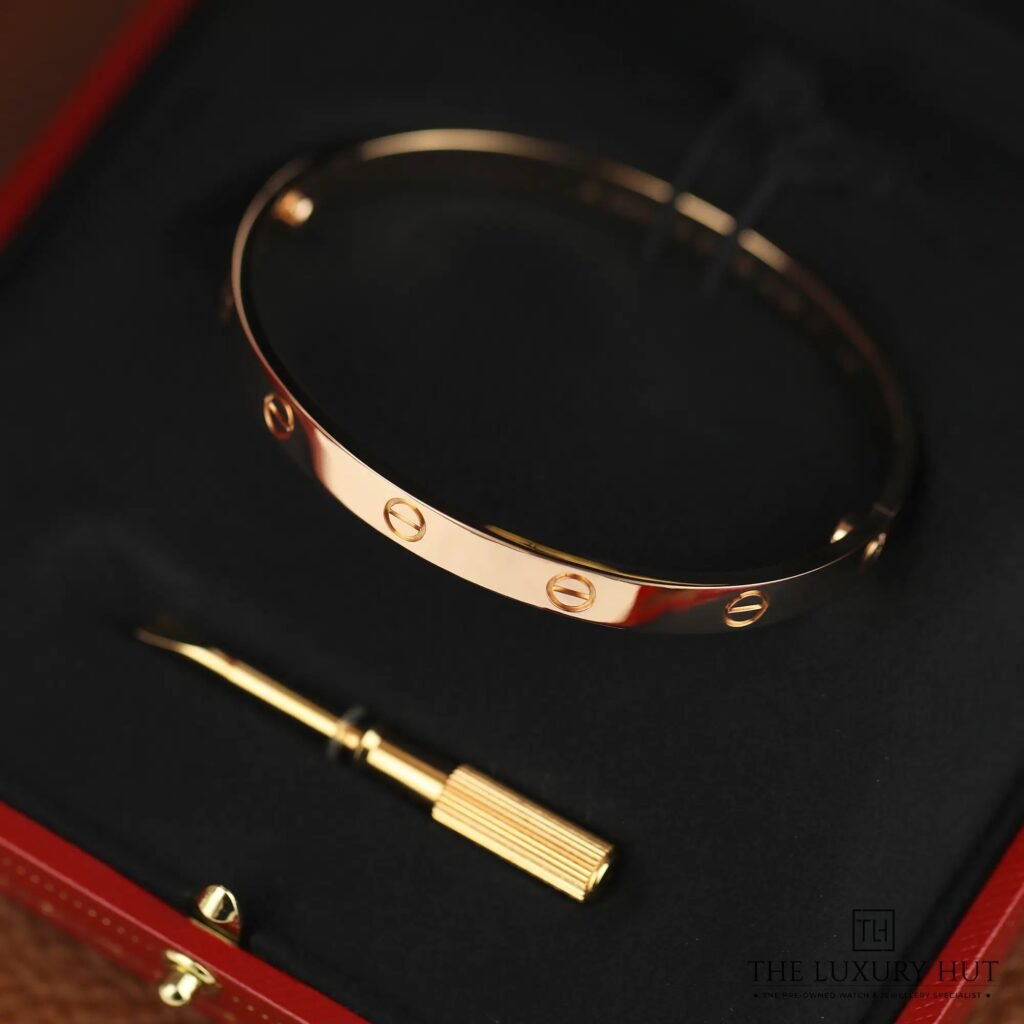
Value depends not only on scarcity but on belief. The Love bracelet carries immense cultural capital, signaling wealth, taste, and stability without overt branding. Its recognition is selective, visible primarily to those fluent in luxury codes. This discretion enhances its status value while protecting it from the volatility associated with conspicuous trends.
The bracelet is also emotionally anchored. It is frequently gifted to mark commitment, anniversaries, or personal milestones, embedding it within intimate life narratives. This emotional significance discourages resale and limits supply on the secondary market. Unlike trend led luxury goods that flood resale platforms during downturns, Love bracelets are typically held. Sentiment, in this case, stabilizes value rather than distorting it, creating a form of emotional lock in that benefits long term price integrity.
Resale Markets and Asset Like Performance
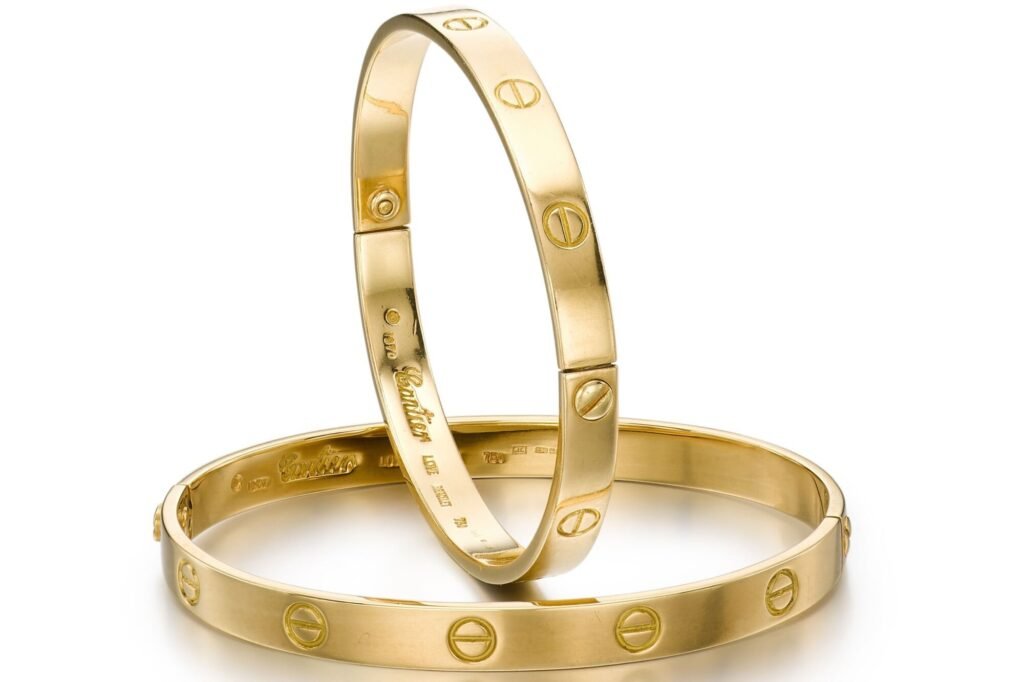
The rise of luxury resale platforms has made the Love bracelet’s financial characteristics more visible and measurable. Data consistently shows that it retains value better than most branded jewelry, particularly in gold. Its resale pricing reflects both intrinsic material worth and a durable brand premium that persists across market cycles.
This hybrid structure distinguishes the Love bracelet from ordinary consumer goods. It combines hard value from precious metals with soft value derived from brand equity, cultural relevance, and emotional meaning. It is portable, insurable, globally recognizable, and liquid enough to be resold across markets. Notably, Cartier has never explicitly positioned the bracelet as an investment. By allowing financial meaning to emerge organically, the brand preserves the romantic narrative while benefiting from the object’s asset like behavior.
The Love bracelet demonstrates how luxury, when governed by discipline, can behave like capital. Through design permanence, pricing control, cultural longevity, and emotional lock in, Cartier transformed a symbol of romance into an object of enduring value.
Written By: Mia Quisumbing
Published On: 4th February 2026