
Luxury has always chased the idea of total immersion, but rarely has it achieved it as literally as Bugatti Residences by Binghatti. Rising in Dubai’s Business Bay, this residential tower is not simply branded real estate. It is a translation of hypercar philosophy into architecture, lifestyle, and long term capital value. As the global ultra wealthy consolidate their lives around fewer but more extreme assets, Bugatti Residences represents a new chapter in how luxury brands monetise identity, scarcity, and permanence.
From Hypercars to High Rise Living
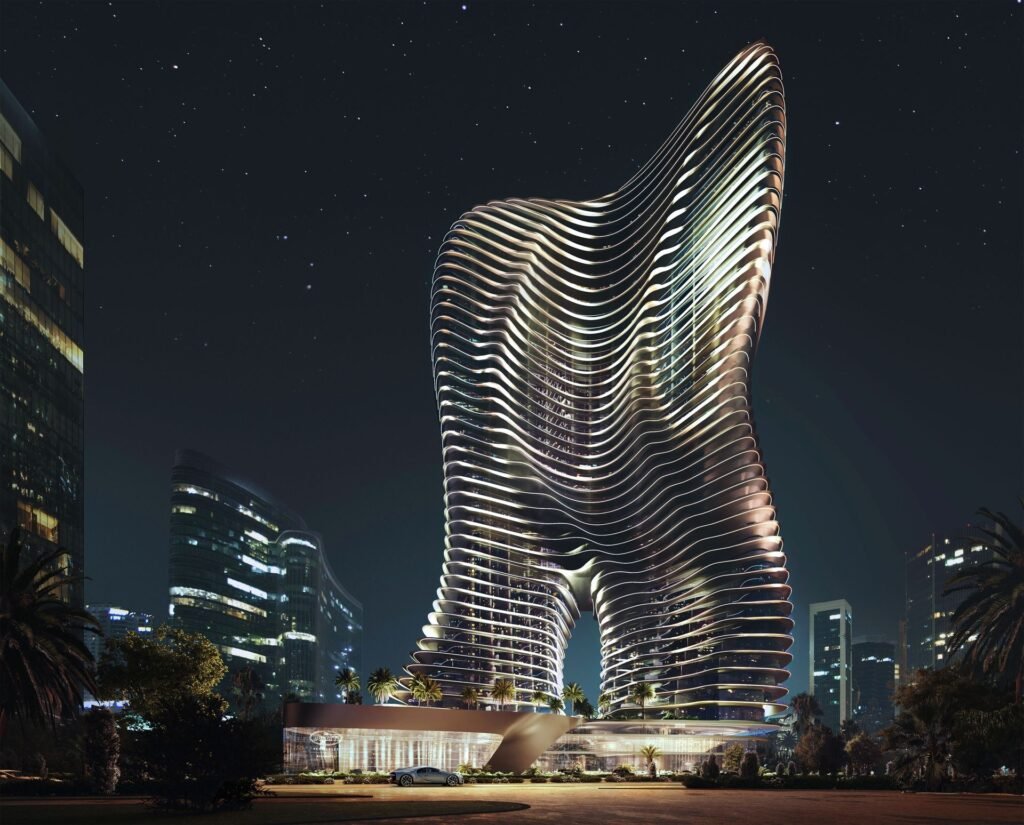
Bugatti’s move into residential real estate reflects a broader evolution within the luxury industry. The most powerful brands no longer stop at products. They extend into environments that shape how wealth is experienced every day. Partnering with Dubai based developer Binghatti, Bugatti brings its design language into a 77 storey tower overlooking Downtown Dubai and the Burj Khalifa district.
The building’s flowing silhouette echoes the aerodynamic curves of Bugatti vehicles, while interiors borrow from the marque’s obsession with precision, material science, and handcrafted detail. Carbon fibre accents, sculptural forms, and bespoke finishes aim to translate automotive excellence into domestic space. This approach avoids surface level branding. Instead, it embeds Bugatti’s design DNA into how residents move, live, and display wealth.
The Architecture of Extreme Exclusivity
Exclusivity sits at the core of the project. Bugatti Residences comprises just 182 Riviera Mansions and 11 Sky Mansions, with the latter occupying entire floors. Entry prices reportedly begin in the multi million dollar range and escalate sharply for penthouse level residences. Scarcity is deliberate and essential to the brand narrative.
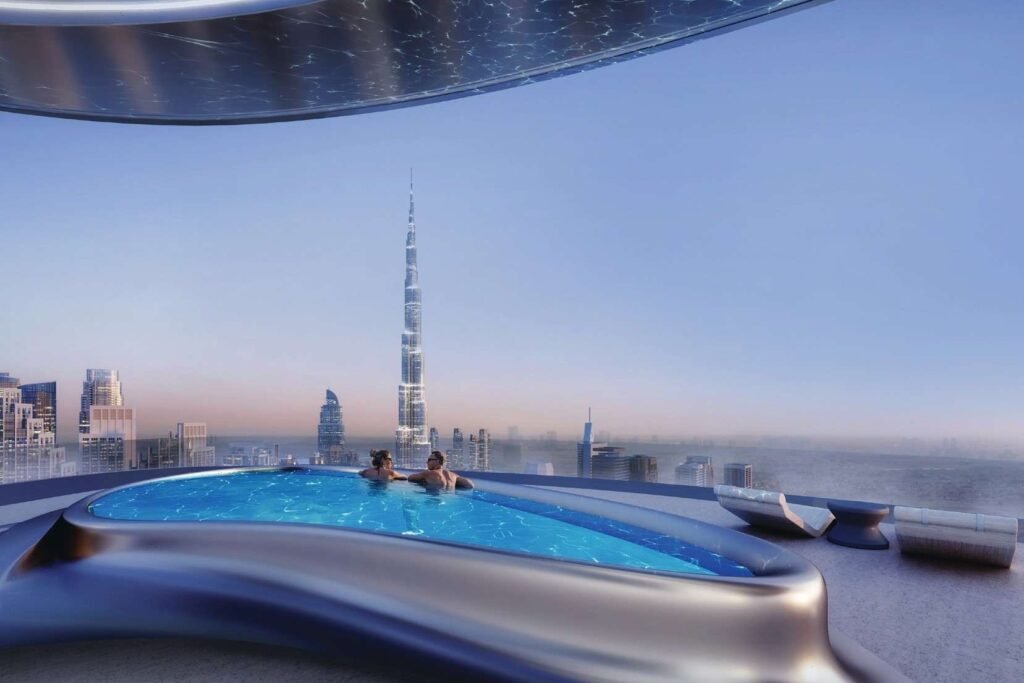
Among the most discussed features are private car elevators that allow owners to bring their vehicles directly into their apartments. This is not novelty for novelty’s sake. It reflects the psychology of the ultra high net worth buyer, for whom collections are personal, private, and inseparable from identity. Additional amenities include private pools in select units, a beach style lagoon exclusive to residents, concierge services, and spa facilities curated to match Bugatti’s aesthetic discipline. The result is a living environment that rejects mass luxury. Access is limited, recognition is subtle, and the experience is intentionally insulated from the broader city.
Why Dubai is the Ideal Stage
Dubai has positioned itself as the global capital of branded ultra luxury real estate. Its regulatory flexibility, tax advantages, and openness to architectural ambition make it fertile ground for projects that would struggle elsewhere. In recent years, the city has attracted billionaires, fund managers, and founders seeking both lifestyle and capital security.
Bugatti Residences aligns perfectly with this trajectory. Located in Business Bay, it sits at the intersection of finance, hospitality, and cultural spectacle. Dubai’s appetite for landmark developments allows a project of this scale to exist without compromise. At the same time, its international buyer base ensures demand is not dependent on local cycles alone.
For luxury brands, Dubai offers something increasingly rare. The freedom to build at the outer limits of imagination, supported by a market that understands and rewards excess when it is executed with discipline.
Investment, Identity, and the Future of Branded Homes
Beyond lifestyle appeal, Bugatti Residences raises important questions about the future of luxury investment. Branded residences typically command premiums over comparable properties due to perceived quality, service, and resale desirability. When paired with a brand as tightly controlled as Bugatti, those premiums may prove durable.
However, the true value proposition lies deeper. These residences function as long term brand assets embedded in physical space. Owners are not just buying square metres. They are buying alignment with a legacy brand that produces scarcity by design. In an era where financial assets feel increasingly abstract, tangible luxury backed by cultural capital becomes especially attractive. Bugatti Residences signals a future where elite brands extend beyond fashion, cars, or hospitality into fully integrated ecosystems. Homes become brand statements, cities become curated stages, and ownership becomes an expression of permanence rather than consumption.
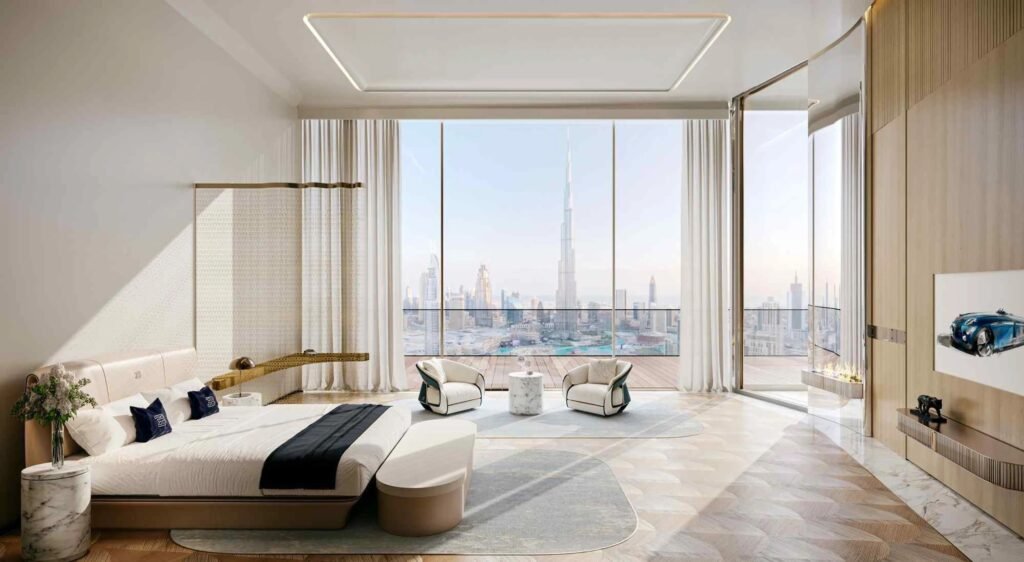
Bugatti Residences Dubai is not a gimmick, nor is it merely a real estate play. It represents the convergence of brand power, architectural ambition, and the evolving psychology of extreme wealth. By turning hypercar culture into a permanent address, Bugatti and Binghatti have created a blueprint for what post aspirational luxury looks like. Quiet, controlled, and unapologetically exclusive.
Written By: Mia Quisumbing
Published On: 12th February 2026