
Luxury in dining is often explained through price, rarity of ingredients, or technical complexity. Restaurant Hubert in Sydney challenges that definition. The menu is French, the cooking is refined, yet the real focus is atmosphere. Guests descend underground into candlelight, jazz, and attentive but relaxed service. The experience feels less like consumption and more like participation in a scene. This article argues that Hubert’s luxury does not come from innovation or extravagance. It comes from emotional immersion. The restaurant sells a memory of dining rather than a display of culinary superiority.
Nostalgia as Design
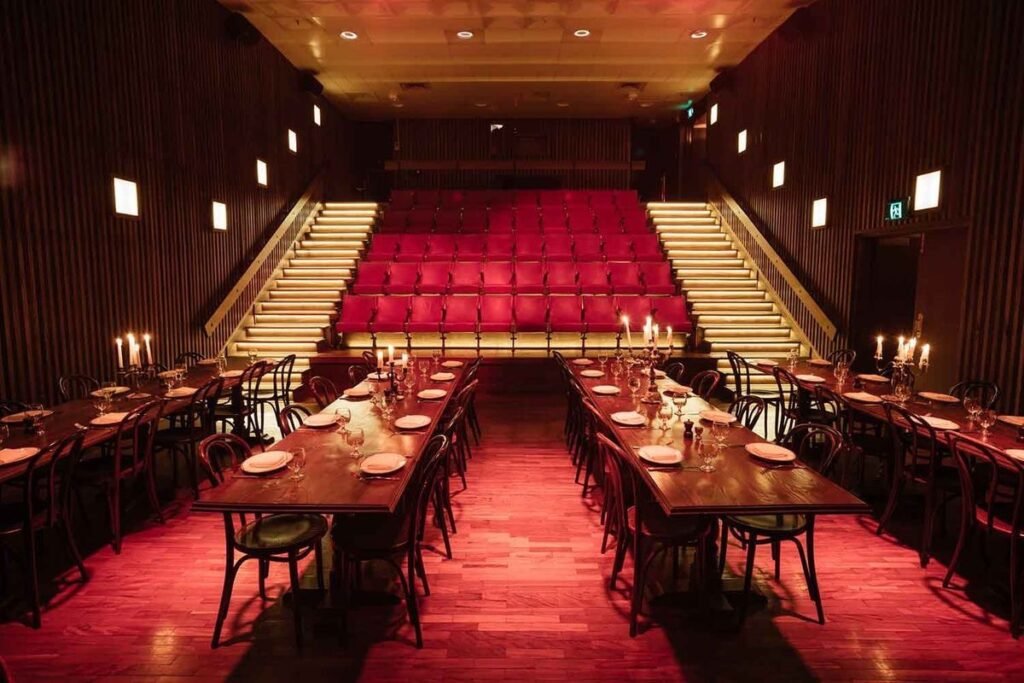
Hubert recreates a Parisian past that most guests have never actually lived. Red leather banquettes, mirrored walls, handwritten menus, and live jazz construct a shared fantasy. None of these elements are accidental decoration. They shape expectation before the first bite arrives. The guest already feels transported, which changes perception of flavour and value. The escargots or steak frites become symbols rather than just dishes.
This type of nostalgia is carefully curated. The restaurant does not copy history perfectly. It edits history into comfort. Lighting hides modern infrastructure. Music softens conversation into a social murmur. The room becomes warm rather than authentic. Luxury here means emotional safety. The guest feels part of a sophisticated world without needing specialist knowledge to belong in it.
Service as Performance
Fine dining traditionally separates staff and diner through formality. Hubert removes that distance while keeping professionalism. Waiters speak casually yet precisely. Plates arrive with timing that appears effortless. The illusion is spontaneity. In reality, the dining room operates like choreography.
Service functions as theatre. Staff manage pacing so the night unfolds gradually rather than quickly. Courses arrive just as conversation slows. Wine is suggested rather than sold. Guests interpret this as generosity, not management. The performance is successful because it hides labour. The restaurant demonstrates that the highest form of service is invisibility. Guests leave remembering comfort instead of procedure.
Food as a Supporting Actor
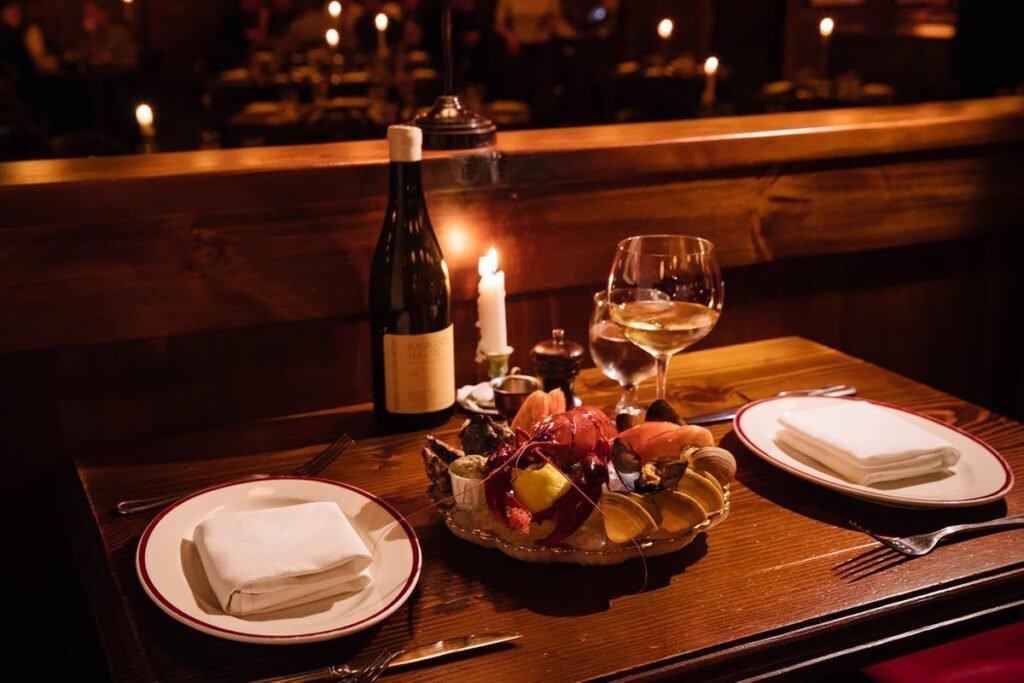
The cooking is strong but intentionally familiar. Roast chicken, tartare, soufflé. Techniques are precise yet not experimental. Hubert avoids culinary shock. The dishes reinforce the emotional tone already established by the room. The flavour profile is recognisable and comforting. Luxury becomes reassurance.
This approach contrasts with modern tasting menu culture where surprise signals prestige. Hubert suggests the opposite idea. Predictability can be indulgent when executed perfectly. Guests trust the kitchen and therefore relax. The meal supports conversation and mood rather than demanding intellectual analysis. The restaurant prioritises pleasure over innovation and therefore broadens its appeal without lowering status.
Exclusivity Without Intimidation
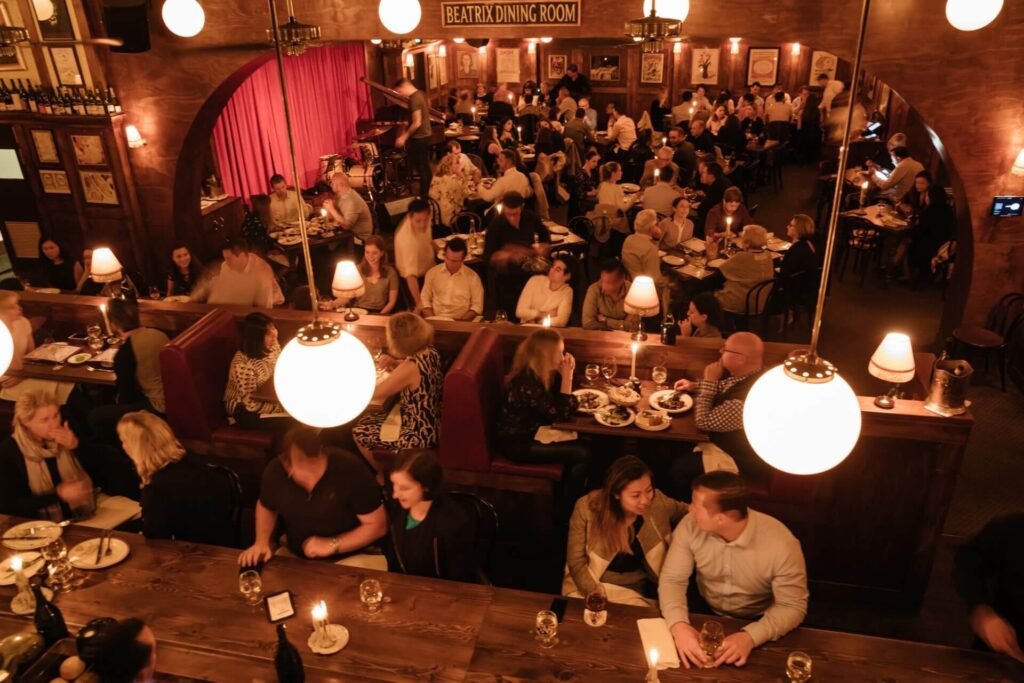
Many high end restaurants depend on difficulty. Reservations, strict etiquette, and unfamiliar menus create prestige through anxiety. Hubert uses popularity instead. It is busy, loud, and energetic. Waiting for a table becomes anticipation rather than barrier. The restaurant feels social instead of rarefied.
This strategy creates a democratic luxury. Diners feel stylish but not judged. Groups celebrate birthdays beside couples on dates. The environment signals sophistication while allowing ease. Hubert proves exclusivity does not require discomfort. A full room can generate prestige more effectively than a silent one because it communicates desirability through collective approval.
Restaurant Hubert reframes luxury as emotion rather than hierarchy. Its value comes from atmosphere, rhythm, and shared experience rather than culinary experimentation. Nostalgic design shapes perception, service performs care, and familiar food sustains comfort. The restaurant succeeds because it understands why people dine out. Guests are not only hungry. They want to feel part of a story for a few hours. Hubert provides that narrative consistently. In doing so it demonstrates that modern luxury may depend less on rarity and more on belonging.
Written By: Mia Quisumbing
Published On: 13th February 2026