
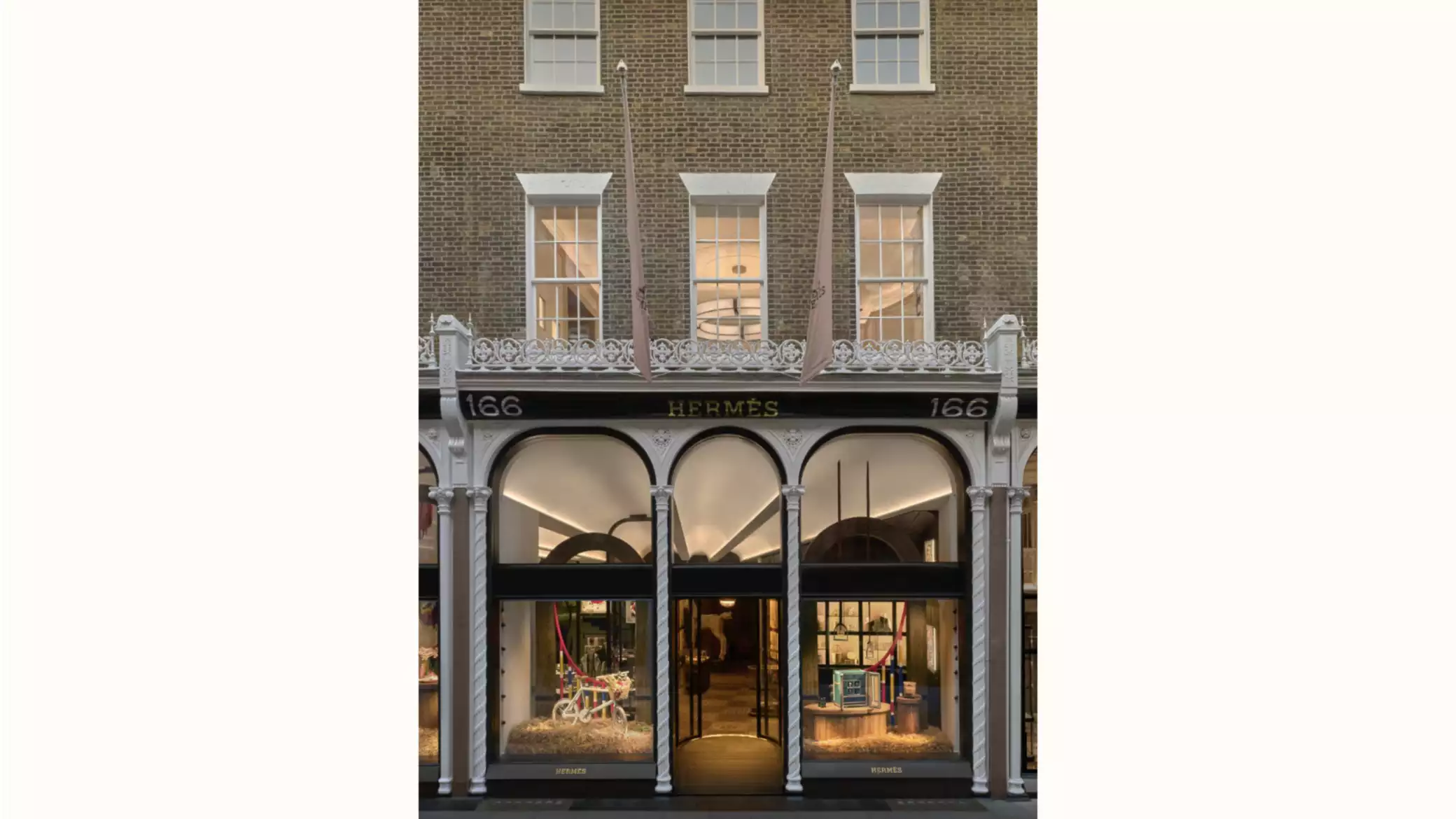
Hermès has unveiled its latest London Maison on New Bond Street, transforming six interlinked Georgian townhouses into one of the most ambitious luxury retail spaces in Europe. More than a flagship store, the project reflects the house’s distinctive philosophy of craftsmanship, storytelling and cultural immersion. In a city already defined by luxury retail, the opening reinforces Bond Street’s position as one of the world’s most important destinations for high end fashion and heritage brands.
A Landmark Arrival on Bond Street
New Bond Street has long been synonymous with global luxury, sitting alongside Avenue Montaigne, Via Montenapoleone and Fifth Avenue as one of the most prestigious retail addresses in the world. It is home to flagship boutiques from houses including Chanel, Louis Vuitton, Cartier and Bvlgari, each contributing to the street’s evolving identity as a stage for contemporary luxury.
Against this backdrop, Hermès has opened its new London Maison at 166 New Bond Street, marking a significant expansion of its presence in the United Kingdom. The building itself is a carefully restored cluster of six Grade II listed Georgian townhouses, previously occupied by Asprey for more than a century. Acquired by Hermès in 2009, the property has undergone a long transformation into a unified architectural space that blends historical preservation with modern design vision.
Rather than treating the site as a conventional retail environment, Hermès has approached it as a cultural destination. The result is a space designed for exploration, where visitors move through a sequence of rooms that reveal different facets of the house’s identity.
A Maison Designed as a Journey
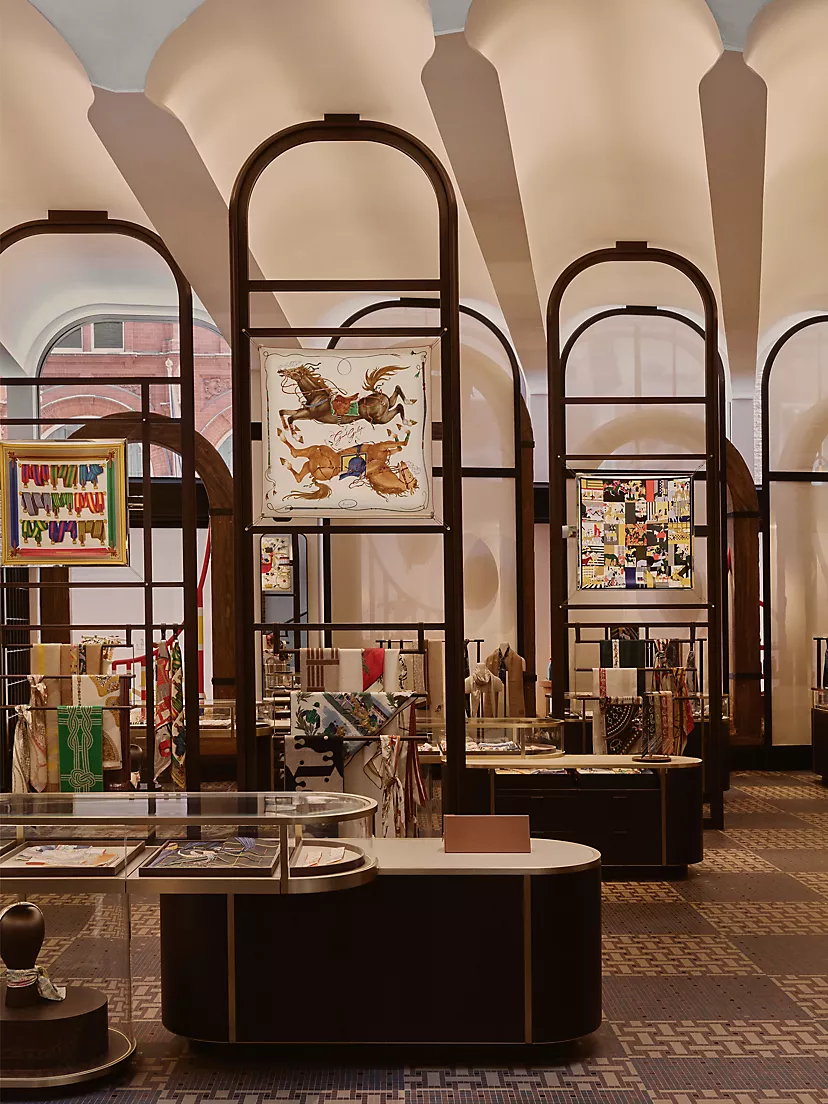
Spanning more than 21,000 square feet across five floors, the new Maison unfolds as a labyrinth of 55 rooms connected by staircases and lifts. The most striking architectural feature is a spiral staircase designed by Norman Foster, extended as part of the renovation and serving as a sculptural centrepiece that links the building’s various levels.
Paris based architecture studio RDAI, led by artistic director Denis Montel, oversaw the interior design. Known for shaping Hermès boutiques around the world, the studio has created a space that balances architectural clarity with narrative depth. Rather than imposing a single aesthetic, each room offers a distinct atmosphere, reflecting the diversity of Hermès métiers including leather goods, silk, jewellery, watches, homeware and ready to wear.
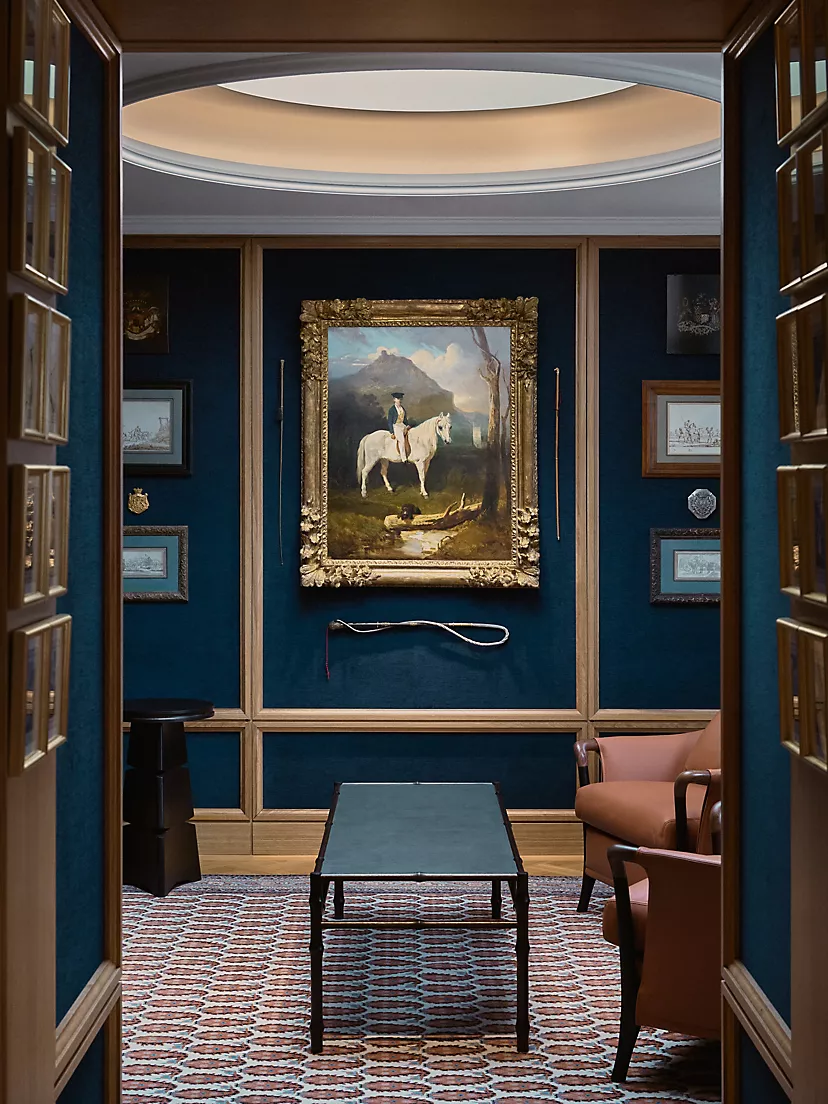
Across the Maison, more than 500 artworks have been curated specifically for this location by Hermès artistic director Pierre Alexis Dumas. These pieces are not decorative additions but integral elements of the visitor experience, reinforcing the idea that the store is as much about cultural engagement as it is about commerce.
British Influence and Hermès Heritage
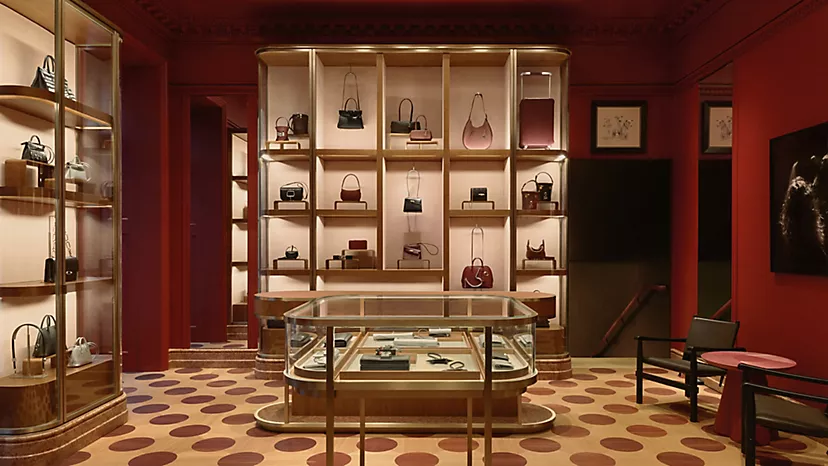
The design of the new Maison reflects a deliberate dialogue between French craftsmanship and British cultural heritage. Hermès has long drawn inspiration from equestrian traditions rooted in the United Kingdom, an influence that continues to shape the house’s aesthetic vocabulary today.
According to Hermès leadership, the intention behind the project was twofold. The first was to pay tribute to British craftsmanship and cultural history, particularly its influence on equestrian design and tailoring. The second was to infuse the space with what is often referred to internally as the Hermès spirit, a sense of lightness, creativity and quiet joy that distinguishes the brand’s global retail environments.
This balance is expressed through restored architectural details, subtle references to historical street signage and carefully preserved elements discovered during renovation. The building does not attempt to recreate the past, but instead layers contemporary design over historical foundations in a way that feels both respectful and expressive.
Craftsmanship at Architectural Scale
One of the defining features of the Maison is the sheer level of artisanal involvement in its construction. More than 50 craftsmen contributed to the project, producing bespoke furnishings, decorative finishes, glasswork and marquetry that integrate seamlessly into the architecture.
This commitment to craftsmanship extends beyond materials into the spatial experience itself. Each floor is designed to encourage discovery rather than direct navigation, allowing visitors to move through the building in a way that feels intuitive and exploratory.
The result is a retail environment that resembles a cultural institution as much as a boutique. Every detail, from mosaic restoration to custom lighting and hand finished surfaces, reflects Hermès’ broader philosophy that luxury is defined by time, skill and attention to detail.
Art as the Central Narrative
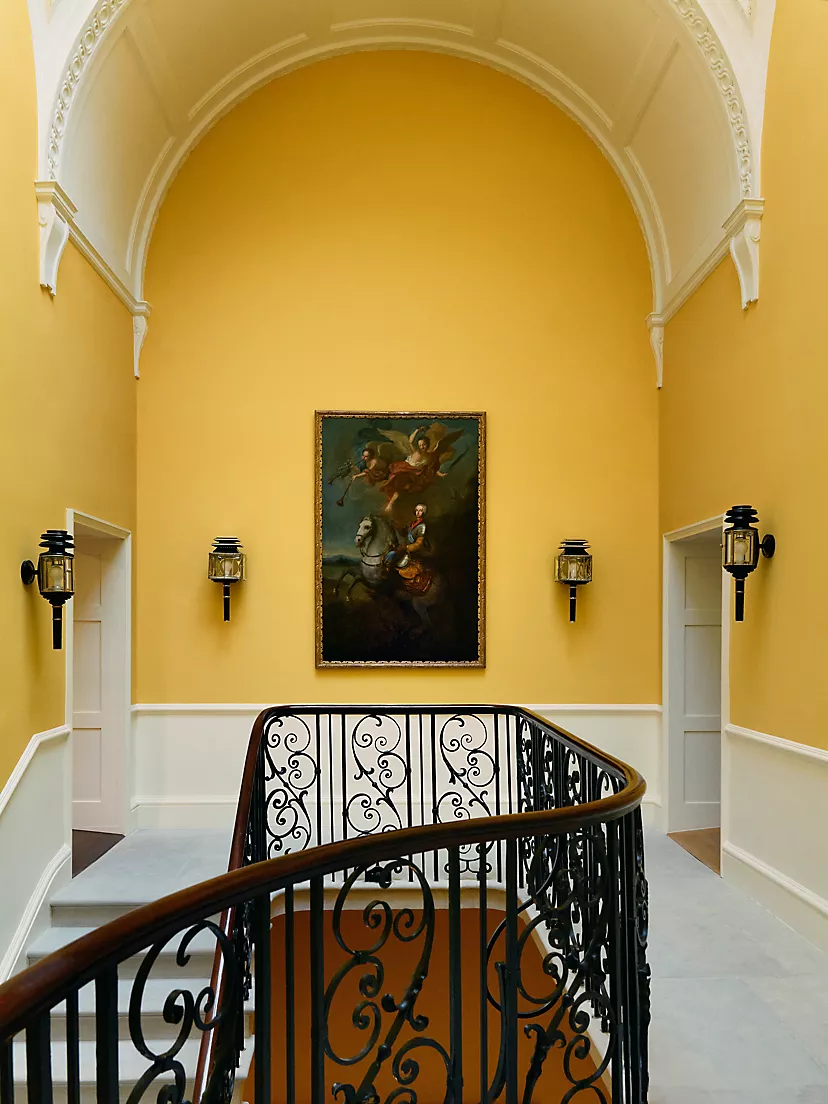
Art plays a central role throughout the Maison, with works selected to reflect both Hermès heritage and contemporary creativity. The collection spans historical pieces, modern photography and specially commissioned works, creating a dialogue between different artistic periods and perspectives.
Among the highlights are references to the Émile Hermès collection, often described as a cabinet of curiosities, which continues to influence the brand’s cultural direction today. Equestrian themes appear throughout, not as repetition but as reinterpretation, connecting the house’s origins in saddle making to its present day identity as a global luxury maison.
Contemporary artists also feature prominently, contributing works that engage with themes of movement, storytelling and transformation. Rather than functioning as background decoration, these pieces are integrated into the architecture, encouraging visitors to experience the space as a continuous narrative rather than a series of separate rooms.
A New Definition of Luxury Retail
The opening of Hermès on New Bond Street reflects a broader shift in how luxury brands approach physical retail spaces. In an increasingly digital world, flagship stores are evolving into immersive environments designed to communicate brand identity, heritage and cultural relevance.
For Hermès, this means creating spaces that cannot be replicated online. The Maison is not defined by product display alone, but by atmosphere, storytelling and sensory experience. Visitors are encouraged to move slowly, observe details and engage with the environment in a way that mirrors the brand’s own philosophy of thoughtful craftsmanship.
This approach also reinforces Bond Street’s continued evolution as a global luxury destination. As international brands invest in increasingly ambitious architectural projects, the street itself becomes a curated experience of global luxury culture.
A House Built for the Future
Hermès describes the new Maison as a long term investment in its presence in London, reflecting a philosophy that prioritises continuity over short term retail trends. The project was conceived not as a statement of scale but as a space intended to evolve over time, adapting to new collections, commissions and cultural dialogues.
In this sense, 166 New Bond Street is not simply a store opening. It is an extension of Hermès’ broader identity as a house built on heritage, craftsmanship and creative independence. By transforming a historic address into a living architectural experience, the brand reinforces its belief that luxury is most powerful when it is rooted in culture rather than convention.
As Bond Street continues to evolve, Hermès has added a space that does not merely join the street’s luxury landscape but expands its possibilities. The result is a Maison that feels less like a retail destination and more like a carefully composed journey through craft, history and imagination.
Witten By: Lydia Kelly
Published: 30th June 2026