
Venice has long been celebrated as one of the world’s most extraordinary cultural destinations. Built upon a network of canals and islands, the city is a living museum where Renaissance masterpieces and Gothic palaces coexist with modern tourism. However, rising sea levels, environmental pressures and the large volume of visitors have placed strain on Venice’s historic fabric, making preservation challenging.
In this context, luxury hospitality is becoming increasingly meaningful in aiding cultural conservation, with some hotels beginning to invest in the preservation of the city itself. The Gritti Palace, a Luxury Collection Hotel, has demonstrated this initiative and illustrated how a hospitality business can contribute directly to safeguarding Venetian heritage through supporting the restoration of the Sala delle Quattro Porte in the Doge’s Palace. This project represents a growing philosophy regarding the role luxury hotels can play in becoming custodians of the destinations in which they operate.
Restoring One of Venice’s Historic State Rooms
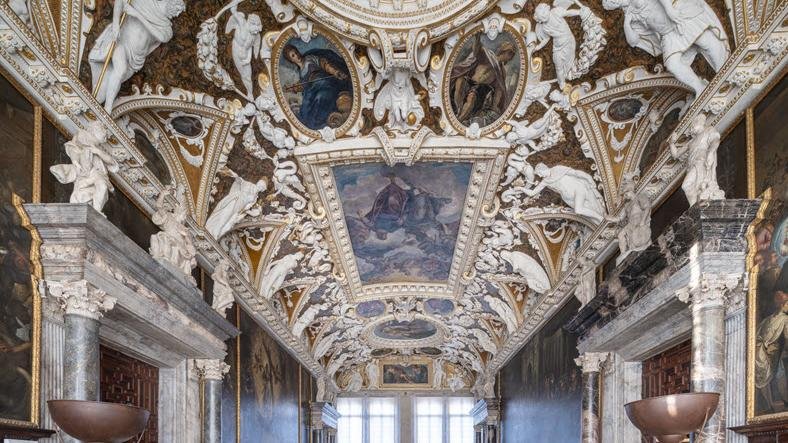
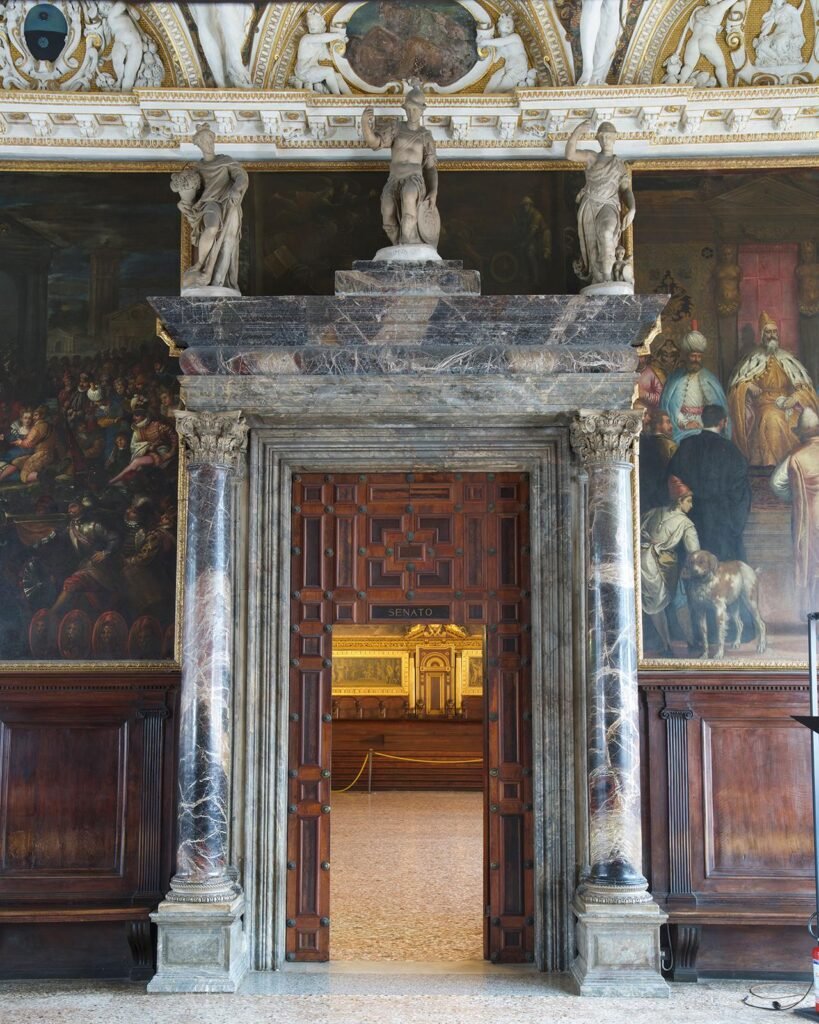
The Sala delle Quattro Porte, also known as the Four Doors, occupies an important position within Venice’s Palazzo Ducale (the Doge’s Palace). During the centuries of the Venetian Republic, the room served as a ceremonial reception chamber where ambassadors, dignitaries and visiting heads of state were welcomed before entering the political heart of the republic. Beyond its political significance, the room is also highly regarded for its artistic richness. Designed by Renaissance architect Andrea Palladio, it contains elaborately vaulted ceilings, monumental marble doorways, frescoes by Jacopo Tintoretto, paintings by Titian and sculptural works by Alessandro Vittoria. However, to protect these masterpieces from centuries of ageing and environmental exposure, extensive conservation is critical. This involved highly specialised restoration techniques to stabilise decorative plasterwork while conserving painted surfaces and architectural details without compromising their historical integrity.
A Three-Year Conservation Effort
The restoration, completed over three years, was undertaken through a collaboration between the Fondazione Musei Civici di Venezia (MUVE), the international preservation organisation Save Venice and The Gritti Palace.
Conservation specialists focused particularly on the Roman-inspired vaulted ceiling, whose richly decorated stucco and mural paintings required significant restoration efforts. Alongside this, the four monumental marble portals, including the historic entrance leading to the Senate Hall, and the monumental canvases positioned above each doorway underwent careful restoration. Rather than simply replacing damaged elements of these masterpieces, conservators prioritised the preservation of original materials wherever possible, reflecting modern heritage conservation practices that aim to maintain authentic craftsmanship. In doing so, they were able to restore the ceremonial chamber, communicating the grandeur and artistic sophistication of the Venetian Republic while remaining faithful to its sixteenth-century origins.
Hospitality as Cultural Stewardship
Luxury hotels have traditionally been associated with exceptional service, fine dining and exclusive experiences. However, travellers are increasingly expecting meaningful connections with the destinations they visit, causing hospitality businesses to adapt to this shift and think beyond accommodation. Consequently, The Gritti Palace’s involvement in the Sala delle Quattro Porte restoration illustrates this evolving role by supporting the protection of local heritage. Beyond the restoration, hotel associates played a larger role in increasing public appreciation for Venetian heritage by participating in educational initiatives and supporting events, cultural programmes and guided experiences that explained the restoration process to visitors.
Preservation Beyond Hotel Walls
For Marriott International, The Gritti Palace’s involvement aligns with a wider commitment to community investment and heritage preservation. Rather than limiting sustainability initiatives to environmental measures, the company increasingly recognises cultural preservation as a crucial aspect of responsible tourism.
This is especially important for historic destinations such as Venice, as they face many unique challenges. Their monuments require continuous maintenance, and public funding alone may not be enough for sustainable preservation initiatives. Therefore, partnerships between public institutions, non-profit organisations and private businesses play an increasingly important role in ensuring long-term preservation.
Why Heritage Matters to Modern Luxury Travellers
Today’s luxury travellers increasingly seek experiences rooted in authenticity rather than standardised opulence. In this space, historic hotels occupy a unique position, as they allow guests to engage directly with local culture through architecture, craftsmanship and storytelling. The Gritti Palace exemplifies this philosophy, as beyond the five-star experience, guests are inhabiting a building that has withstood centuries of Venetian history. Every restored ceiling and handcrafted textile contributes to an atmosphere that cannot be replicated in newly built modern hotels.
These conservation initiatives create a meaningful relationship between tourism and heritage, where hospitality can play a larger role in cultural stewardship rather than being a passive beneficiary of historic surroundings.
Written By: Leah Kim
Published On: 3rd July 2026