
Hidden beneath the sands of Egypt’s remote Dakhla Oasis, archaeologists have uncovered one of the most significant Byzantine settlements ever discovered in the country’s Western Desert. The remarkably well-preserved city reveals a sophisticated urban community complete with churches, homes, defensive structures, and hundreds of written records that offer an unusually intimate glimpse into daily life more than 1,600 years ago. Together, the discoveries paint a vivid picture of a thriving desert settlement that flourished during the fourth and fifth centuries AD, when Egypt formed part of the Byzantine Empire.
A Remarkable Discovery in the Dakhla Oasis
Egypt’s deserts have long concealed extraordinary chapters of history, but the latest excavation at the Ain Al-Sabil archaeological site has revealed one of the country’s most important Byzantine discoveries in recent years.
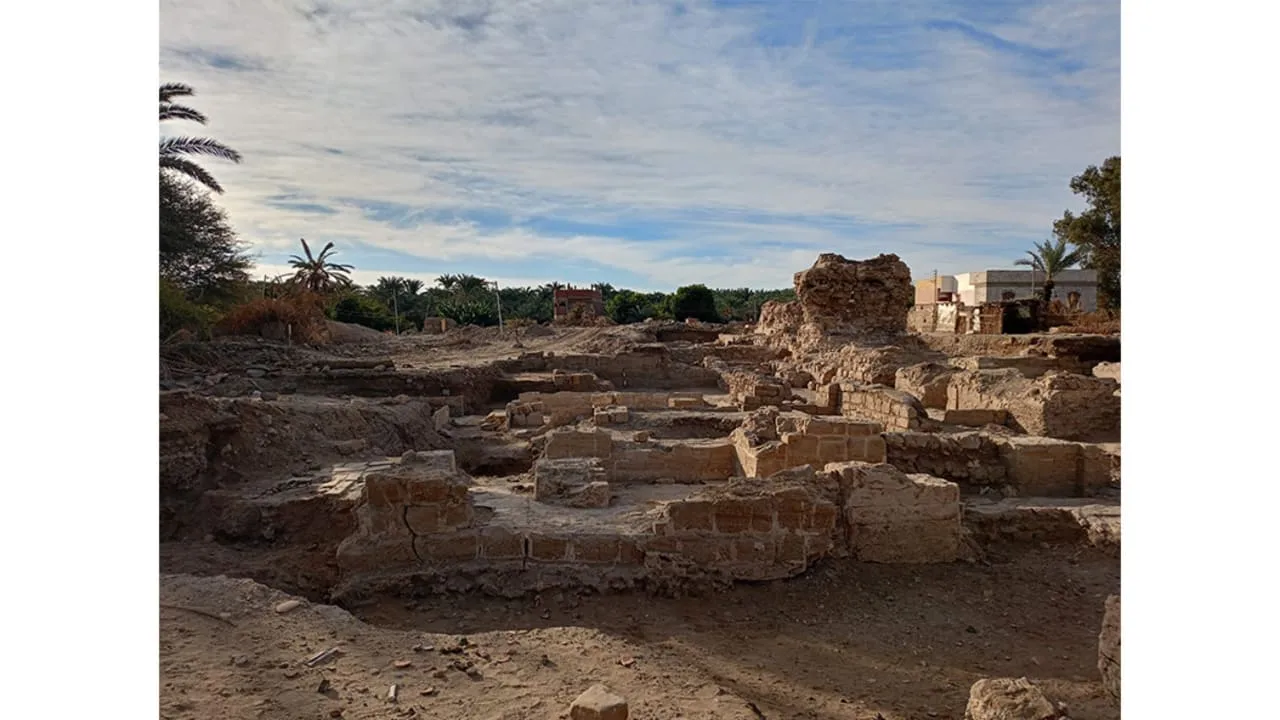
Archaeologists from Egypt’s Supreme Council of Antiquities uncovered an exceptionally well-preserved residential city within the Dakhla Oasis, located in the New Valley Governorate deep in Egypt’s Western Desert. Unlike isolated monuments or individual buildings, the excavation has revealed an entire urban settlement, providing researchers with an unusually complete picture of how people lived, worked, worshipped, and traded during the Byzantine period.
The scale and condition of the site make it particularly significant. Rather than uncovering scattered ruins, archaeologists have exposed an organised community whose streets, homes, public buildings, and infrastructure have survived for more than sixteen centuries beneath the desert sands.
As excavations continue, the settlement is rapidly emerging as one of the best preserved examples of Byzantine life ever discovered in Egypt’s interior.
A Carefully Planned Desert City
One of the most striking aspects of the discovery is the city’s sophisticated urban planning.
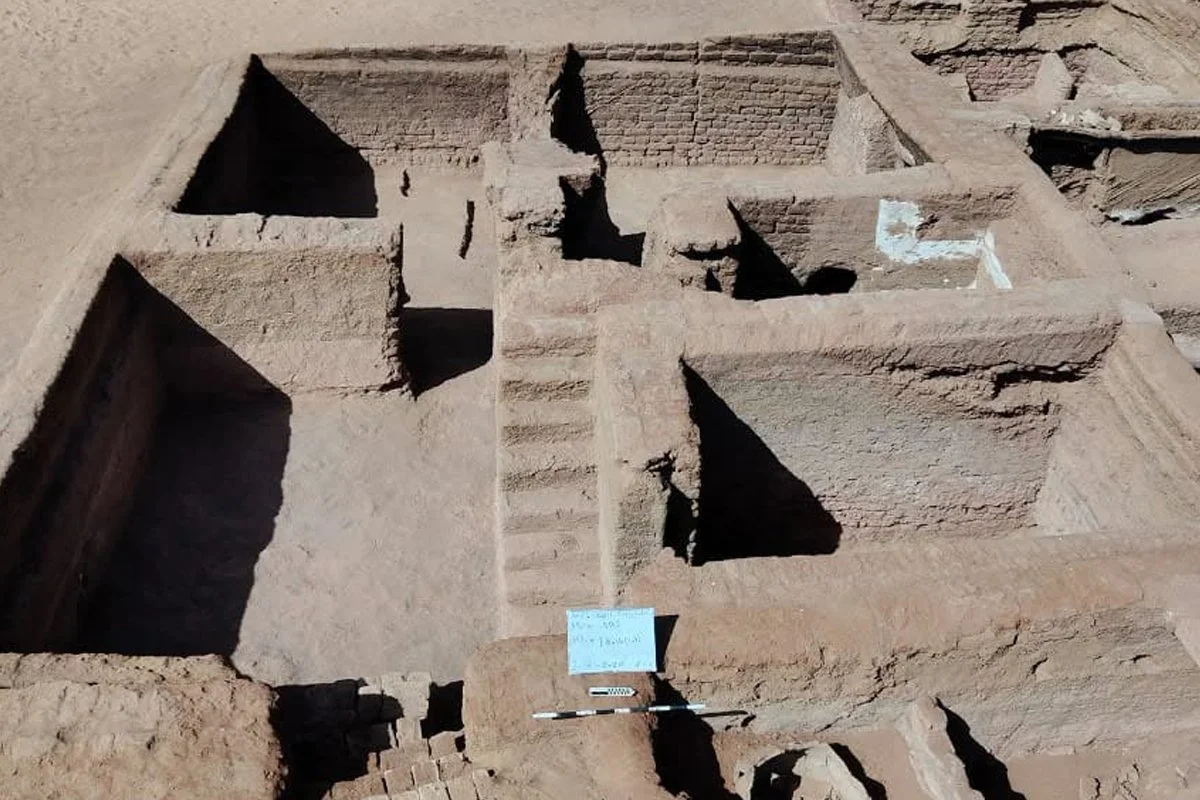
Researchers found a clearly defined street network built around broad north to south avenues intersected by narrower east to west roads, creating open squares and communal spaces throughout the settlement. This orderly layout demonstrates that the city was carefully planned rather than developing organically over time, reflecting the administrative organisation typical of many Byzantine communities.
At the heart of the settlement stands a fourth century Christian basilica overlooking one of the city’s principal streets. Its prominent position suggests it served as both a religious centre and an important gathering place for the surrounding community.
Beyond the church, archaeologists uncovered two watchtowers positioned along the city’s perimeter together with a substantial fortified structure, highlighting the importance of security within what was otherwise a prosperous desert settlement. These defensive features illustrate that even remote communities invested heavily in protecting both their residents and valuable trade routes crossing the Western Desert.
Everyday Life Preserved in Extraordinary Detail
Perhaps the greatest strength of the discovery lies in how completely it captures ordinary daily life.
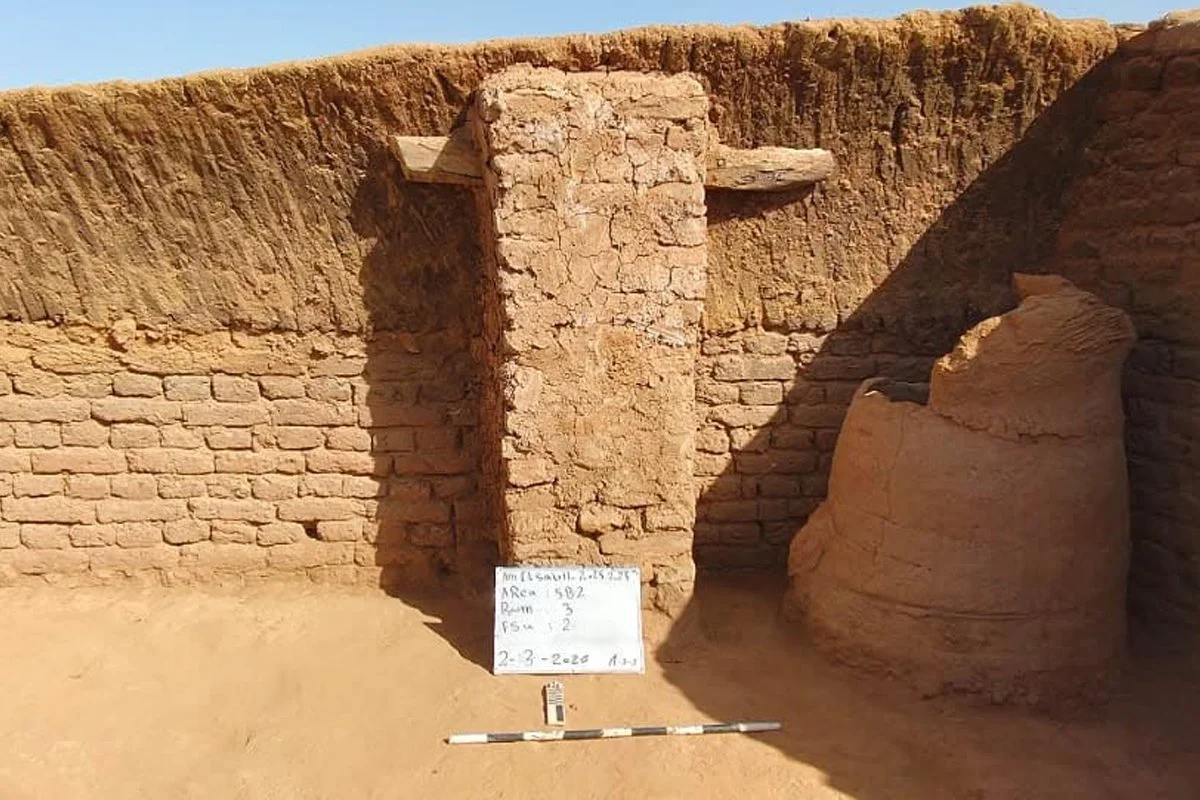
The excavation revealed numerous mud brick homes alongside bread ovens, kitchens, grain grinding installations, and food preparation areas, offering direct evidence of how residents produced meals and managed household life. Cooking vessels, storage jars, lamps, perfume bottles, and stone tools further enrich the archaeological record, allowing researchers to reconstruct the rhythms of everyday existence with remarkable precision.
Among the residential buildings, two stand out for their historical importance.
One belonged to a church deacon named Tisos, whose home dates to the second half of the fourth century. Another residence, associated with a man named Tabibos, appears to have served as an early house church before construction of the larger basilica. If confirmed, this would provide rare evidence of how Christian worship evolved within the oasis, illustrating the transition from private gatherings inside homes to dedicated public churches.
These discoveries highlight not only architectural development but also the gradual establishment of organised Christian communities during a transformative period in Egyptian history.
Hundreds of Ancient Documents Tell Human Stories
While impressive buildings reveal how the city functioned physically, some of its most valuable discoveries are considerably smaller.
Archaeologists recovered nearly 200 ostraca, fragments of broken pottery that were commonly reused as writing surfaces throughout the ancient world. Inscribed in both Coptic and Greek, these texts provide one of the richest collections of written evidence ever recovered from a Byzantine settlement in Egypt’s Western Desert.
Unlike monumental inscriptions intended for public display, these records document ordinary life. They include commercial contracts, business agreements, financial transactions, personal correspondence, and administrative records, offering an exceptionally personal perspective on the people who once lived within the settlement.
Together, the texts reveal a community actively engaged in trade, commerce, and social relationships. They also demonstrate the coexistence of multiple languages, reflecting both the administrative traditions of the Byzantine Empire and the growing importance of Coptic as Christianity spread throughout Egypt.
For historians, these written records are among the excavation’s most valuable finds because they allow archaeology to be paired with the voices of the people themselves.
Coins That Date a City
The excavation has also yielded an impressive collection of ancient coins that help establish both the city’s chronology and its wider connections to the Byzantine world.
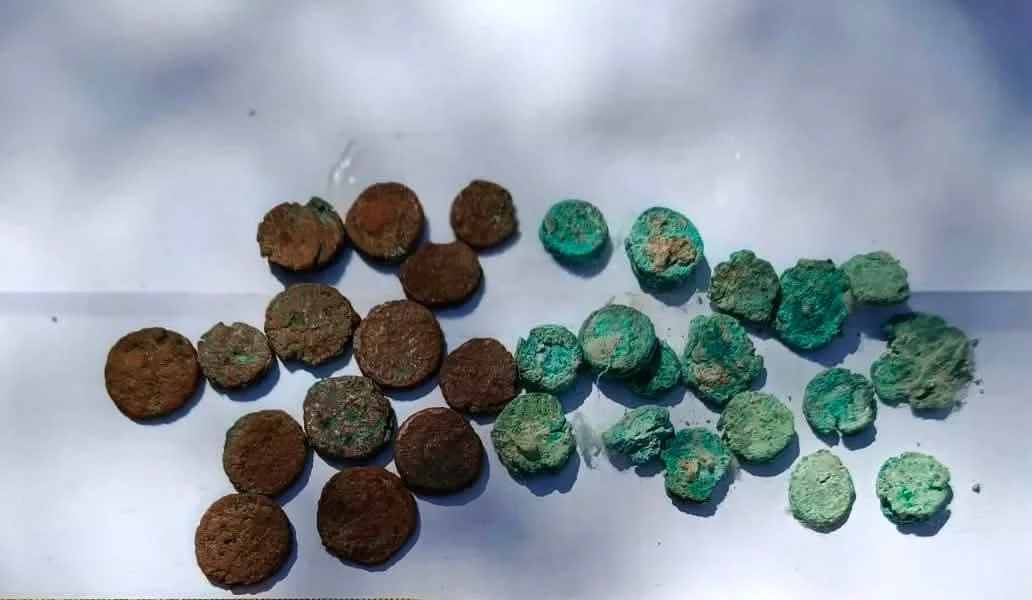
Researchers uncovered numerous well preserved bronze coins bearing portraits of Byzantine emperors, Latin inscriptions, and Christian symbols. These provide valuable evidence of the settlement’s economic activity while illustrating its integration into the broader imperial monetary system.
Even more significant are a number of gold coins dating to the reign of Roman Emperor Constantius II, who ruled between AD 337 and 361. Their presence firmly places the city’s principal period of occupation within the fourth century while confirming its prosperity during a pivotal era in the development of Byzantine Egypt.
For archaeologists, coins serve as some of the most reliable dating tools available, allowing individual layers of occupation to be linked to specific historical periods with considerable confidence.
Christianity in Egypt’s Western Desert
The discovery also contributes to a broader understanding of Christianity’s expansion across Egypt.
Although Egypt is widely recognised as one of Christianity’s earliest centres, comparatively few settlements from this period have survived with such exceptional completeness. The basilica, possible house church, Christian symbols on coins, and bilingual written documents collectively illustrate a community undergoing both religious and cultural transformation.
Rather than existing in isolation, the settlement appears to have been closely connected to wider Byzantine society while maintaining its own distinctive identity within the remote desert landscape.
Its churches, clergy, and written records suggest an organised religious community supported by stable civic institutions, demonstrating how Christianity became firmly established even in settlements located far from the Nile Valley.
Why the Discovery Matters
The significance of the Ain Al-Sabil excavation extends well beyond the discovery of another ancient city.
For archaeologists, the site represents a remarkably complete snapshot of Byzantine urban life in Egypt’s Western Desert. Instead of relying on isolated monuments or scattered artefacts, researchers can examine an entire community, from its street layout and religious buildings to its homes, businesses, administrative records, and everyday household objects.
The combination of architecture, written documents, coins, and domestic artefacts allows historians to reconstruct not only how the city looked but how its inhabitants lived. Few archaeological sites preserve such a comprehensive record of both public and private life.
A City Still Revealing Its Secrets
Although the discovery is already being hailed as one of the most important Byzantine settlements identified in Egypt’s Western Desert, archaeologists believe the site still has much to reveal.
Excavations at Ain Al-Sabil remain ongoing, with each season uncovering new structures and artefacts that deepen understanding of this once thriving oasis community. As additional buildings are exposed and more inscriptions are translated, researchers expect to develop an even clearer picture of the economic networks, religious life, and daily routines that sustained the settlement for generations.
For now, the rediscovered city stands as a remarkable reminder that beneath Egypt’s vast desert landscape, entire chapters of history remain hidden, waiting for the shifting sands to reveal them once again.
Written By: Lydia Kelly
Published: 8th July 2026