
Few creative directors arrive at a historic fashion house with expectations as high as those placed on Pierpaolo Piccioli. His first haute couture collection for Balenciaga was one of the most anticipated presentations of the Paris season, not only because of the house’s storied legacy but also because of Piccioli’s own reputation for creating emotionally resonant fashion. His debut delivered a confident vision that celebrated craftsmanship, embraced bold color, and paid thoughtful tribute to Cristóbal Balenciaga while establishing a new creative identity for the brand.
Romance Takes Center Stage
Presented within the elegant grounds of the Cité Internationale Universitaire in Paris, the collection unfolded as a celebration of couture in its purest form. Every look reflected Piccioli’s long-held belief that fashion should inspire emotion as much as admiration, balancing technical excellence with expressive beauty.
Having spent more than a year shaping Balenciaga through collaborations and contemporary ready-to-wear collections, the designer used his couture debut to return to the discipline that has defined his career. It was a reminder of the craftsmanship, elegance, and humanity that have consistently distinguished his work.
Rather than pursuing shock value or theatrical provocation, Piccioli embraced softness, sophistication, and optimism, offering a collection that felt deeply personal while remaining unmistakably Balenciaga.
Color Returns to the Spotlight
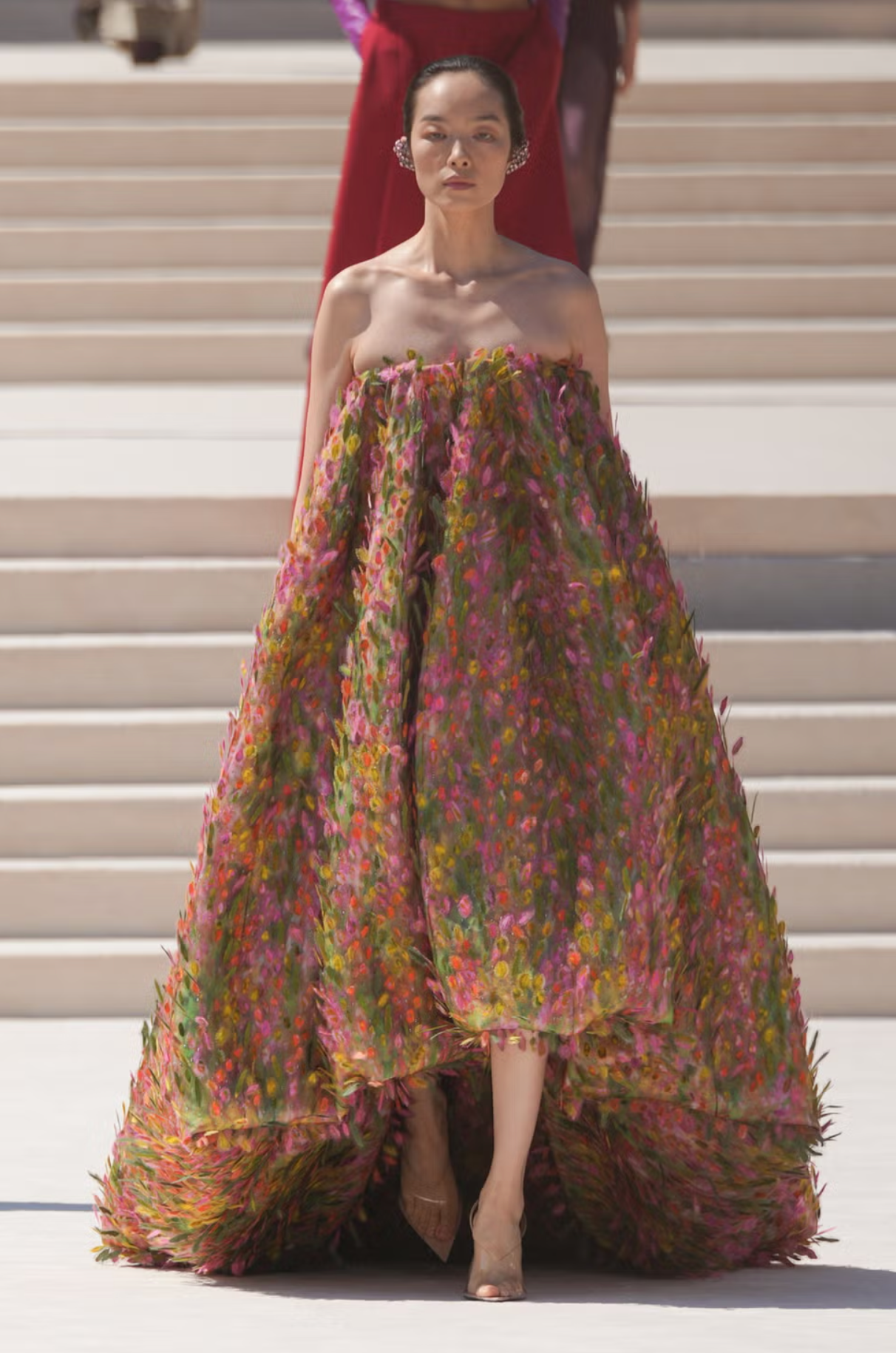
Perhaps the most striking element of the collection was its fearless use of color.
Throughout his tenure at Valentino, Piccioli became synonymous with vibrant palettes, most famously through the cultural phenomenon of PP Pink. That instinct remained central to his Balenciaga debut, where saturated shades infused the collection with warmth and vitality.
Rich plum tones appeared in delicately fringed skirts paired with sheer lavender blouses, while radiant lemon-yellow gowns shimmered beneath the Paris afternoon light. Bright pinks, soft lilacs, vivid oranges, and bold reds punctuated the runway, demonstrating that couture can be both technically extraordinary and emotionally uplifting.
Rather than overwhelming the garments, color became another expression of craftsmanship, highlighting intricate embroidery, textured fabrics, and sculptural silhouettes with remarkable clarity.
The result was a collection that felt refreshingly optimistic without sacrificing sophistication.
Modern Luxury With Everyday References
One of Piccioli’s greatest strengths has always been his ability to make couture feel surprisingly approachable. That philosophy continued throughout the collection as traditional haute couture techniques were paired with familiar wardrobe staples.
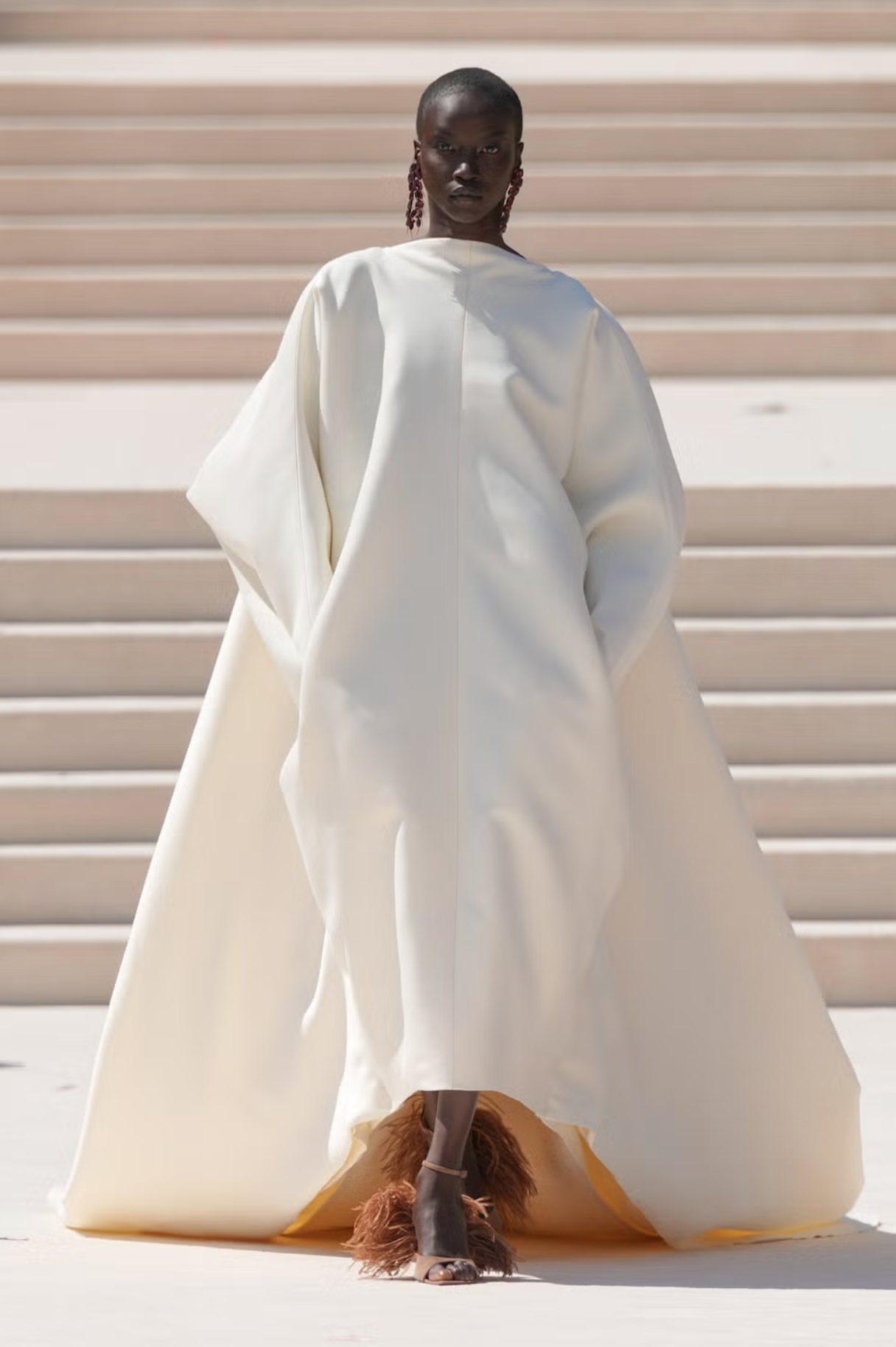
A sharply tailored white dress borrowed the relaxed neckline of a classic T-shirt, subtly transforming an everyday silhouette into something unmistakably luxurious. Elsewhere, crisp white shirts slipped casually from the shoulder before flowing into dramatic floor-length skirts finished with delicate fringe.
Technical trench coats, another recurring motif, combined practical functionality with couture embellishment. Oversized collars framed feather-trimmed evening gowns beneath, creating layered looks that balanced structure with softness.
Accessories reinforced this contemporary perspective. The iconic City bag appeared alongside several looks, introducing a familiar streetwear reference into an otherwise elevated couture wardrobe and underscoring Piccioli’s vision of luxury as something to be lived rather than simply admired.
Honoring Cristóbal Balenciaga
Although the collection carried Piccioli’s unmistakable creative signature, it also demonstrated considerable respect for the heritage of Balenciaga.
Rather than reproducing archival designs, the designer incorporated subtle references that acknowledged Cristóbal Balenciaga’s enduring influence without allowing nostalgia to dominate the presentation.
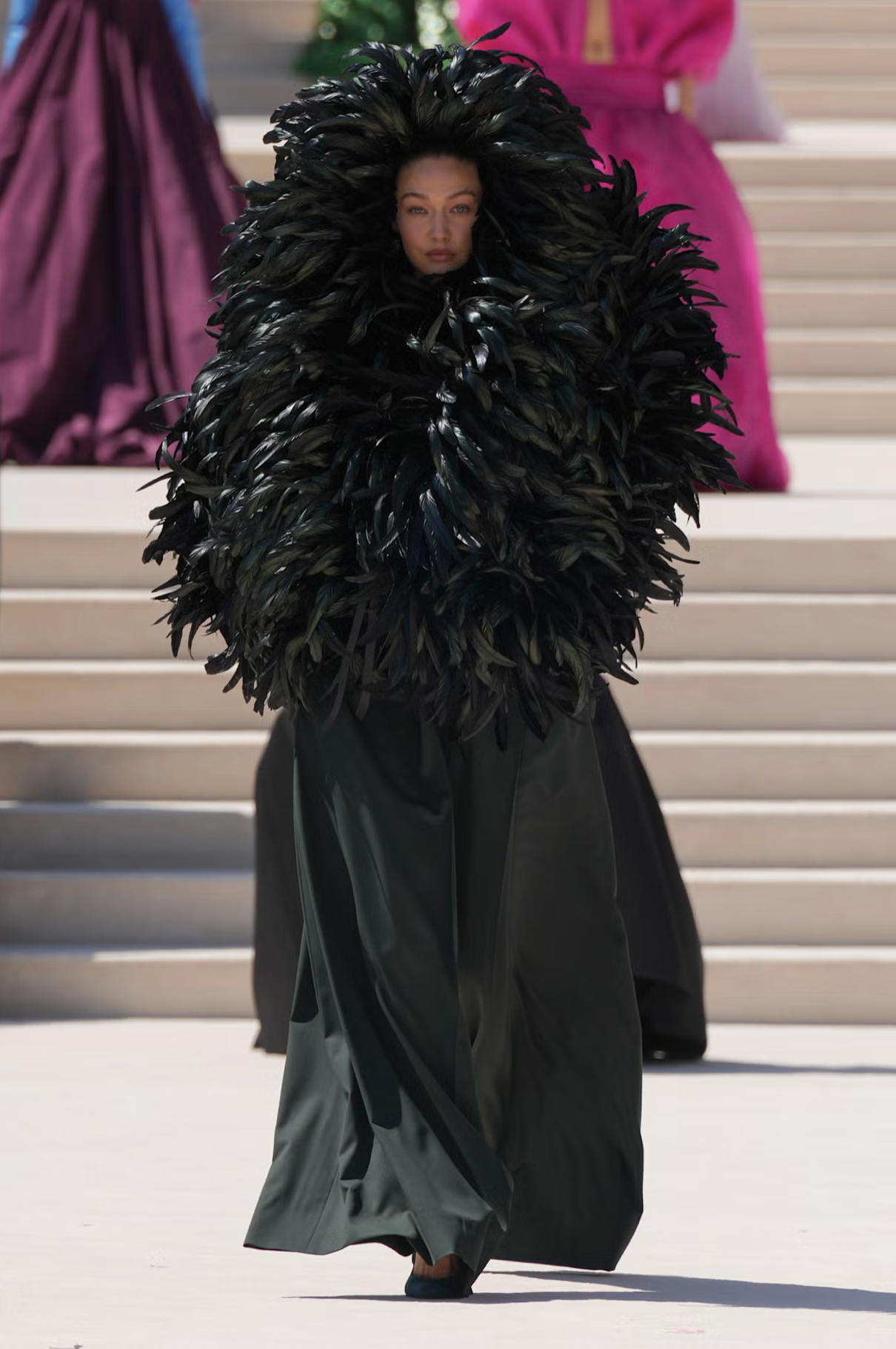
One of the most memorable moments came when Gigi Hadid made a surprise runway appearance wearing pleated trousers paired with a dramatic black chou top. The sculptural floral collar framed the neck and shoulders in a way that echoed the architectural precision for which the house’s founder became renowned.
The finale provided another direct connection to Balenciaga’s history. The closing bridal look featured a striking trapeze silhouette inspired by the house’s celebrated Spring/Summer 1967 collection. While unmistakably contemporary in execution, the gown reflected Cristóbal Balenciaga’s mastery of volume, proportion, and sculptural construction.
These references served not as historical recreations but as thoughtful conversations between past and present.
Craftsmanship Above All
Beyond color and silhouette, the collection celebrated the extraordinary artisans whose expertise makes couture possible.
In his show notes, Piccioli emphasized that the garments represented far more than individual creative expression. Instead, he described the collection as the product of the atelier itself, acknowledging the skilled craftspeople whose technical knowledge transforms ambitious designs into wearable works of art.
This perspective reflects one of couture’s defining qualities. Unlike mass-produced fashion, every garment is shaped through countless hours of handwork, requiring close collaboration between designers, pattern makers, embroiderers, seamstresses, and specialists dedicated to preserving generations of craftsmanship.
Throughout the runway presentation, that attention to detail was evident in every feather, pleat, embroidered surface, and sculpted silhouette.
Rather than allowing spectacle to overshadow technique, Piccioli ensured that craftsmanship remained the true centerpiece of the collection.
A Standing Ovation for a New Beginning
As the final bridal look disappeared backstage, the audience rose in applause.
When Piccioli emerged for his closing bow, he was joined not only by his creative team but by the atelier artisans who had helped bring the collection to life. It was a powerful gesture that reinforced the central message of the presentation: couture exists because of the people who dedicate themselves to its craft.
In an era when fashion often prioritizes speed and constant reinvention, the moment served as a reminder that lasting luxury continues to be built upon patience, expertise, and human creativity.
The Future of Balenciaga
Piccioli’s couture debut signals the beginning of an intriguing new era for one of fashion’s most influential houses. Rather than rejecting Balenciaga’s rich heritage or simply replicating it, he has introduced a vision that feels respectful, contemporary, and emotionally engaging.
His emphasis on color, romance, and exceptional craftsmanship offers a compelling counterpoint to the more confrontational aesthetic that has recently defined luxury fashion. It suggests a future in which elegance and innovation can coexist, allowing Balenciaga to evolve while remaining connected to its extraordinary history.
For fashion enthusiasts and couture collectors alike, the collection demonstrated that some of the industry’s most powerful statements are not made through excess or provocation but through beautifully executed design. Pierpaolo Piccioli’s first couture collection for Balenciaga was ultimately a celebration of artistry, humanity, and the enduring magic of haute couture itself.
Written By: Lydia Kelly
Published: 9th July 2026