
Fashion has always been quite cyclical, with many trends and items often being reinvented in hopes of appealing to the new generation. Very few accessories survive multiple decades without losing relevance. One major luxury handbag that has transcended time is the Balenciaga City Bag, a silhouette that helped define the early 2000s. The bag, rediscovered by the new generation through the Y2K revival, has now been elevated to haute couture and has commanded the interest of an evolving consumer base.
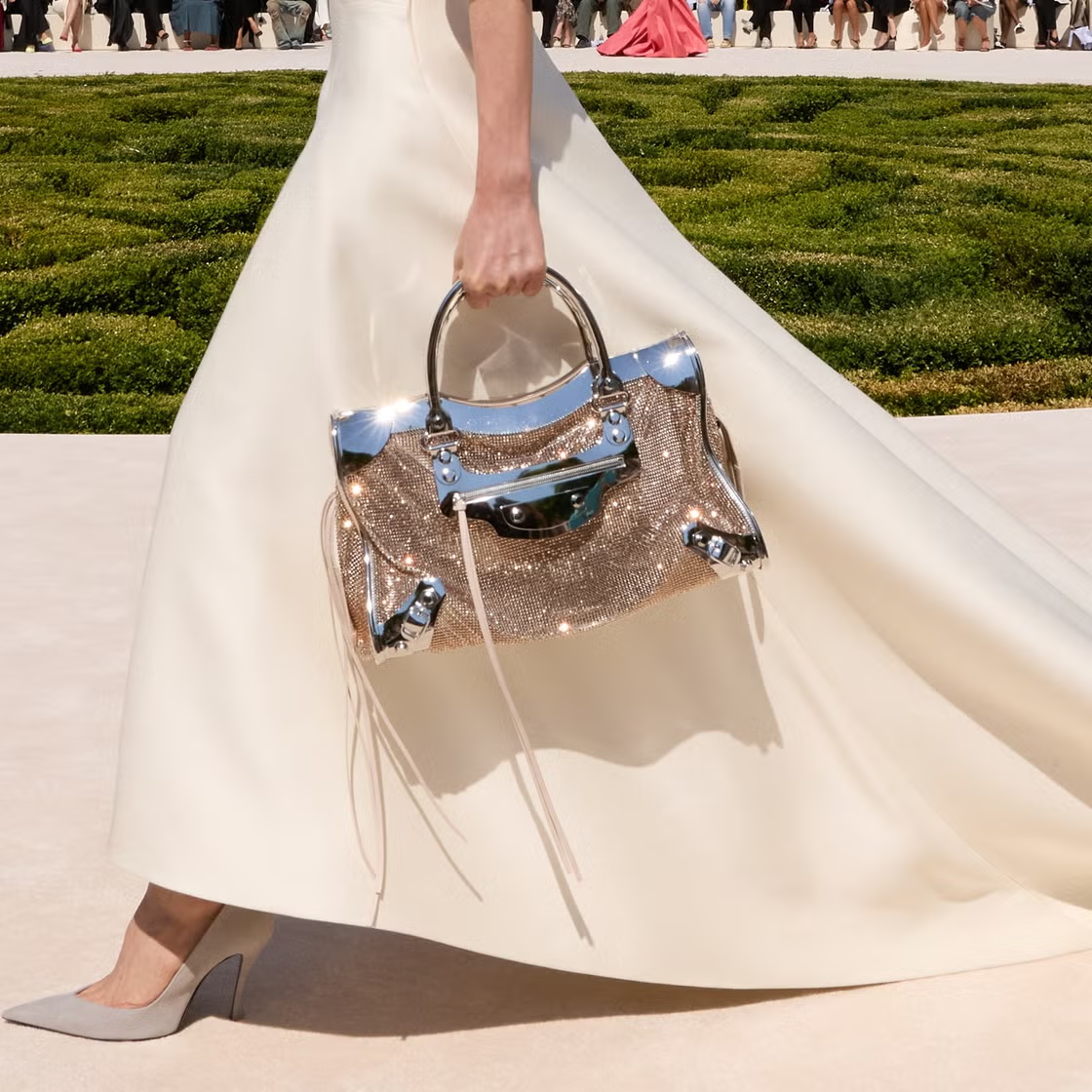
This evolution reached an unmissable new chapter during Balenciaga’s Fall 2026 Haute Couture presentation led by creative director Pierpaolo Piccioli, who unveiled a glittering interpretation of an iconic bag. Rather than using the familiar soft leather construction of the original, he updated this archival favourite with a crystal mesh material to transform one of fashion’s most recognisable handbags into couture craftsmanship.
Spain’s Luxury fashion house
Founded by Spanish couturier Cristóbal Balenciaga in 1917, Balenciaga is one of the world’s most influential luxury fashion houses, celebrated for its innovative approach to haute couture and its sculptural, architectural silhouettes. After relocating to Paris after the Spanish Civil War in 1937, the brand gained a reputation for its craftsmanship and innovative design that helped reshape women’s fashion. In the 21st century, the fashion house is owned by Kering and produces ready-to-wear collections that balance Cristóbal Balenciaga’s legacy with bold creative reinvention.
From Motorcycle Bag to Modern Icon
Originally introduced in 2001 under Nicolas Ghesquière, when luxury handbags were commonly defined by structured tops and polished leather, the City Bag offered something different. Initially named “Le Dix Motorcycle Lariat”, its slouchy silhouette and soft leather material created a lived-in, effortlessly cool appeal that contrasted with the era’s luxury bag market. Despite this, the City Bag reportedly didn’t receive immediate success as a commercial favourite, though it quickly developed a devoted following. Its unique style attracted numerous celebrities, including Kate Moss, the Olsen twins and Nicole Richie, which played a critical role in turning the bag into one of the generation’s “it-bags”. Unlike many accessories that are confined to a particular time period,the City Bag remained culturally relevant, eventually becoming one of the strongest sellers in the luxury resale market as the Y2K style revived. Its preservation is largely attributed to its ability to balance practicality and luxury.
Pierpaolo Piccioli’s First Couture Statement
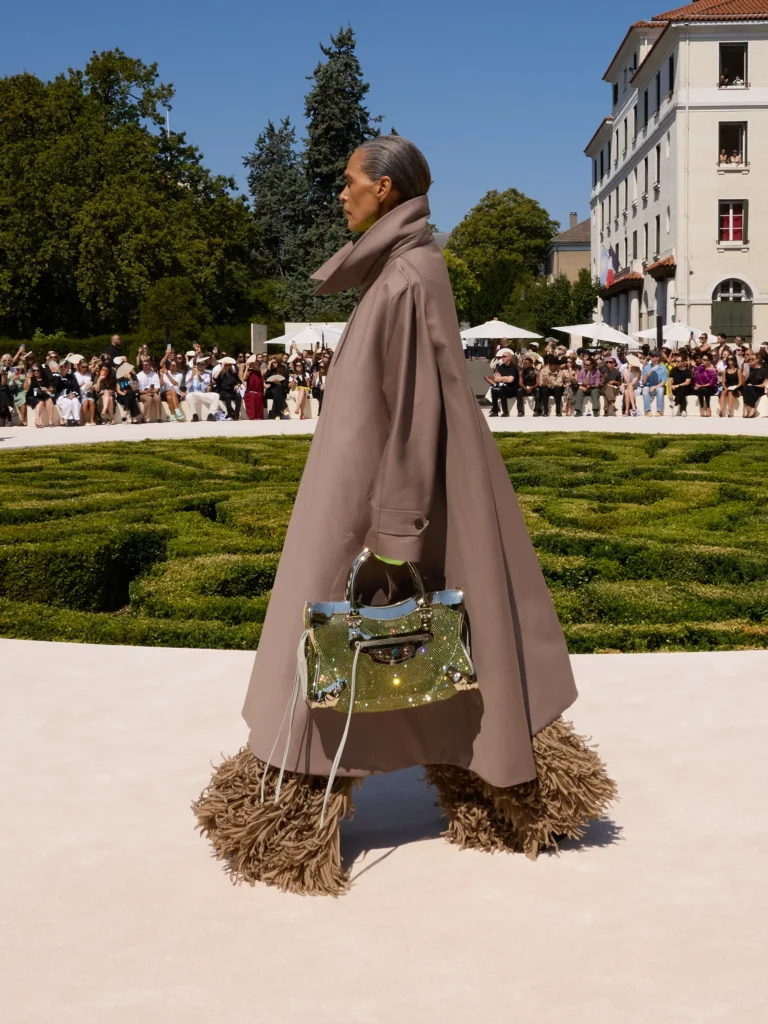
Balenciaga’s recent Fall 2026 Haute Couture collection has marked a new milestone for the bag. Known for his romantic vision and use of colour, Piccioli’s debut couture presentation for Balenciaga weaved in craftsmanship, innovation and storytelling. For his debut, Piccioli focused on artistry, using hand-painted feathers, organza-made petals and experimental textiles. Within this context, the City Bag followed this experimental narrative, being reimagined as an example of couture craftsmanship. Rather than erasing and completely reinventing Balenciaga’s past, he acknowledged its previous style and maintained its familiar silhouette while elevating it to couture status.
Its unique material composition, containing thousands of crystals arranged into a mesh fabric in both silver, soft rose-gold and green versions, blinded the runway and transformed into wearable works of art. This cemented its couture status, sitting at the balance between fashion and craftsmanship, showcasing technical expertise. This approach holds particular significance as Balenciaga’s founder Cristóbal Balenciaga was revered as one of history’s greatest couturiers. By applying couture techniques to one of the brand’s most commercially recognised products, Piccioli created a bridge between Balenciaga’s heritage and its contemporary identity.
Why Heritage Matters Again
Many luxury brands increasingly rely on archives to generate intrigue and excitement. Consumers in the modern world are interested in vintage collecting and fashion history. In a world where fast fashion and cheap-quality products dominate fashion, consumers are going back to archival, intentional clothing due to its longevity, quality and established cultural significance.
In this environment, older heritage pieces hold value, where instead of launching new handbag designs each season, many luxury brands are revisiting proven designs and reimagining them through contemporary craftsmanship. Balenciaga’s commitment to spotlighting the City Bag reflects this movement, demonstrating confidence that their accessories possess enough cultural relevance to be the pillar of a runway decades after its launch. Balenciaga’s approach is particularly successful as it doesn’t simply reproduce an old design; instead, it elevates its original silhouette into something new and extravagant.
A New Chapter for Balenciaga
Piccioli’s debut collection suggests that Balenciaga is potentially entering a new creative phase, one where craftsmanship and couture are highly regarded while maintaining its identity and modern legacy. The crystal City Bag embodies this aesthetic, honouring one of Balenciaga’s most commercially successful designs while demonstrating intentional couture.
Written By: Leah Kim
Published On: 10th July 2026