
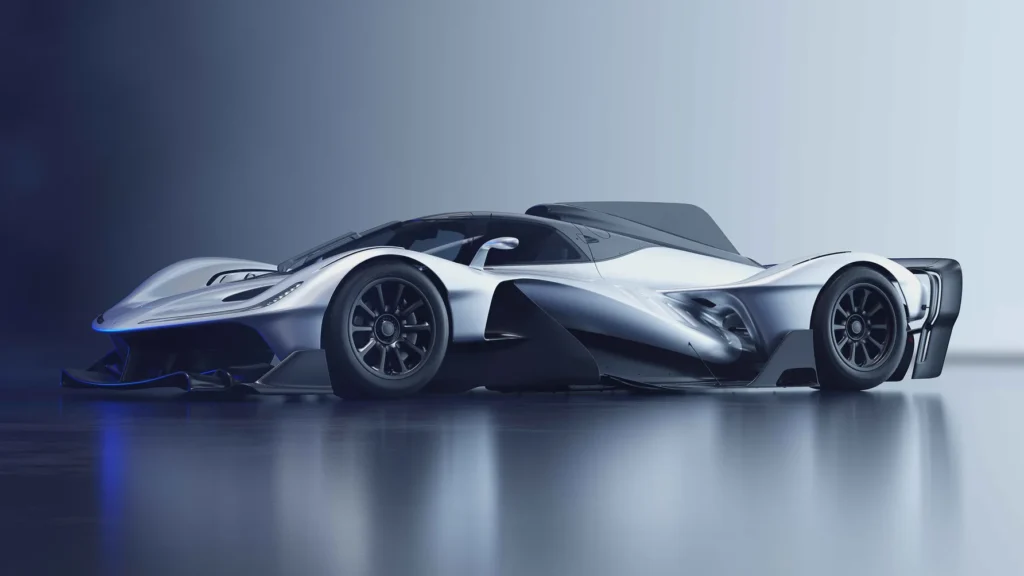
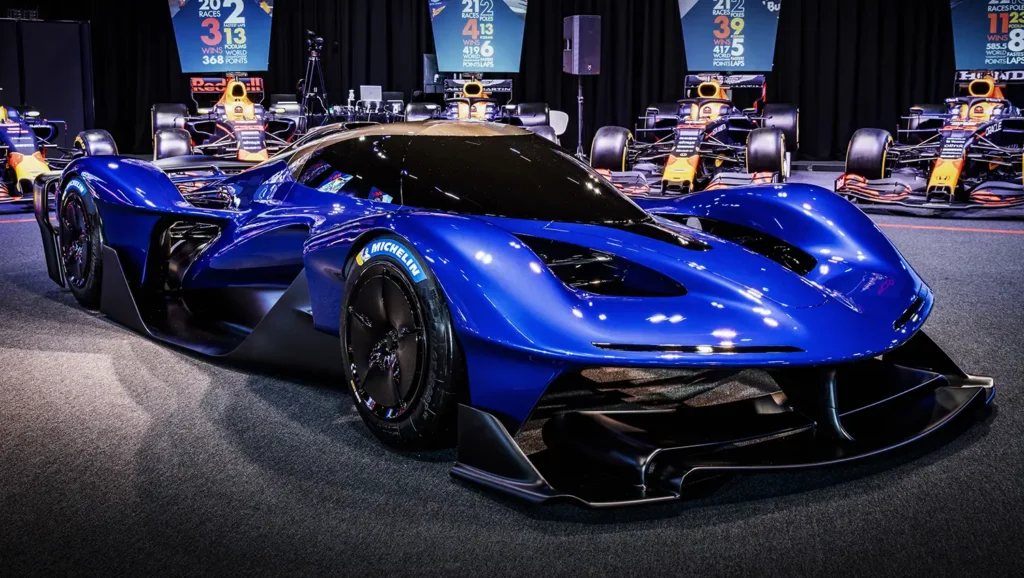
After many years of anticipation, Red Bull Advanced Technologies has unveiled the final production design of the RB17, representing their most ambitious project taken outside of Formula One. This track-only hypercar made its public debut at the 2026 Goodwood Festival of Speed and is the fruition of decades of racing knowledge distilled into a machine designed without the constraints of motorsport regulations.
For the coveted designer Adrian Newey, widely regarded as one of Formula One’s greatest recent engineers, the RB17 represented the opportunity to apply F1 thinking to a clean-sheet project intended for private ownership without the restrictions of racing rulebooks. This resulted in an ultra-exclusive performance car that sits between a Formula One machine and a Le Mans prototype.
A Vision Beyond Formula One
Deviating from Formula One, the RB17 was developed by Red Bull Advanced Technologies rather than Red Bull Racing’s Formula One team. Though the project draws heavily on the expertise from the F1 counterpart’s success in racing, sharing the same coveted engineer who produced some of their most successful race cars. Unlike many other hypercars, which balance road usability and racing performance, the RB17 only focuses on the latter. As the vehicle is not intended for the road or bound to any racing regulations, the design team were provided an unusual freedom that allowed them to optimise all aspects of its performance without having to compromise to the restraints that regulate conventional supercars. On a sentimental note, the RB17 is also the final hypercar designed by Adrian Newey during his time with Red Bull, having moved to a competing team, Aston Martin.
Designed Around Downforce
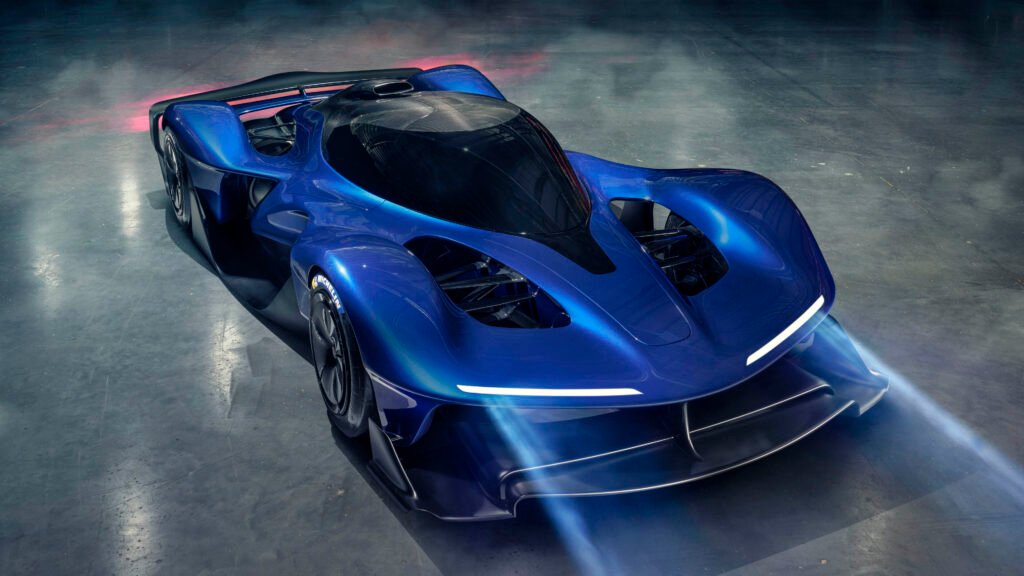
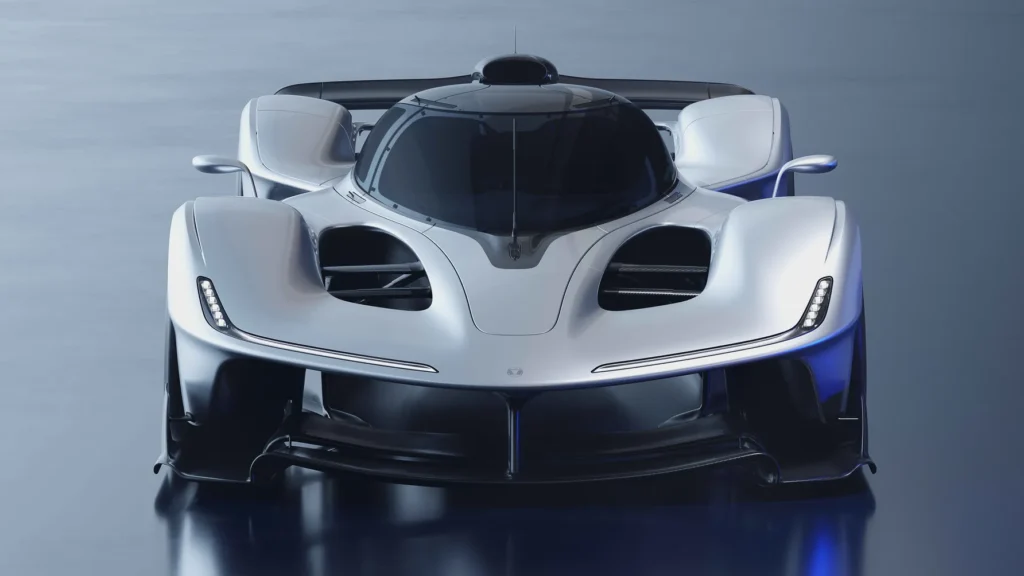
One of the RB17’s defining characteristics is its intriguing aerodynamic philosophy. Instead of relying on wings alone, a significant portion of the car’s performance is gained through ground-effect aerodynamics. Essentially, airflow between the car is carefully managed to create enormous levels of downforce while minimising drag, a common concept derived from Formula One. This enables the RB17 to remain stable during high-speed corners while maintaining exceptional straight-line performance. Its unique bodywork structure has been designed with aerodynamics at the forefront, with all elements contributing to airflow management.
In the interior, the two-seat cockpit is composed of a compact carbon-fibre chassis, illustrating their focus on weight reduction without sacrificing strength. Carbon-fibre elements are present throughout many elements of the vehicle, reinforcing its goal of purpose-built racetrack speed.
Naturally Aspirated Power
In an era where many high-performance vehicles are relying on turbocharging or electric powertrains, the RB17 embraces the naturally aspirated V10 engine. Developed in partnership with the renowned engine builder Cosworth, a 4.5-litre powerplant has been engineered. This has been developed to work at extremely high engine speeds, revving to 15,000 rpm. On top of this, the engine is paired with a hybrid system that adds additional power, creating a combined output exceeding an astounding 1,200 horsepower. Together, the powertrain combines traditional internal combustion performance with modern hybrid technology.
The choice of a naturally aspirated V10 satisfies both racing performance and driver experience. Without the presence of turbochargers, the throttle response is immediate while possessing a high-revving character that delivers a user experience rare in recent modern performance cars. Additionally, the hybrid component helps complement the driver experience rather than dominating it, offering additional performance while allowing the V10 to remain the centrepiece of the car.
A Car for Drivers
Despite these impressive statistics and powerful engine, Red Bull has emphasised that the RB17 has been developed to be approachable for experienced owners even without requiring the skills of a professional F1 driver. The interiors and cockpit, including the driving position, controls and overall ergonomics, have been designed to maximise user confidence while delivering precision expected of a car developed by Formula One engineering principles.
Each RB17 will also be supported by an ownership programme intended to provide customers with more than just the vehicle. From this, owners will be granted access to track events, engineering support and driver coaching. These additions allow users to experience the car in an environment that caters to its capabilities. This approach acknowledges that private owners may lack the resources required to operate this advanced track machine alone. Consequently, by offering support, Red Bull aims to deliver an experience comparable to those enjoyed by professional racing teams and drivers. This gives an opportunity for enthusiasts to engage with the engineering developed at a competitive motorsport level.
A Star Attraction at Goodwood
The RB17’s debut as a static, non-running design model was in 2024, and its first dynamic running debut was at the 2026 Goodwood Festival of Speed from the 6th to the 12th of July. This marked the first opportunity for the public to see the finalised version of the car in action. This featured the car competing in its first public hill climb, giving spectators a glimpse of both its striking design and the unmistakable sound of its naturally aspirated V10.
The Festival of Speed was strategically chosen as it has become one of the world’s premier celebrations of automotive performance, attracting both manufacturers, racing teams and enthusiasts worldwide. This event also highlighted the engineering philosophy behind the project, being able to demonstrate the car in action rather than displaying it on a stand. Ultimately, its appearance was especially significant as it transformed the RB17 from a concept into a tangible and functional product.
Exclusivity by Design
Following suit of many of the world’s most ambitious hypercars, the RB17 will be produced in limited quantity. Production is thus restricted to only 50, ensuring that each car remains highly exclusive. Additionally, all customers will receive more than the vehicle itself, being invited to Red Bull’s ownership programme.
This approach reflects that of competing manufacturers, where ownership extends beyond the product itself and becomes an ongoing relationship with the manufacturer. The RB17 has also been developed with opportunities for personalisation. Though all cars share the same fundamental engineering package, owners are provided with the opportunity to tailor elements of the vehicle to their personal preferences, making each car special.
With a reported price of £5 million before taxes and local charges, the RB17 sits at the top tier of the hypercar market. Its high price is explained by its rarity, bespoke engineering, and its connection to Formula One expertise, which places it among the most exclusive performance cars offered by a Formula One-affiliated organisation.
Adrian Newey’s Final Red Bull Masterpiece
Although the RB17 is remarkable on its own merits, its significance is heightened by Adrian Newey’s involvement. Throughout a career spanning more than four decades, Newey has designed championship-winning cars in both IndyCar and Formula One, helping the team secure multiple driver and constructor titles, including that of four-time world champion Max Verstappen.
Newey has described this project as a chance to explore the limits of what could be achieved when performance, efficiency and driver experience become the sole priorities. Free from the restraints of racing rulebooks, the engineering team was free to pursue the most effective and creative decisions. Additionally, the RB17 stands as Newey’s final completed design for Red Bull before continuing with the rest of his Formula One career in a different team.
More Than a Hypercar
The RB17 arrives at an interesting time in the automotive industry. With electrification and emission regulations changing the industry and racing landscape, naturally aspirated engines are becoming increasingly rare. In this context, rather than rejecting modern technology, it combines hybrid assistance to support the naturally aspirated V10, preserving its distinct responsiveness, sound and character.
Equally important as its internal combustion, the focus the RB17 has on aerodynamic efficiency is prominent. The practices learnt from the highest form of single-seat racing are translated into this machine, demonstrating how top-level motorsport continues to influence automotive engineering. Consequently, the RB17 is a showcase of the possibilities gained when engineers are given the freedom to prioritise performance over regulation.
The Final Word
Ultimately, the Red Bull’s RB17 is a truly unique vehicle in the modern automotive industry. It is not a road-legal car available for track use, nor is it a racing car built in compliance with racing rules. Rather, it is its own product that sits at the convergence of Formula One-inspired engineering and freedom.
Written By: Leah Kim
Published On: 13th July 2026