
The Sián FKP 37, six years after its debut, is continuing to make its presence known at major auctions, with its prices climbing everytime. Prestine models are now already breaking the multi-million dollar mark, which is unusual for a car this recent.
Part of the Sián success originates from its release in 2019 during the Frankfurt Motor Show. This was not just another limited-edition model release; instead, it was Lamborghini finally answering a question the rest of the industry had already answered years earlier: what happens when you put a hybrid system into a car built around a naturally aspirated V12?
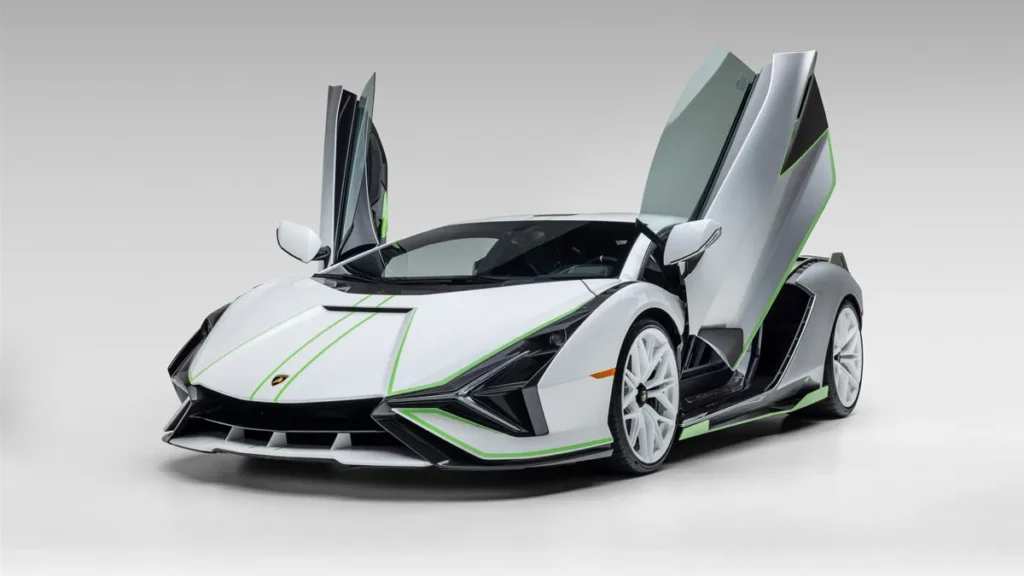
Building the hybrid without losing the V12
Lamborghini spent decades resisting the industry change. Prior, other luxury manufacturers like Ferrari, Mclaren and Porsche had all released their version of hybrid halo cars. Lamborghini’s reluctance made car enthusiasts uncertain whether they would release one at all. Consequently, when the Sián was released with such intentional engineering, the buzz was almost immediate. Engineers kept the 6.5-litre V12 largely intact and bolted a small 48-volt electric motor onto the transmission, adding, on paper, 34 horsepower. Though combined output landed at 808 horsepower, enough to make it the most powerful production Lamborghini built up to that point, with a 0-100 km/h time under 2.8 seconds and a top speed north of 350 km/h.
Despite those attention-grabbing numbers, one of the more intriguing elements was the exclusion of a conventional lithium-ion battery. Thus, in its place sits a supercapacitor, a component more common in Formula 1 or industrial applications than road cars. Supercapacitors do not store nearly as much energy as a battery, but they charge and discharge almost instantly and weigh a fraction as much.
The 34-horsepower motor is intentionally included to fill in the gaps a V12 leaves, for example, easing the brief lag between gearshifts and the moment of hesitation off idle. This ensures that the engine feels sharper and more responsive. Though the power of the V12 continues to dominate the experience, ensuring the car sounds like a Lamborghini is supposed to sound
63 coupes, 19 roadsters, and no two alike
Lamborghini built exactly 63 coupes, a nod to the company’s founding in 1963, plus 19 open-top Roadsters, for a total of 82 cars. Every single one of these vehicles sold before customers had even seen a finished example in person. Ensuring personalisation, buyers then went through Lamborghini’s Ad Personam. This enabled each owner to choose their own paint, exposed carbon-fibre patterns and interior details to their liking. In doing so, owning a Sián is one of a kind, where consumers own a configuration nobody else has.
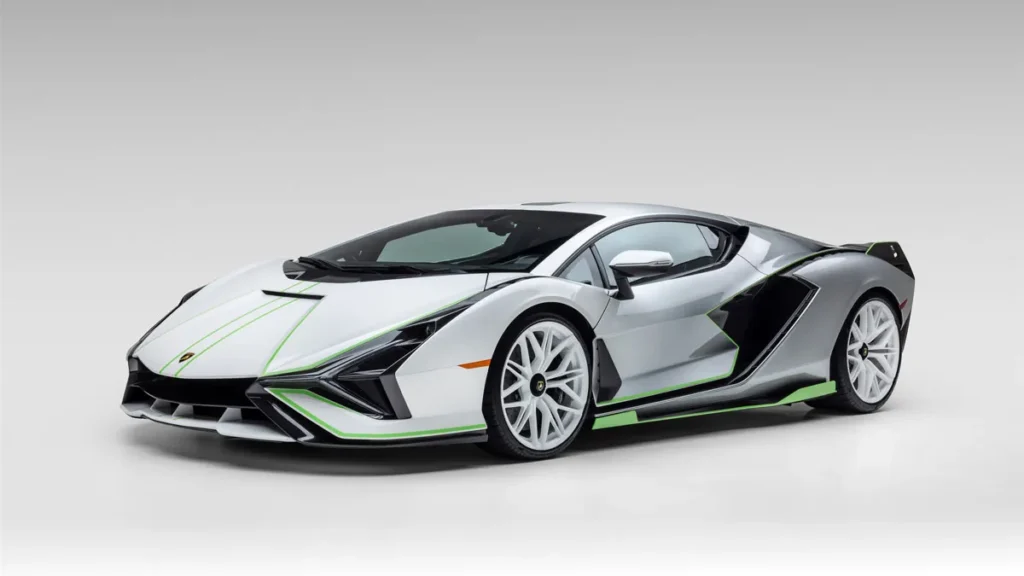
A design language still shaping the brand
Underneath, the Sián shares its bones with the Aventador. Though the exterior is unique to its own kind. The front intakes are sharper and more aggressive than anything on the Aventador, and the Y-shaped daytime running lights borrow directly from the Terzo Millennio concept car. Around back, six hexagonal taillights nod to the Countach, sitting above a raised exhaust and an unusually deep diffuser. Additionally, they possess the scissor doors iconic to the Lamborghini portfolio.
Why the auction houses keep paying attention
Collectors have gotten pickier about what counts as historically important, where low production numbers do not play a key role in indicating luxury. Though one thing that continues to carry significance is when something is considered the “first”. The Sián is the first hybrid Lamborghini ever put into production, built at the tail end of the Aventador’s life, wearing styling that shaped everything that came after it.
The 2020 Sián sold through the Broad Arrow Auctions strongly exemplifies its value. With 84 miles on the odometer, one owner from new, and north of $260,000 in factory options layered on top of the base spec, sales estimates have tended to land somewhere between $2.5 million and just over $3 million, depending on spec and provenance, and several examples have sold at or near the top of that range.
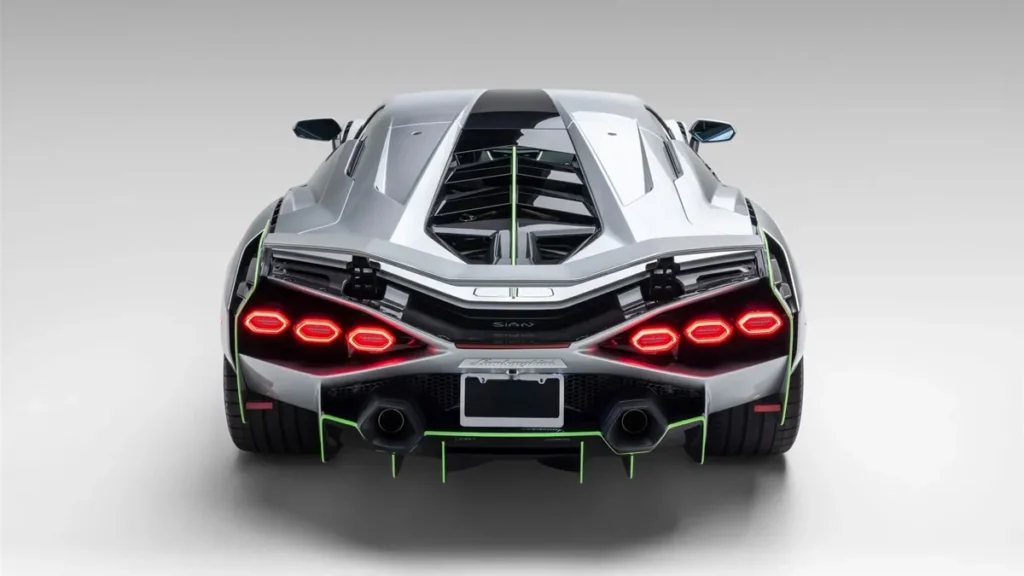
Inside, and what it all adds up to
The performance figures get the headlines, but the interior deserves some credit too: Alcantara and Poltrona Frau leather stitched throughout, exposed carbon fibre panels, a digital instrument cluster that still manages to feel unmistakably Lamborghini rather than generic and screen-heavy. What sticks with most people who’ve driven one, though, is how little the hybrid system gets in the way. The V12 is still the star. You can still feel and hear the engine doing the work, which is precisely the point; plenty of modern hybrids mute that connection between driver and engine, and the Sián deliberately doesn’t.
Now that the Revuelto has taken Lamborghini’s V12-hybrid formula into full production, the Sián’s place in the story is easier to see clearly: it was the test case that proved this combination could work without diluting what makes a Lamborghini feel like a Lamborghini. Cars that go first tend to get remembered longer than the ones that follow and refine, which is probably why interest in the Sián shows no sign of cooling. Whether it ends up remembered mainly as a rare limited-edition car or as the hinge point between Lamborghini’s V12 past and its electrified future likely depends on how the next decade of the brand plays out. Right now, it looks a lot like the latter.
Written By: Leah Kim
Published On: 31st July 2026