
When Aman confirmed the opening of Aman Nai Lert Bangkok, it was not announced with spectacle. There was no splashy campaign, no celebrity heavy launch, no attempt to shout over the noise of a crowded luxury hospitality market. Instead, the news moved quietly through industry circles, investors, and seasoned travelers who understood the weight of what was unfolding. Aman was not simply opening another urban hotel. It was entering Bangkok through one of the city’s most culturally protected private estates.
The Legacy of Nai Lert Park and Why Location is the Message
Nai Lert Park is not simply a plot of land. It is one of Bangkok’s last privately owned green sanctuaries, established in the early twentieth century by Nai Lert, a pioneering entrepreneur often described as one of the architects of modern Thailand. While Bangkok expanded vertically and relentlessly around it, the estate remained untouched, a rare pause in a city defined by motion.
By choosing Nai Lert Park, Aman aligned itself with legacy rather than visibility. The estate’s historical significance means development has long been constrained, both by regulation and by cultural reverence. Any partnership capable of operating within this environment required trust, restraint, and an understanding that luxury here would need to whisper.
For Aman, whose brand equity is built on serenity and spatial generosity, the location is a declaration of values. In a city known for maximalism and sensory overload, Aman Nai Lert offers a counter narrative. The true luxury is not proximity to nightlife or landmarks, but the ability to exist above the city without leaving it. The decision also reflects a broader recalibration of urban luxury. Increasingly, the most valuable addresses are not those surrounded by activity, but those protected from it.
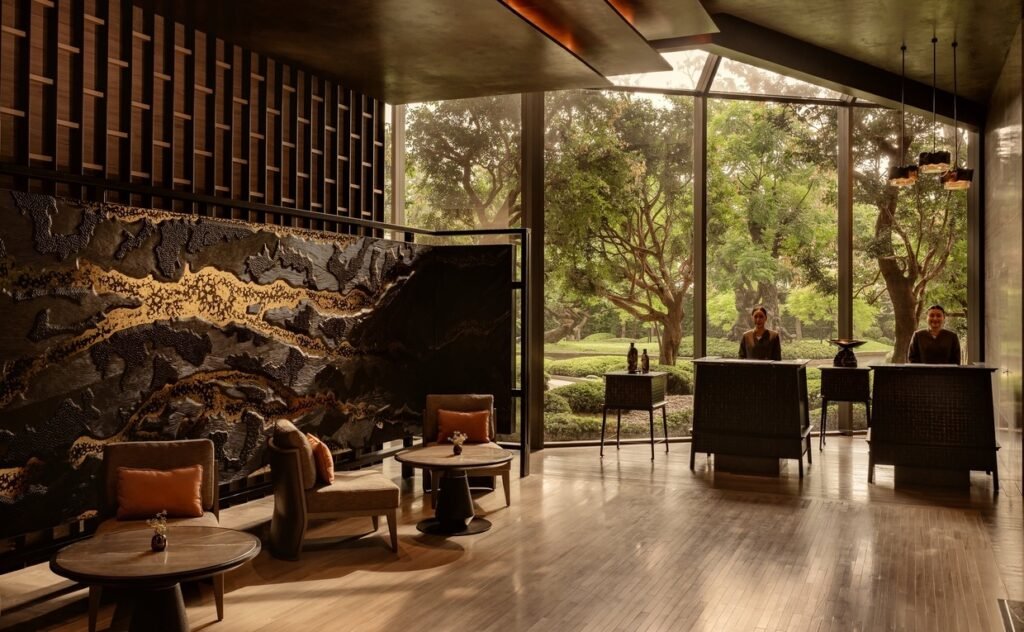
Inside the Property: Urban Sanctuary as Architectural Philosophy
Aman Nai Lert Bangkok comprises just 52 suites, a deliberately restrained number for a city of this scale. Each suite is designed to feel residential rather than transient, with expansive floor plans, floor to ceiling windows, and views that look inward toward greenery rather than outward toward traffic.
The architecture emphasizes horizontality and calm geometry, drawing on Aman’s established design language while responding to the tropical urban context. Materials are natural and tactile, with stone, wood, and muted textiles replacing gloss and ornamentation. This is not luxury designed for photography, but for permanence. The property also includes Aman branded residences, a segment that has become increasingly central to the group’s strategy. These residences are not marketed as hotel adjacent apartments, but as long term urban sanctuaries for global individuals whose lives oscillate between cities rather than countries.
Crucially, the hotel’s amenities prioritize wellness and privacy over social display. A full scale Aman Spa anchors the property, alongside meditation spaces, a discreet members lounge, and dining concepts that emphasize refinement over trend. The effect is intentional isolation within density, a concept that resonates strongly with post pandemic luxury consumers.
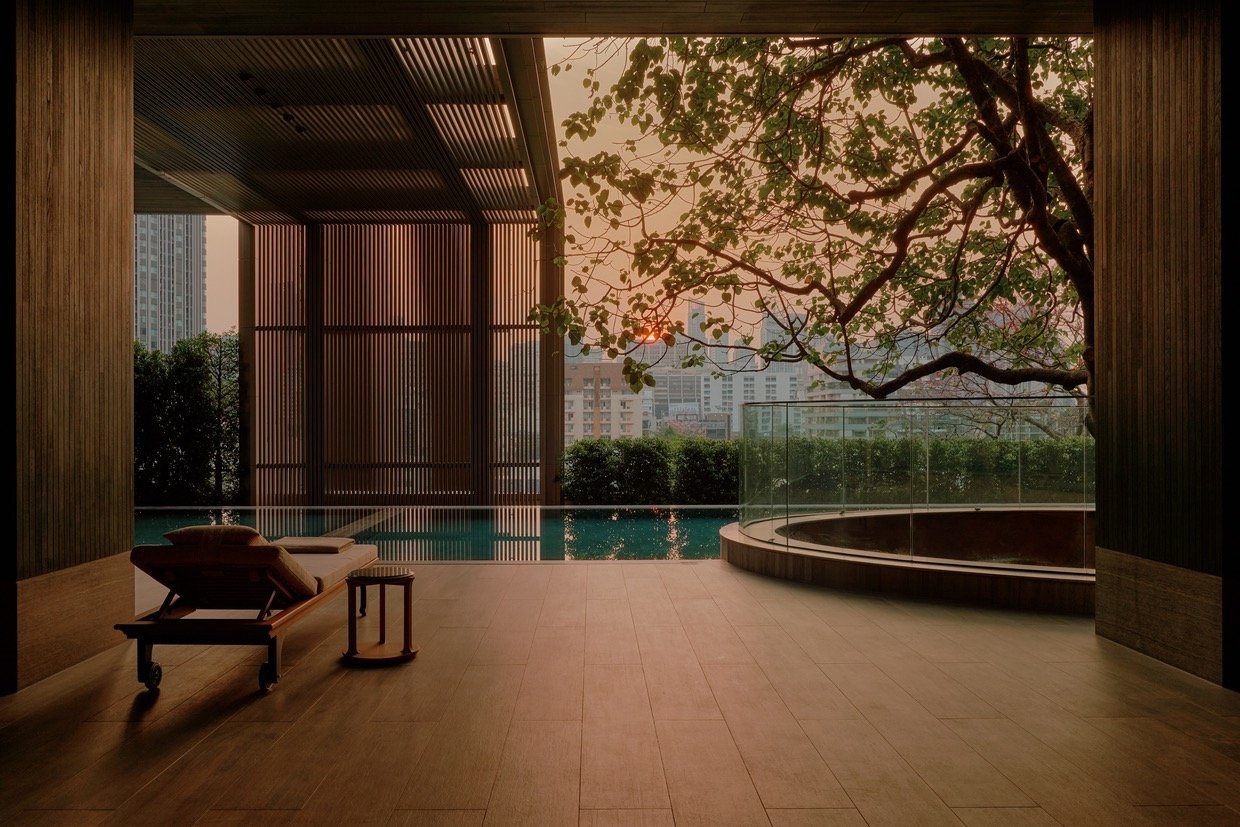
Why this Opening Signals a Shift in Asian Luxury Hospitality
Aman Nai Lert Bangkok arrives at a moment when Asian luxury hospitality is undergoing a structural shift. The region is no longer competing on scale or novelty alone. Instead, the emphasis is on cultural specificity, emotional resonance, and long term value creation.
Bangkok has seen an influx of high end hotel openings in recent years, from legacy European brands to contemporary lifestyle concepts. Yet Aman’s entry is distinct because it refuses to compete directly within that ecosystem. It does not aim to be the city’s most visible hotel, but its most protected.
This strategy reflects a broader recalibration among ultra luxury brands in Asia. As wealth in the region matures, particularly among family offices and multi generational investors, the demand has shifted toward assets that hold cultural legitimacy. Properties embedded in heritage, land scarcity, and narrative depth are increasingly viewed as stores of value, not just experiences. Aman Nai Lert also underscores the rising importance of urban wellness as a luxury category. The ability to access nature, silence, and restorative spaces without leaving a capital city is becoming one of the most coveted forms of privilege.
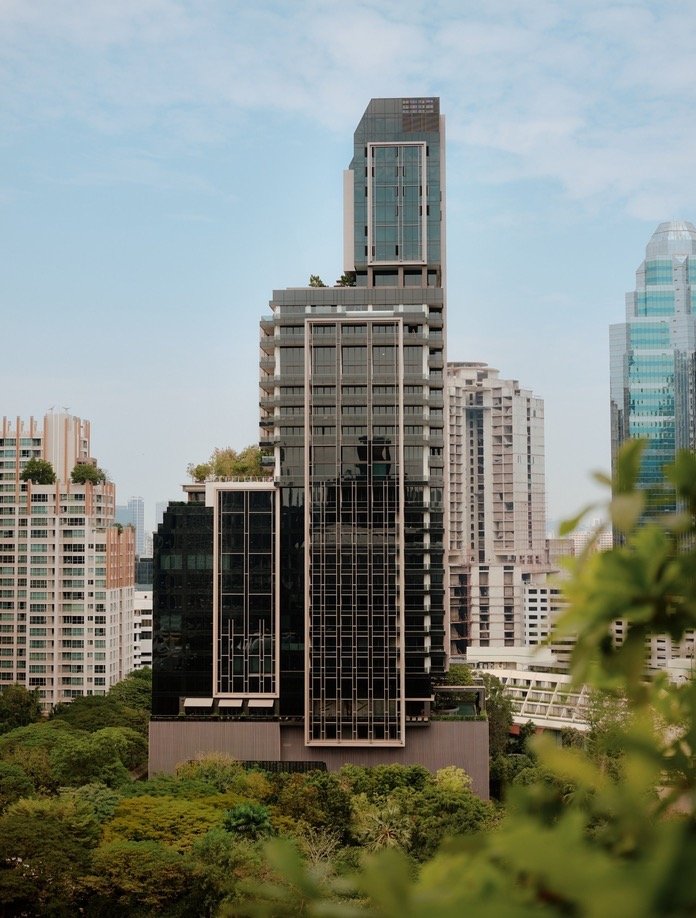
Bangkok’s Reinvention as a Global Luxury Capital
The opening of Aman Nai Lert Bangkok cannot be viewed in isolation. It is part of a broader repositioning of Bangkok itself. Long perceived as a destination for hospitality volume rather than exclusivity, the city is now attracting a different tier of global attention.
Infrastructure investment, a growing creative economy, and Thailand’s strategic openness to global capital have reshaped Bangkok’s appeal. High net worth individuals are no longer merely visiting. They are buying, building, and embedding themselves into the city’s future. In this context, Aman’s presence functions as both a validation and a catalyst. It signals that Bangkok is no longer an emerging luxury market, but a mature one capable of sustaining the world’s most selective brands.
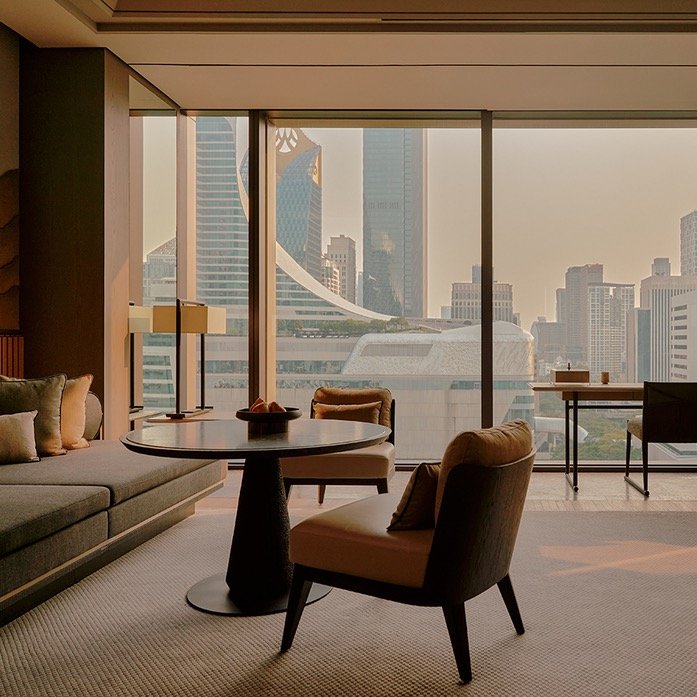
More importantly, it reframes what luxury in Bangkok looks like. Not opulence, but composure. Not excess, but intention. Not spectacle, but control. Aman Nai Lert Bangkok is not designed to dominate headlines. Its power lies in its quiet certainty. And in a global luxury landscape increasingly saturated with noise, that restraint may prove to be the most radical statement of all.
Written By: Mia Quisumbing
Published On: 17th December 2025