
Every July, Paris Haute Couture Week turns the French capital into the most exclusive stage in the world for creativity. Alongside the couture collections everyone’s watching for, the city’s historic jewellery houses put out high jewellery presentations that regularly push past what most people think of as luxury. These aren’t collections built to chase trends or sell units. They’re closer to a demonstration of what’s technically and artistically possible, a look at where fine jewellery might be headed.
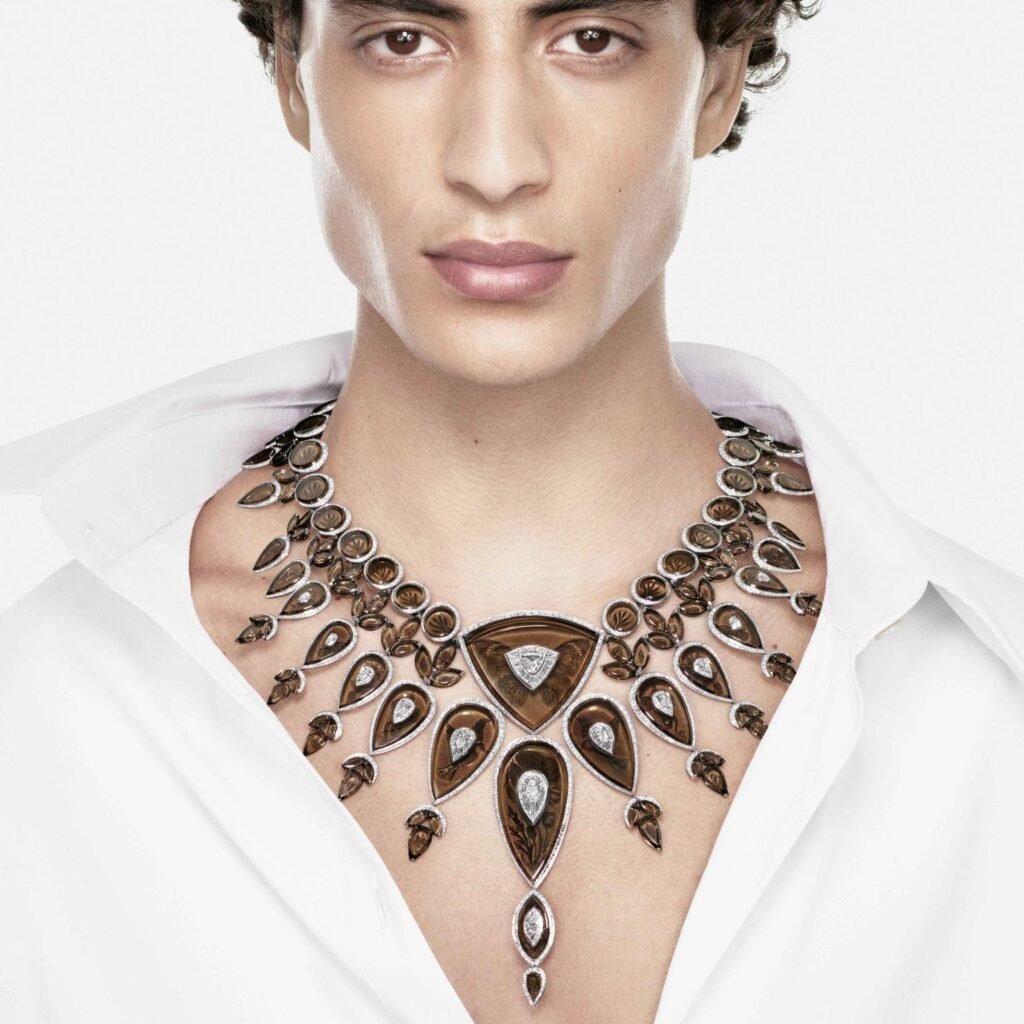
Boucheron, once again, proved why it’s one of the more daring names in the business. Its latest Carte Blanche collection took a different angle on adornment, working through the relationship between jewellery, the body and the idea of self-expression. Instead of just setting exceptional stones into precious metal, the house asked viewers to think of jewellery as something closer to an extension of the wearer, pieces that seem to grow out of the skin, follow the body’s lines, and sit somewhere between sculpture, fashion and identity.
It’s the kind of collection that adds to Boucheron’s reputation for pushing boundaries, and it shows off some genuinely impressive technical work along the way.
A Collection Built Around Human Expression
For over a decade, Boucheron’s annual Carte Blanche collections have functioned as its testing ground. With no commercial pressure attached, Creative Director Claire Choisne has used the platform to try out unusual materials, unconventional construction, and ideas that don’t always play it safe.
This year, rather than centring on gemstones or familiar motifs, the collection leans into one of the oldest forms of visual storytelling there is: marks left on the body. Instead of treating jewellery as something placed on top of the skin, the pieces read as though they belong to it, borrowing the permanence and intimacy you’d associate with body art while staying, unmistakably, fine jewellery.
The pieces themselves work from a lot of different angles. Necklaces seem to float across the collarbone. Delicate structures mimic ink lines running over the shoulders. Diamond-set forms wrap around wrists, fingers and necks without the usual heaviness you’d expect from high jewellery.
Engineering the Illusion
Jewellery that looks nearly weightless is one of the hardest things to actually build. The drama is what people notice first, but most of the real work happens underneath. A piece that looks effortless usually took months, sometimes years, of engineering before a single jeweller picked up a tool to make it.
Traditional high jewellery tends to show its structure off. The piece uses visible settings, articulated links, and solid metal frameworks, which is often how craftsmanship gets communicated. Boucheron went the other way here and tried to make all of that disappear.
That means metalwork fine enough to support real stones while staying nearly invisible. It means constructions flexible enough to move with the body without giving up on durability or comfort. Every joint between components had to be worked out so the whole thing moves like it’s soft, not rigid. The engineering hides itself well enough that the jewellery ends up behaving almost like fabric, even though there’s a huge amount of complexity built into every piece.
Precision at the Microscopic Level
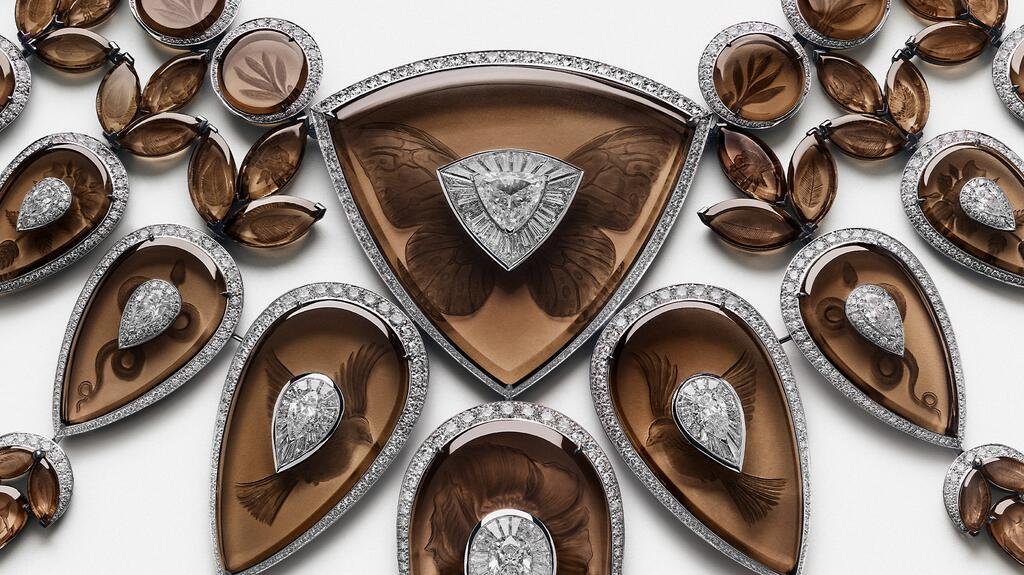
A lot of what separates good haute joaillerie from great haute joaillerie now comes down to detail nobody will consciously notice. Zoom in and you can see it: every polished edge, every stone seat, every articulated joint reflects a level of precision that’s hard to overstate. Components get measured in fractions of a millimetre and still need to work perfectly once everything’s assembled.
Stone setting is one of the harder disciplines here. Diamonds and coloured stones need to catch as much light as possible while holding structural integrity with barely any visible metal around them, which puts a lot on the setter’s judgment.
Polishing is its own challenge. Highly reflective surfaces show every flaw, so getting that seamless finish takes hours of refinement most people will never think about. Much of the real achievement stays invisible, which is often the point.
Jewellery Meets Couture
Jewellery presentations happen alongside Haute Couture Week, but the relationship between the two has shifted over the years. Jewellery used to complement the clothes. Now, plenty of houses build pieces that can stand alone as art while still working with a couture silhouette when they need to.
Boucheron’s latest work makes that shift obvious. The thin lines draw attention to the shoulders, the neckline, the posture, the same way a couture garment shapes a figure. The jewellery isn’t an accessory here. It’s part of the whole composition.
That overlap between fashion and jewellery matters more now that luxury clients want the full story, not just a good stone. People are buying into the concept and the craft behind a piece as much as the piece itself.
Innovation Beyond Gemstones
Exceptional diamonds still sit at the centre of high jewellery, but that’s no longer where the innovation stops. Houses increasingly set themselves apart through construction, material research and design thinking rather than carat weight alone. Boucheron has leaned into that for years. Earlier Carte Blanche collections used unexpected materials next to traditional stones, pushing back on the idea that rarity alone defines value, and putting craftsmanship front and centre instead.
This collection keeps going in that direction, focusing less on decoration and more on how a piece interacts with the person wearing it. The jewellery responds to movement and body shape, which asks the viewer to think differently about how a precious object occupies space. It’s part of a bigger shift in the industry, where the story behind a piece is starting to matter almost as much as the gemological credentials.
The Changing Face of High Jewellery
Haute Couture Week made a few broader shifts in luxury jewellery pretty clear. Plenty of houses are pulling back from obvious extravagance and leaning into something quieter. Rather than bigger statement necklaces, designers are working with movement, versatility, and pieces that actually mean something to the person wearing them.
Wearability matters now, even for pieces mostly bought by collectors. Designs that can shift between configurations keep drawing attention, which tracks with clients who want flexibility as much as exclusivity these days. Nature is still a constant reference point, though it shows up in more abstract shapes than literal florals now. Curved lines, flowing structures and sculptural forms turned up across a lot of the week’s presentations.
There’s also a growing focus on individuality. High jewellery is leaning toward personal identity over strict dress codes, which means people are wearing serious pieces in far more casual settings than you’d expect.
Preserving Traditional Craft
For all this modern thinking, none of it works without craft that’s centuries old. A single high jewellery piece still passes through a long line of specialists. Designers, model makers, wax sculptors, goldsmiths, setters, polishers, gem specialists- each one brings something the others can’t. A lot of the core techniques haven’t really changed. Hand engraving, careful stone setting, traditional polishing, these still define what “the best” looks like in this industry.
Digital tools might help early on in the design process, but the final execution still comes down to a person’s judgment and hands. Collections like this one are a reminder that innovation here doesn’t replace the old craft. It builds on top of it.
Jewellery as Contemporary Art
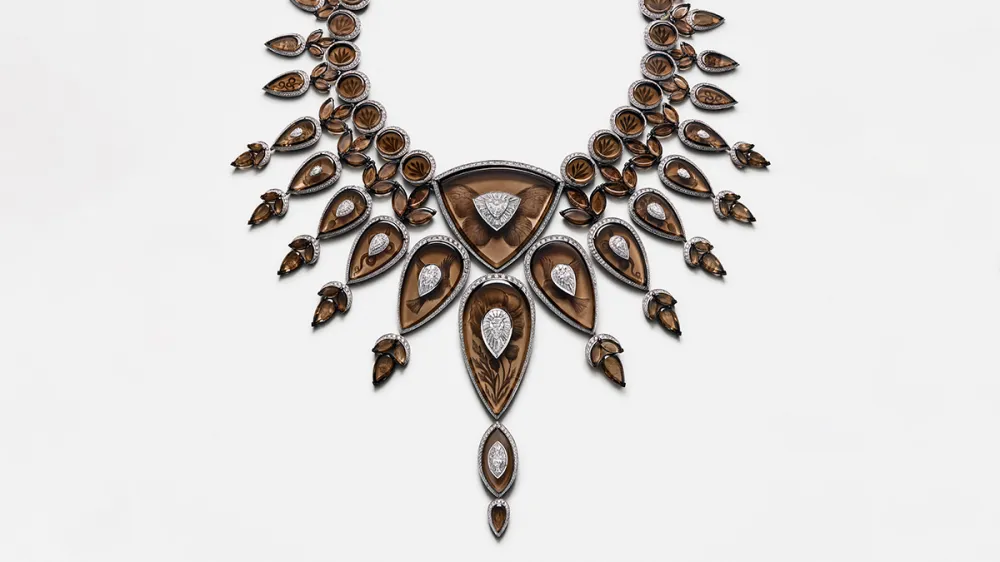
Maybe the biggest shift in haute joaillerie right now is how much it’s being treated as collectable art. Collectors are approaching exceptional jewellery the way they’d approach a sculpture, weighing originality and concept alongside the value of the materials.
That’s pushing houses toward more ambitious work. Instead of conventional luxury objects, they’re making pieces meant to be discussed and interpreted, not just worn.
Boucheron’s latest collection sits right in the middle of that shift. Each piece works as engineering, as sculpture, and as something you’d actually wear, blurring lines between fashion, design and fine art that used to feel fixed. It pushes jewellery’s relevance past wealth or status and into something closer to an art form in its own right.
What’s Ahead?
Great stones will always matter. But craftsmanship, invention and the story behind a piece are catching up fast as measures of what makes a collection exceptional.
Boucheron’s latest Carte Blanche presentation showed that even after more than 165 years, one of France’s oldest jewellery houses still isn’t afraid to question its own conventions. Between the engineering, the design choices and the craftsmanship, the collection turned jewellery into something closer to a second skin than a decoration.
For anyone who follows this world closely, there was more here than a nice thing to look at. It showed what happens when designers, engineers and master artisans actually work together to get an ambitious idea into something wearable.
Real innovation is getting harder to find in luxury right now, and Boucheron’s latest work is a good argument that the best haute joaillerie isn’t just measured by how good the diamonds are. It’s measured by how much genuine vision went into making them.
Written By: Leah Kim
Published On: 3rd August 2026