
Bangkok has no shortage of luxury hotels. Fairmont Hotels & Resorts has now arrived with a property designed to do more than add another address to Sukhumvit’s crowded hospitality scene.
Fairmont Bangkok Sukhumvit officially opened on August 18, 2026, marking the brand’s first hotel in Thailand. Developed with Asset World Corp, the 474-room property brings Fairmont’s usual mix of grand hospitality, dining, wellness and celebration to one of Bangkok’s most energetic neighbourhoods. It has 416 guestrooms and 58 suites, putting it among the larger luxury openings in the city.
The ambition goes past rooms and standard amenities. Fairmont built the hotel around a substantial culinary programme, entertainment spaces, wellness facilities and extensive event infrastructure. Seven dining and drinking concepts are launching through 2026, alongside an underground supper club and rooftop venues meant to give the property a real social identity.
A new chapter for Fairmont in Thailand
Thailand has long mattered to international hospitality brands, with Bangkok working as both a business centre and a gateway to the country’s leisure destinations. Sukhumvit has become one of the capital’s most dynamic districts, mixing shopping, dining, nightlife, offices and easy transport access.
A “blooming stage” for Bangkok
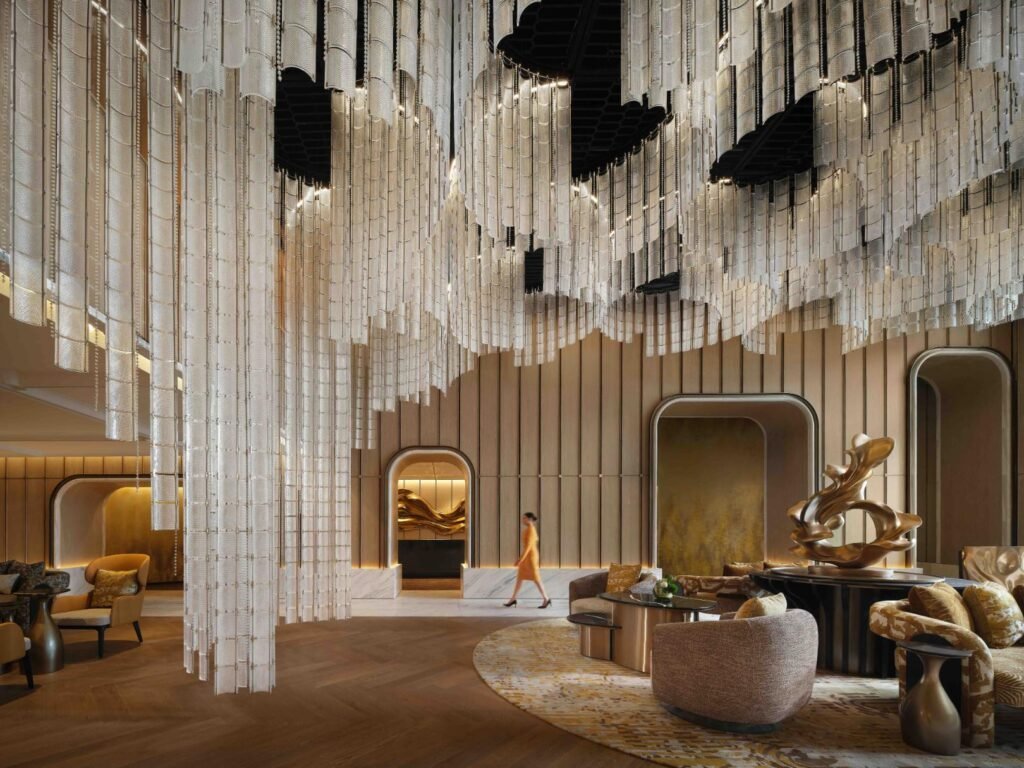
Thai architectural and interior design practice PIA created the hotel’s design around the idea of a “blooming stage.” The inspiration comes from Thailand’s botanical heritage, interpreted through contemporary interiors rather than traditional decoration. Floral references run through the property, tying together the lobby, guestrooms and public areas.
The clearest expression sits in the lobby, where a chandelier inspired by the ratchaphruek, Thailand’s national flower, hangs above the arrival space. It uses 4,166 glass pieces and more than 35,000 crystal balls, built as an elaborate focal point meant to capture the delicacy and movement of a flowering plant. The botanical theme continues past the entrance, through patterns, sculptures and decorative details drawn from flowers and foliage. The goal isn’t to turn the hotel into a museum of Thai design. It’s to use local references as the foundation for something modern and international.
474 rooms designed for modern travellers
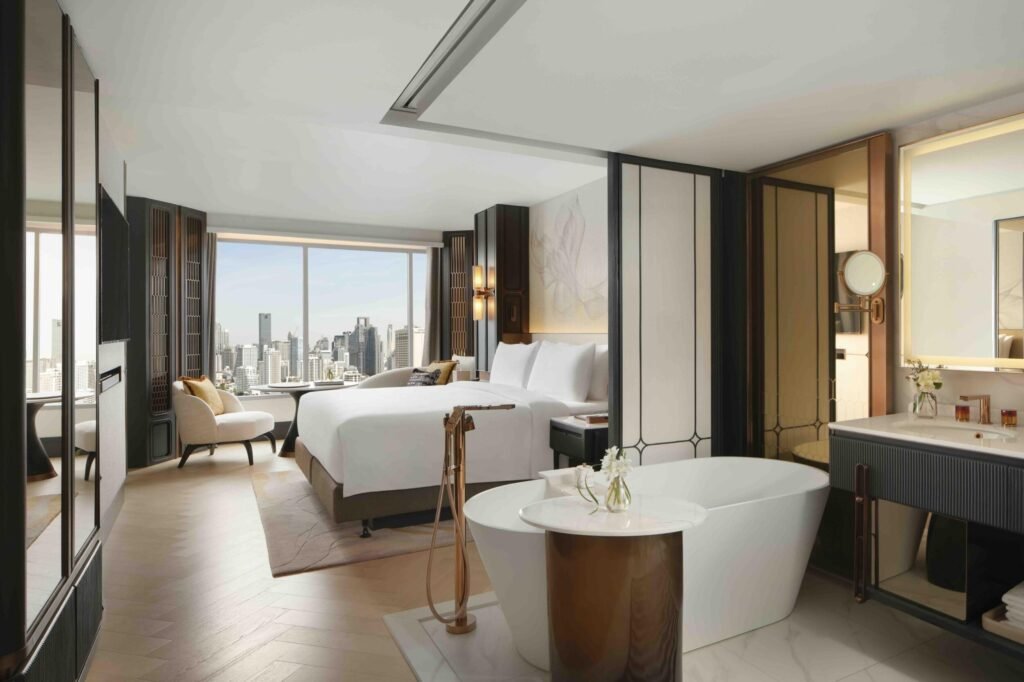
Accommodation spans 474 keys: 416 guestrooms and 58 suites. The interiors carry the same design language as the rest of the hotel, mixing contemporary luxury with subtle botanical references. Families get real attention here. Larger accommodation options, connecting-room arrangements and a dedicated Kids Club give younger guests their own activities rather than treating family travel as an extension of adult hospitality. Fairmont also welcomes pets. Dogs and other animals up to 30 kilograms can stay, with amenities built around their needs.
For a more private stay, Fairmont Gold offers the brand’s “hotel within a hotel” concept: dedicated check-in, a private lounge and personalised concierge service. In a hotel this size, with hundreds of rooms and a busy events and dining calendar, that gives guests a quieter option without losing access to the wider property.
Dining is at the heart of the experience
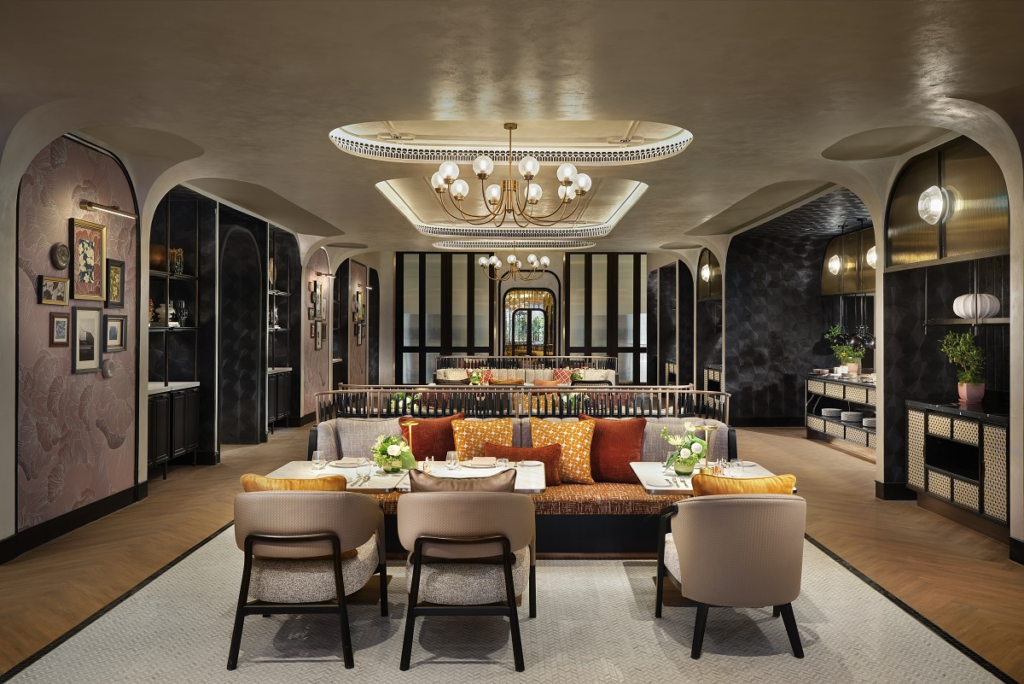
If the rooms establish the hotel’s luxury credentials, the dining programme gives Fairmont Bangkok Sukhumvit most of its personality. Seven food and beverage concepts are launching during the opening year, each built for a different mood or occasion rather than repeating the same style across multiple outlets. Harper’s runs a North American-French brasserie concept, mixing Parisian polish with a more relaxed New York sensibility. It’s built to work all day, as relevant for a business lunch as an evening meal.
AELA Social Bar shifts with the day. It runs as a refined lounge before sunset, then moves toward cocktails and socialising after dark, a rhythm familiar to Bangkok, where a bar’s atmosphere can change completely once the working day ends. CAYA Pool Club draws from Bangkok’s street-food culture and night markets. Its food and cocktail programme gives the pool area a distinctly local reference point while keeping the relaxed feel expected of a resort-style space.
Inside Wiggle Room
An underground supper club called Wiggle Room opens in September 2026, with its own entrance on Sukhumvit Soi 18. It combines dining, cocktails and live cabaret-style performance, closer to a theatrical night out than a conventional hotel dinner. The separate entrance matters. It lets Wiggle Room work as a destination on its own, so guests don’t need to be staying upstairs to experience it, giving the venue a shot at becoming part of Bangkok’s wider nightlife circuit. The rooftop extends that further. Two more restaurants are planned for the 32nd and 33rd floors, one focused on Italian-Japanese cuisine and one on modern Thai food, both expected to open in December 2026.
A serious address for events
Beyond leisure, Fairmont Bangkok Sukhumvit is built as a major meetings and events venue. More than 2,000 square metres of event space run across three floors. The Signature Grand Ballroom has a high ceiling and its own entrance, and a second ballroom, seven breakout rooms and Couture Hall add further flexibility. That infrastructure lets the hotel compete for conferences, corporate events, weddings, product launches and incentive travel, which matters in Bangkok specifically. The city’s status as an international business and events hub means luxury hotels are increasingly expected to handle both individual travellers and large-scale gatherings.
Wellness after the city
Bangkok’s intensity is part of its appeal, but it also makes slowing down valuable. Fairmont Bangkok Sukhumvit answers that with Fairmont Spa, an outdoor pool, and Fairmont Studio, which covers yoga, cardio and strength training. The studio runs 24 hours for in-house guests, with dedicated service available during the day. Wellness here is built into the broader hotel experience rather than treated as a separate facility. A guest might train in the morning, head out for meetings or sightseeing, come back for a treatment, then move straight into dinner and entertainment. The hotel is designed to hold all of that under one roof, which matters more now that travellers don’t neatly separate business, leisure, wellness and social life.
A hotel designed for families too
Multi-generational travel gets real focus here. Beyond the family-oriented rooms and Kids Club, the hotel offers a children’s cooking class, Kids’ Check-In, breakfast provisions for children, guaranteed connecting rooms and a Kids Butler service. These details sound small next to the ballrooms and restaurants, but they reflect where luxury travel is heading. Families increasingly expect high-end hotels to build experiences specifically for children, not just make adult facilities accessible to them. It also gives parents more freedom: if younger travellers have their own activities and meals, the whole property gets easier to navigate as a family.
More than another luxury hotel in Sukhumvit
Fairmont Bangkok Sukhumvit arrives as Bangkok’s luxury hotel market gets more competitive. The city already has an enormous concentration of international brands, independent properties and destination restaurants, so simply opening a large five-star hotel isn’t likely to be enough on its own. Fairmont’s answer is to make the property feel like a collection of experiences: PIA’s visual identity, the 474-room accommodation offering, Fairmont Gold, the spa and wellness facilities, seven dining and drinking concepts, the coming rooftop restaurants, Wiggle Room, and more than 2,000 square metres of event space. Each piece targets a different audience, but together they let the hotel function through the day and deep into the night, which suits Sukhumvit well, where the line between hotel life and city life keeps blurring.
The beginning of Fairmont’s Thai story
Fairmont is expanding across Asia as travellers increasingly want hotels that combine recognisable international service with a strong sense of place, and Bangkok is a good place to test that. The botanical design, Thai-inspired dining and local cultural references tie the hotel to its surroundings, while the international restaurants, luxury rooms, wellness facilities and event spaces deliver the consistency expected of a global luxury brand.
Written By: Leah Kim
Published On: 21st August 2026