
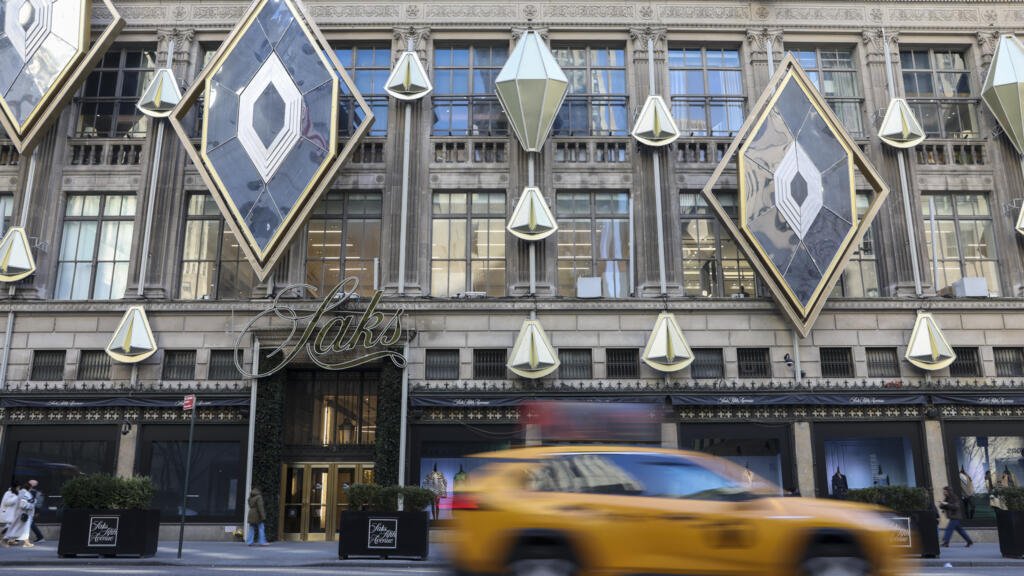
Saks Global, the parent company of Saks Fifth Avenue, Neiman Marcus, and Bergdorf Goodman, has filed for Chapter 11 bankruptcy after months of financial instability and leadership changes. Backed by a $1.75 billion debtor in possession financing package, the company aims to restructure its debt while keeping stores operating. The bankruptcy raises serious questions for vendors, employees, and the future shape of luxury department store retail in the United States.
A Long Anticipated Bankruptcy Filing
After months of speculation and mounting concern across the fashion industry, Saks Global has officially filed for Chapter 11 bankruptcy protection. The company, which owns Saks Fifth Avenue, Neiman Marcus, and Bergdorf Goodman, confirmed the filing on January 14, 2026. Alongside the announcement, Saks Global revealed it had secured a financing commitment of approximately $1.75 billion intended to stabilize operations while the business restructures.
Chapter 11 bankruptcy allows a company to continue operating while renegotiating debt under court supervision. For Saks Global, the filing is meant to buy time and preserve the core business rather than signal liquidation. Executives emphasized that underlying demand for luxury goods remains intact and that the company’s challenges stem from debt load, inventory flow, and shaken vendor confidence rather than a collapse in consumer interest.
The filing follows weeks of chaotic headlines that included missed payments, strained relationships with suppliers, and a revolving door of top leadership. While the news did not come as a shock, it marks a defining moment for one of the most influential players in American luxury retail.
Leadership Shakeups at a Critical Moment
As part of the bankruptcy announcement, Saks Global confirmed that Geoffroy van Raemdonck has been appointed chief executive officer, effective immediately. Richard Baker stepped down from his role as executive chairman and CEO on January 13, just one day before the bankruptcy filing became public.
Van Raemdonck is a familiar figure in luxury retail. He previously served as CEO of Neiman Marcus and successfully led the company through its own Chapter 11 bankruptcy before it was acquired by Saks Global. His return to the helm is widely seen as a strategic move, especially given that the current bankruptcy proceedings are being negotiated in Texas, the same jurisdiction where Neiman Marcus restructured under his leadership.
In a statement, van Raemdonck called the moment an opportunity to strengthen the company’s foundation and position it for the future. Board member Paul Aronzon echoed that sentiment, citing van Raemdonck’s experience in driving transformation and building trust across the industry.
The leadership turmoil began earlier this month when Marc Metrick, a 30 year veteran of the company, stepped down as CEO. Richard Baker briefly assumed the role before reports emerged that he, too, would exit. The rapid succession of changes unsettled vendors and investors, making the bankruptcy filing feel almost inevitable.
How Saks Global Built Its Debt Burden
Saks Global was formed in December 2024 when Hudson’s Bay Company acquired Neiman Marcus and Bergdorf Goodman for $2.6 billion. That purchase price was largely taken on as debt by the newly formed entity, instantly saddling Saks Global with a heavy financial obligation.
The company later partnered with Authentic Brands Group to create Authentic Luxury Group, a platform designed to incubate and expand brands globally. While the long term potential of the partnership was widely discussed, it also added complexity to an already leveraged balance sheet. It remains unclear how the partnership will be affected by the bankruptcy proceedings.
In September 2025, Saks Global began exploring the sale of a minority stake in Neiman Marcus to raise liquidity, though no deal materialized. The company also sold the real estate of the Beverly Hills Neiman Marcus location for an undisclosed amount. Despite these efforts, Saks Global missed a $100 million interest payment on December 30, triggering credit downgrades and further eroding confidence among vendors and lenders. Total debt is estimated at roughly $6 billion.
The $1.75 Billion Financing Plan Explained
Central to the Chapter 11 filing is a $1.75 billion debtor in possession financing package. This type of loan allows a bankrupt company to fund operations while restructuring. An immediate cash injection of $1 billion will be provided by an investor group led by Pentwater Capital Management and Bracebridge Capital, with an additional $750 million expected from asset backed lenders led by Bank of America.
According to company disclosures, $240 million in cash will become available immediately, with total access potentially rising to $500 million after Saks Global exits bankruptcy. The fact that multiple investors reportedly competed to provide this financing is viewed by some analysts as a sign of confidence in the company’s ability to recover.
The company has stated that it expects to exit Chapter 11 protection before the end of 2026, though that timeline will depend on court approval, negotiations with creditors, and operational performance during restructuring.
What the Bankruptcy Means for Vendors
For vendors, especially independent and emerging brands, the bankruptcy is deeply unsettling. Many designers rely on Saks Global retailers for a substantial portion of their revenue, sometimes accounting for 50 percent or more of their wholesale business.
Court filings indicate that Saks Global owes money to between 10,000 and 25,000 creditors. The largest individual amounts are reportedly owed to Chanel, Kering, and LVMH. While the new financing is intended to keep the business running, it does not mean vendors will be paid immediately. In bankruptcy proceedings, available liquidity is typically directed first toward taxes, legal fees, and obligations tied to the new financing.
That said, Chapter 11 does offer some protections for vendors. Essential suppliers may be classified as critical vendors, allowing for partial or full payment of pre filing claims if their goods or services are necessary to ongoing operations. Additionally, vendors who delivered goods within 20 days prior to the bankruptcy filing are entitled under bankruptcy law to priority payment, provided claims are filed correctly and on time.
Post filing deliveries are treated as administrative claims and must be paid in full. While this offers some reassurance, smaller brands remain vulnerable, particularly if payment timelines are extended or renegotiated.
Potential Impact on Stores and Employees
Bankruptcy protection also opens the door to store closures. Chapter 11 allows companies to reject or renegotiate leases, which often results in underperforming locations being shuttered. Saks Global currently operates approximately 33 Saks Fifth Avenue stores, 36 Neiman Marcus stores, two Bergdorf Goodman locations, and several Saks OFF 5TH outlets.
If closures occur, workforce reductions are likely to follow. The company employs roughly 17,000 people across its brands. While no specific closures have been announced, industry observers expect some consolidation as part of the restructuring process.
What Comes Next for Saks Global
For now, Saks Global insists that stores will remain open and that customers should see no immediate disruption. Whether the company can restore vendor confidence, stabilize inventory flow, and manage its debt will determine the ultimate success of the restructuring.
The luxury retail sector has seen other major players emerge from Chapter 11 stronger than before, including Brooks Brothers and Neiman Marcus itself. With experienced leadership back in place and significant financing secured, Saks Global has a path forward, though it is far from guaranteed.
As court proceedings continue, the fate of vendors, employees, and store locations will become clearer. Until then, the bankruptcy stands as a stark reminder of how fragile even the most established names in luxury retail can be in an era of high leverage, shifting consumer habits, and economic uncertainty.
Written By: Lydia Kelly
Published: 15th January 2026