
The Aston Martin DB4 GT Zagato is a renowned vehicle recognised by collectors and racing enthusiasts alike. More than six decades after its debut, this coveted car remains one of the most desirable classic sports cars ever produced, commanding prices in the millions whenever it appears on the open market. Its enduring appeal lies in its chic design and unique history. The DB4 GT Zagato was created with a focus on racing, reflecting a time where manufacturers sought victory through innovation rather than technology alone. The most recent example of this vehicle to gain attention is chassis DB4GT/0186/R, which is scheduled to be at the RM Sotheby’s Monterey sale with an estimated value of between US$12 million and US$15 million.
Born From Racing Ambition
The story of this Aston Martin model begins in the late 1950s, during a time when they were enjoying unprecedented success in the racing industry. Fresh from winning one of the most coveted races, the 24 Hours of Le Mans, they had firmly established their reputation as one of Europe’s premier performance car manufacturers.
With the intent of offering private racing teams a competitive touring car, Aston Martin engineered the DB4 GT. Improving from the DB4, the GT model offered a shortened wheelbase, reduced weight and a more powerful version of Tadek Marek’s legendary straight-six engine. Though, despite these advancements, the DB4 GT struggled against the success of Ferrari, forcing them back into the warehouse to make further improvements.
Rather than redesigning the whole car in-house, Aston Martin partnered with the established coachbuilder Zagato, who had already gained a reputation for their lightweight aluminium-bodied racing cars.

Italian Design Meets British Engineering
The transformation of the DB4 GT Zagato was largely attributed to Ercole Spada, who was a talented young designer working for Zagato. At merely 23 years old, Spada balanced the car’s design with aesthetics and aerodynamics. His version sat lower than the standard DB4 GT and possessed hand-formed aluminium panels that helped reduce weight by approximately 45 kilograms. Aesthetically, the car maintained Zagato’s signature design of a double-bubble roof that also had functional benefits that added additional headroom. The car’s 3.7-litre inline-six engine was improved, increasing horsepower to 314. During the early 1960s, these specifications enabled Aston Martin to become one of the fastest GT cars in the world, capable of exceeding 240 km/hr.
Beyond its performance capabilities itself, the partnership of British mechanical engineering from Aston Martin and the Italian craftsmanship of Zagato helped create a timeless car. To this day, the DB4 GT Zagato is frequently listed among the most beautiful automobiles ever built.
Rarity Beyond Compare
One major contributor to the DB4 GT Zagato is its scarcity. Between 1960 and 1963, Aston Martin created only nineteen original vehicles. Unlike other limited-edition mass-produced classics, each of the DB4 GT Zagatos displayed subtle differences caused by Zagato’s hand-built machines, where no two cars are identical. This type of rarity positions them as an extremely exclusive collector car, where one available for public sale is exceptionally uncommon.
Chassis 0186/R: A Remarkable Survivor
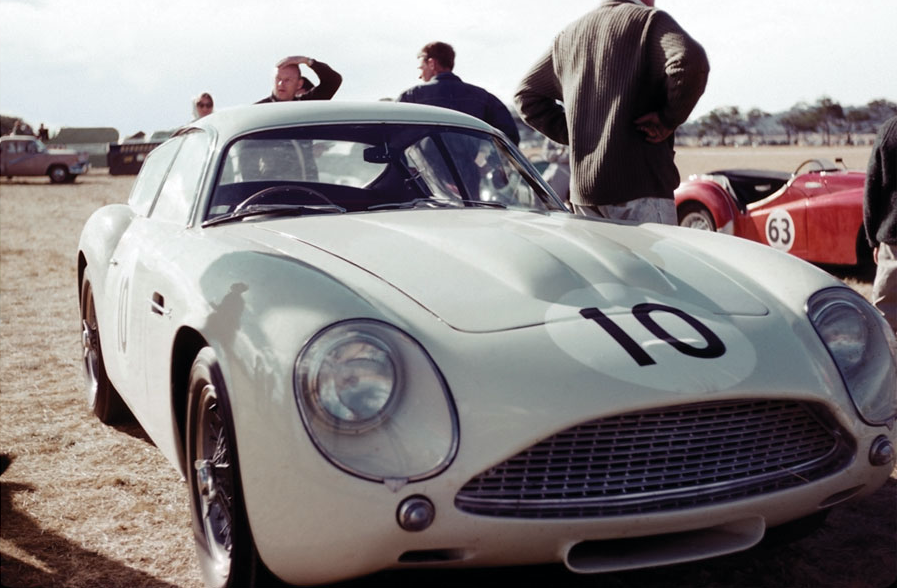
Among the surviving originals, chassis DB4GT/0186/R stands out for its particular history as the 14th of only 19 cars built. Completed in late 1961, it became the only original DB4 GT Zagato delivered new to Australia. Purchased by businessman and racing enthusiast Laurie O’Neill, the car quickly established itself as one of the country’s fastest grand touring machines.
Among the surviving originals, the chassis DB4GT/0186/R stands out for its particular history. Created in 1961, this model became the only DB4 GT Zagato delivered to Australia. It was purchased by businessman and racing enthusiast Laurie O’Neill, and made its racing debut during the 1962 Australian racing season with experienced driver Doug Whiteford. It gained status as one of Australia’s fastest sports cars after victories in GT competition with particularly impressive straight-line speed. The car also competed with renowned Australian driver Ian Geoghegan before racing regulation changes reduced its competitiveness. Fortunately, the 0186/R did not face heavy damage during its racing career, having the original Zagato body and engine largely intact.
A Life Across Continents
After its Australian competition years, the Aston Martin became privately owned and eventually made its way back to England for factory servicing and was passed through various collectors. It then made its way through Europe, ultimately entering the United States, where it took extensive restorations to preserve its historical authenticity and appearance. Kevin Kay Restorations, recognised for their Aston Martin restorations, made significant improvements to the vehicle. During their process, they placed emphasis on preserving its originals and sourcing period-correct pieces. Following its restoration, the DB4 GT Zagato claimed many successes, experiencing victory on the concours circuit and earning major awards at some of the world’s most prestigious automotive events, including Pebble Beach Concours d’Elegance and Villa d’Este.
Why Collectors Value Authenticity
Within the world of collector cars, originality is a highly regarded factor. Vehicles that retain their original engine, chassis and coachwork are seen as very rare, particularly in competition vehicles that endure racing incidents and require many repairs. Consequently, the chassis is particularly notable as it managed to retain a high degree of authenticity. In doing so, for collectors, this vehicle is seen as a historical artefact spanning six decades of racing.
A Lasting Legacy
The influence of the DB4 GT Zagato extends far beyond the original nineteen cars. Its success has continued to inspire Aston Martin and Zagato collaborations in the 21st century, including the more modern V8 Zagato, DB7 Zagato, Vanquish Zagato and the modern DBS GT Zagato. Each of these models pays tribute to the original partnership established in the early 1960s. Collectors and enthusiasts often cite the DB4 GT Zagato as the benchmark against which all Aston Martin special editions are measured.
The Pinnacle of Classic Motoring
The Aston Martin DB4 GT Zagato’s combination of motorsport heritage, design and engineering excellence has cemented its significance in the racing world. As chassis 0186/R prepares for another appearance on the international auction stage, it serves as a reminder that some automobiles transcend their mechanical purpose.
Written By: Leah Kim
Published On: 20th July 2026