
A collection connected to Paul Durand-Ruel, the visionary dealer who helped transform Impressionism from a misunderstood movement into an internationally accepted art form, will come to auction in Paris this October. The event will bring together artworks from acclaimed artists Claude Monet, Pierre-Auguste Renoir, Camille Pissarro and Alfred Sisley.
For more than a century, this remarkable group of Impressionist paintings has remained largely private within the Durand-Ruel family. This autumn, the collection will return to the spotlight as the Christie’s Paris auction releases artworks responsible for cementing Impressionism in the artworld.
Titled “Durand-Ruel: Generations of Vision,” the sale will feature around 60 works from the collection associated with the Durand-Ruel family. Alongside paintings by leading Impressionists, the auction will include works by later artists supported by the family.
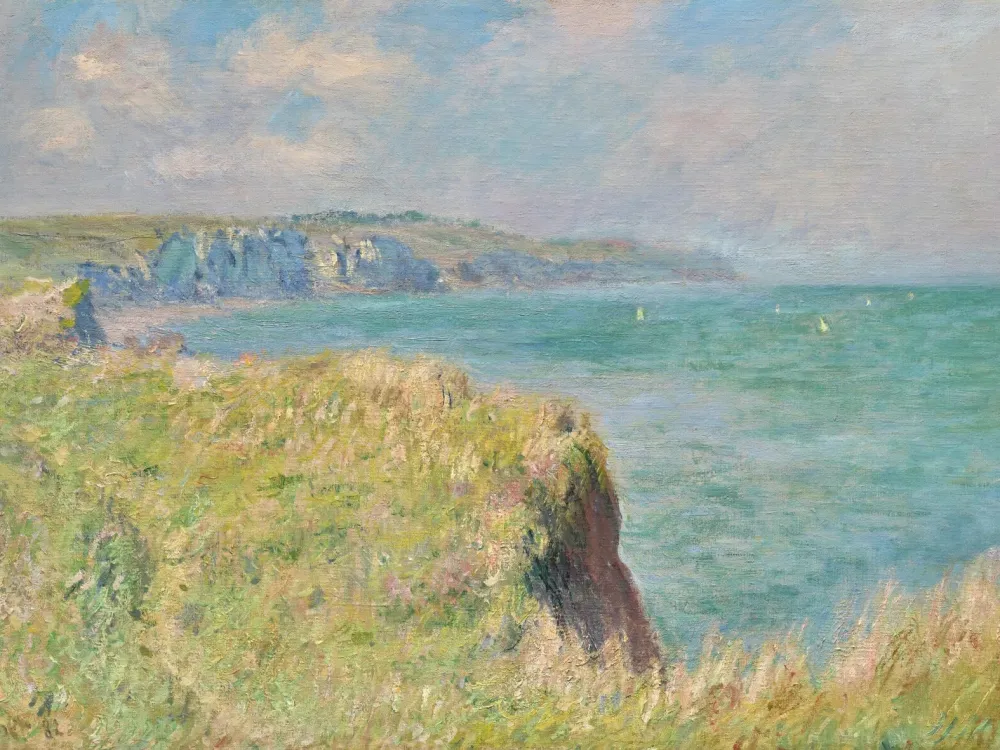
Among the key works is Claude Monet’s “Bord des falaises à Pourville” (1882), a coastal landscape created during an important stage of the artist’s career. Estimated at approximately €11 million to €15 million, the painting is set to be one of the major highlights of the Paris auction season. Yet the significance of the sale goes beyond its estimates.
The man who believed in the Impressionists
When Paul Durand-Ruel began supporting artists such as Monet, Renoir, Pissarro and Sisley in the late 19th century, Impressionism faced scepticism from much of the traditional art world. Its loose brushwork, unconventional compositions and focus on everyday moments challenged established ideas about what painting should be.
Durand-Ruel saw potential where many critics saw disruption. He purchased works directly from artists, provided financial support and organised exhibitions to introduce their paintings to new audiences. His approach changed the role of the art dealer, moving beyond simply selling works to actively shaping public taste.
His support proved especially important for Monet, whose early career was marked by financial struggles and uncertainty. By consistently acquiring works from Impressionist artists, Durand-Ruel helped provide a level of stability during a period when many collectors remained hesitant.
He also recognised that the movement needed an international audience. His exhibitions in the United States during the 1880s introduced Impressionism to American collectors, many of whom became important supporters of the style. That expansion helped establish the market for Impressionist art that continues to influence the art world today.
A rare glimpse into a historic collection
The upcoming Christie’s auction is significant because of the provenance attached to the works. Many of the paintings were acquired directly from the artists by Durand-Ruel and remained within the same family lineage for generations. In the art world, provenance is more than a record of ownership. It can provide a window into the cultural history surrounding a work, who believed in it, who collected it and how it travelled through time.
A Monet acquired by Durand-Ruel carries a different historical weight from an anonymous masterpiece that entered the market decades later. It reflects the relationship between artist and dealer, and the role that relationship played in shaping modern art. Several Monet works connected to Durand-Ruel’s own collection history demonstrate this importance. Earlier examples include Monet’s flower paintings created between 1882 and 1885, many of which were commissioned for the dealer’s Paris apartment. These works revealed Monet’s experimentation with still life and helped strengthen the artist’s reputation during a critical phase of his career.
Monet’s changing vision
The paintings heading to auction also capture an artist constantly evolving. By the early 1880s, Monet was moving away from simply recording scenes and increasingly exploring how atmosphere, weather and light transformed the appearance of the world. His landscapes from Normandy, including views around Pourville, show his growing fascination with nature as a constantly shifting subject.
Rather than painting objects as fixed forms, Monet sought to capture impressions, the changing colour of the sea, the movement of clouds, the effect of sunlight on cliffs and water. That approach became the foundation of Impressionism’s enduring appeal. Collectors today continue to respond to this combination of technical innovation and emotional immediacy. While the art market often focuses on rarity and price, Monet’s strongest works retain their power because they communicate a sense of time passing.
A major moment for the Paris art market
The auction arrives at a time when historic Impressionist works continue to attract intense international competition. Paris, long central to the story of Impressionism, is expected to benefit from renewed attention as collectors, museums and institutions gather around the sale.
The collection will be presented during the period surrounding Art Basel Paris, increasing its visibility among global buyers. Christie’s plans to display the works before the auction, allowing collectors to examine paintings that have spent much of their recent history away from public view.
For the auction house, the appeal lies not only in individual masterpieces but in the narrative connecting them. A Monet, Renoir or Pissarro from this collection is also a piece of the history of collecting itself.
More than a sale: the return of a legacy
The October auction is ultimately a tribute to Paul Durand-Ruel’s extraordinary gamble. During a time when Impressionist painters were struggling for acceptance, he invested in artists whose work challenged conventional ideas about art and technique. He did not simply sell paintings; he helped build a movement.
More than a century later, the works he supported generate some of the highest prices in the global art market. Yet their significance lies beyond auction records.
The paintings returning to Paris tell the story of artists who changed how people saw the world, and the dealer who quickly recognised that vision.
Written By: Leah Kim
Published On: 31st July 2026