
For much of the twentieth century, the South of France represented the pinnacle of European glamour. Artists, aristocrats, movie stars, and industrialists converged along the Côte d’Azur, drawn by its light, leisure, and unspoken codes of elegance. Over time, however, the Riviera’s dominance softened. New luxury centres emerged across the Middle East, Asia, and the Americas, offering novelty, scale, and spectacle. The French Mediterranean coast, by contrast, remained understated, rooted in tradition rather than reinvention.
Herritage as Strategy
The modern Riviera revival is grounded in heritage, but it is not driven by sentimentality. Instead, legacy is being treated as a strategic asset, one that differentiates the region from newer luxury destinations still in the process of constructing identity. Historic properties are undergoing sensitive restorations that preserve architectural integrity while quietly modernising interiors and services. Belle Époque villas, grand hotels, and waterfront estates are being repositioned for a new generation of ultra high net worth individuals who value discretion over display. These buyers are not seeking novelty for its own sake. They are seeking continuity, cultural legitimacy, and places with stories that cannot be replicated elsewhere.
This approach is visible across the region. In Cap d’Antibes and Saint Jean Cap Ferrat, heritage estates are commanding renewed attention, not as seasonal retreats but as long term residences. In Nice and Menton, historic urban cores are being revitalised with boutique developments that respect local character rather than overwrite it. The Riviera’s appeal lies precisely in its refusal to become placeless. Luxury here is contextual, anchored, and deeply European.
A New Chapter in Riviera Hospitality
Hospitality has emerged as one of the clearest indicators of the Riviera’s renewed relevance. Rather than an influx of large scale resorts, the region is attracting highly curated hotel concepts that prioritise intimacy, design, and place making.
Luxury hotel brands are approaching the South of France with restraint, favouring adaptive reuse and limited inventory over expansive footprints. The emphasis is on experience rather than volume, with properties designed to feel residential rather than performative. This aligns with shifting preferences among global travellers, particularly those who already have access to luxury everywhere and are now seeking differentiation through atmosphere and authenticity.
Seasonality, once seen as a limitation, is also being reframed. Extended cultural programming, wellness focused travel, and gastronomic tourism are lengthening the Riviera calendar beyond the traditional summer months. Michelin starred dining, vineyard driven excursions, and private cultural access are becoming central to the offering. The Riviera is no longer positioning itself as a place to be seen for a few weeks each year, but as a year round lifestyle destination for a globally mobile elite.
Real Estate and the Repricing of Permanence
Real estate remains the most tangible expression of the Riviera’s resurgence. Limited supply, strict zoning regulations, and geographic constraints have always underpinned property values along the Côte d’Azur. What is changing now is the buyer profile and the investment rationale.
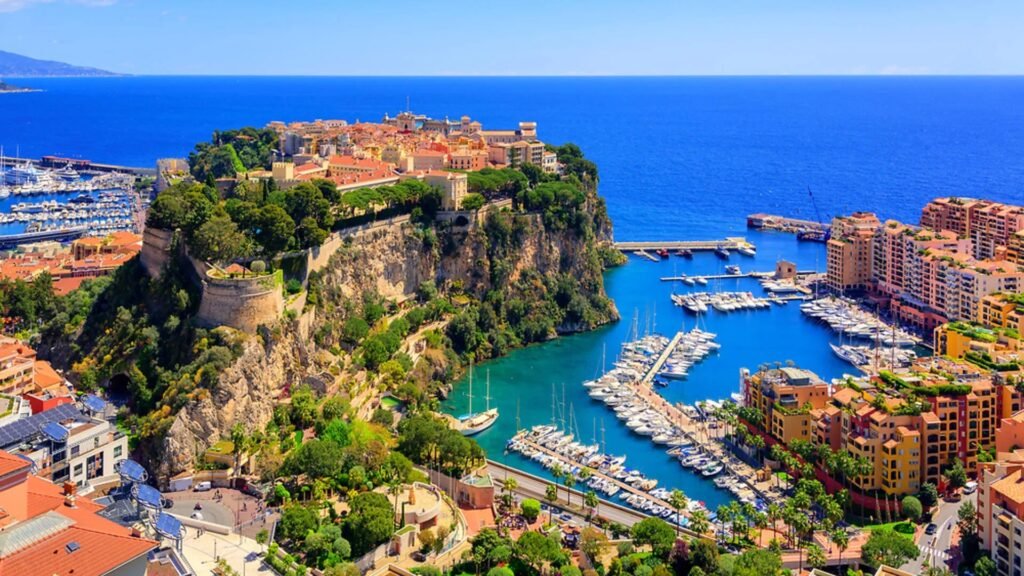
International buyers are increasingly viewing Riviera property not merely as a lifestyle purchase, but as a store of value in an era of geopolitical uncertainty. France’s legal stability, strong property rights, and cultural prestige offer a sense of permanence that newer markets struggle to match. Monaco continues to function as a financial and social anchor, while neighbouring French towns benefit from both proximity and comparative value.
Notably, demand is being driven less by speculative activity and more by long term ownership. Buyers are investing in restoration, sustainability upgrades, and architectural preservation, reinforcing the region’s enduring appeal. The Riviera is not chasing growth through expansion. It is reinforcing scarcity, and in doing so, strengthening its position as one of Europe’s most resilient luxury property markets.
Culture, Craft, and the Quiet Power of Influence
Perhaps the most compelling aspect of the Riviera’s return is its cultural repositioning. The region is reasserting itself as a centre of creative influence, not through mass events alone, but through sustained investment in art, craft, and intellectual capital.
Museums, private collections, and foundations are expanding their presence, while international galleries increasingly view the Riviera as a strategic outpost rather than a seasonal experiment. Fashion houses and luxury brands are hosting intimate presentations and private client experiences that prioritise depth over scale. These moments are not designed for spectacle, but for relationship building among the world’s most influential consumers. The Riviera’s cultural power lies in its subtlety. It does not seek to dominate global headlines, but to shape taste quietly, through proximity, access, and legacy. In an era where luxury is increasingly about belonging rather than visibility, this form of influence is more valuable than ever.
The South of France is not attempting to reinvent itself. It is refining, recalibrating, and reasserting the qualities that once made it the epicentre of European luxury. In doing so, it is responding precisely to the current moment in global wealth, one defined by discernment, discretion, and a renewed appreciation for permanence.
As luxury capitals proliferate around the world, the Riviera stands apart by offering something increasingly rare: a sense of continuity. Its glamour is not manufactured, its appeal not engineered for instant consumption. It is lived, layered, and enduring. And in today’s luxury landscape, that makes the South of France not just relevant again, but quietly dominant.
Written By: Mia Quisumbing
Published On: 12th December 2025