
Programme Solitaire’s latest commission is rumored to fuse the radical Bolide with the elegant Tourbillon, creating one of the most exclusive Bugattis ever conceived. For Bugatti’s most discerning clientele, exclusivity is no longer enough. The world’s wealthiest collectors increasingly seek vehicles that exist entirely outside traditional production lines, commissioning bespoke masterpieces tailored to their personal tastes. If recent reports prove accurate, Bugatti’s next Programme Solitaire creation may represent the purest expression yet of that philosophy.
A New Chapter in Automotive Coachbuilding
Bugatti’s Programme Solitaire division was established to cater to a rarefied group of clients who desire something beyond even the brand’s already limited-production hypercars. Drawing inspiration from the great coachbuilt automobiles of the early twentieth century, the program allows customers to work closely with designers and engineers to create singular machines that will never be replicated.
The initiative has already produced two headline-grabbing creations. The first, the Brouillard, made its debut during Monterey Car Week and demonstrated the extent to which Bugatti was willing to tailor a vehicle to a collector’s vision. It was followed by the F.K.P. Hommage, a tribute that celebrated both the company’s heritage and its modern engineering capabilities.
Now, attention is turning to what could become Programme Solitaire’s third project, a rumored one-off that blends design cues from two of Bugatti’s most fascinating modern machines: the Bolide and the Tourbillon.
The Best of Two Hypercar Worlds
According to reports emerging from sources close to the project, the upcoming commission may combine elements from the track-only Bolide and the recently unveiled Tourbillon. While Bugatti has yet to confirm any details, the concept alone is enough to ignite excitement among enthusiasts and collectors alike.
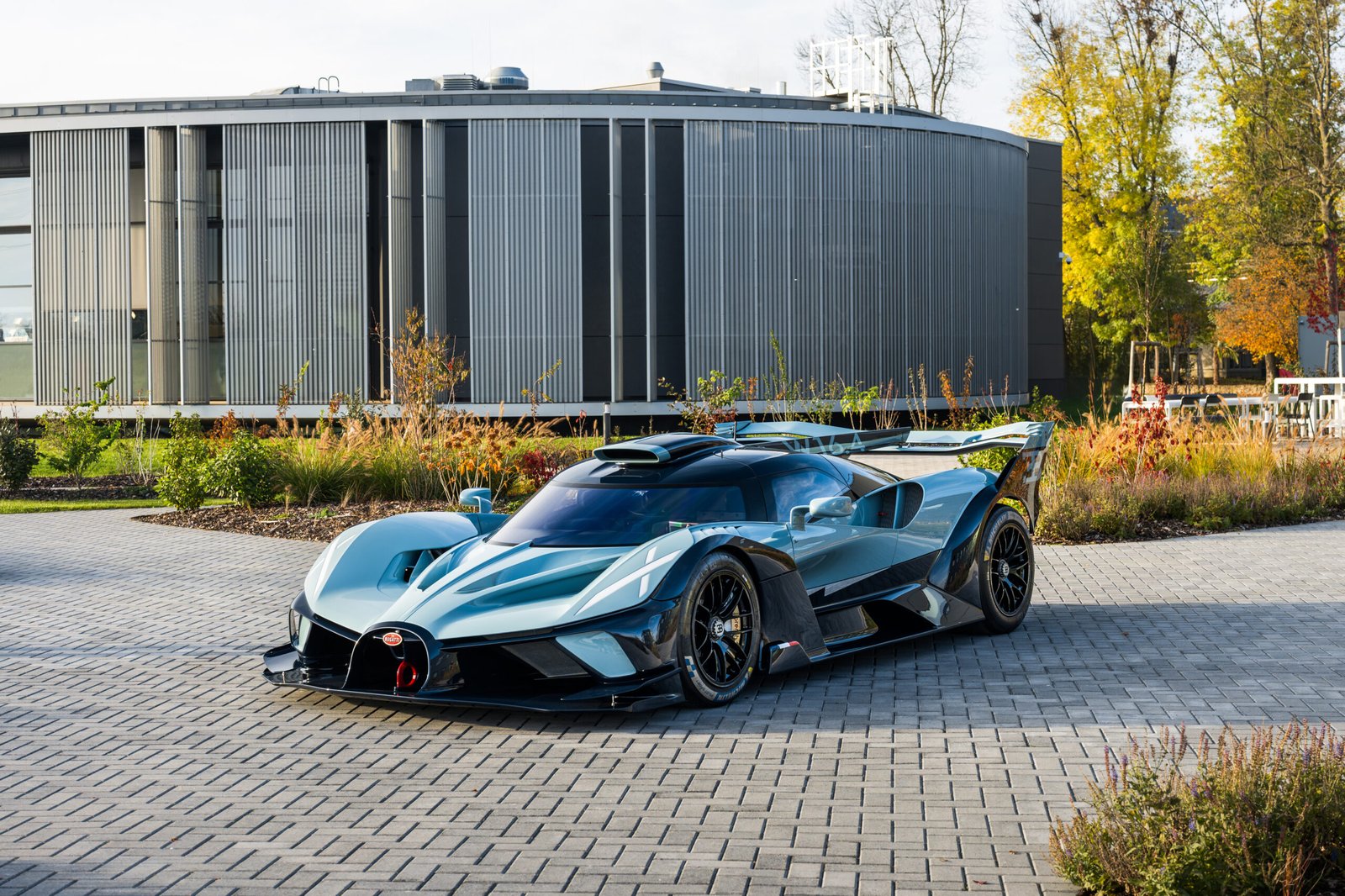
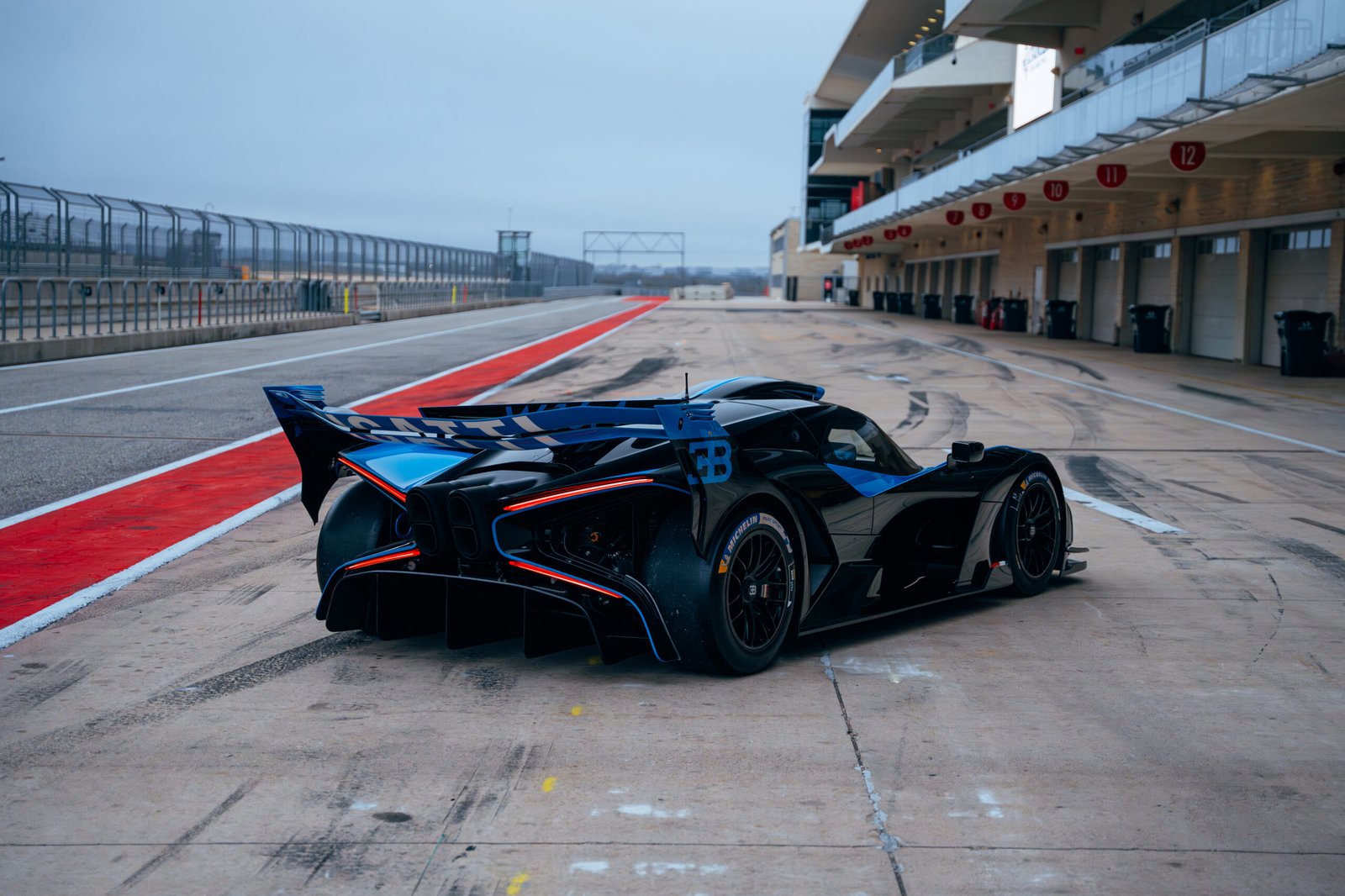
The Bolide represents perhaps the most extreme expression of Bugatti performance ever produced. Designed solely for the racetrack, its aerodynamic bodywork appears sculpted by airflow itself. Every surface serves a purpose, resulting in a machine that looks less like a conventional automobile and more like a futuristic endurance racer.
Among its most recognizable features is an aggressive lighting signature characterized by X-shaped graphics that emphasize the car’s uncompromising personality. Lightweight construction, exposed aerodynamic elements, and an almost skeletal appearance make the Bolide one of the most visually dramatic vehicles the company has ever built.
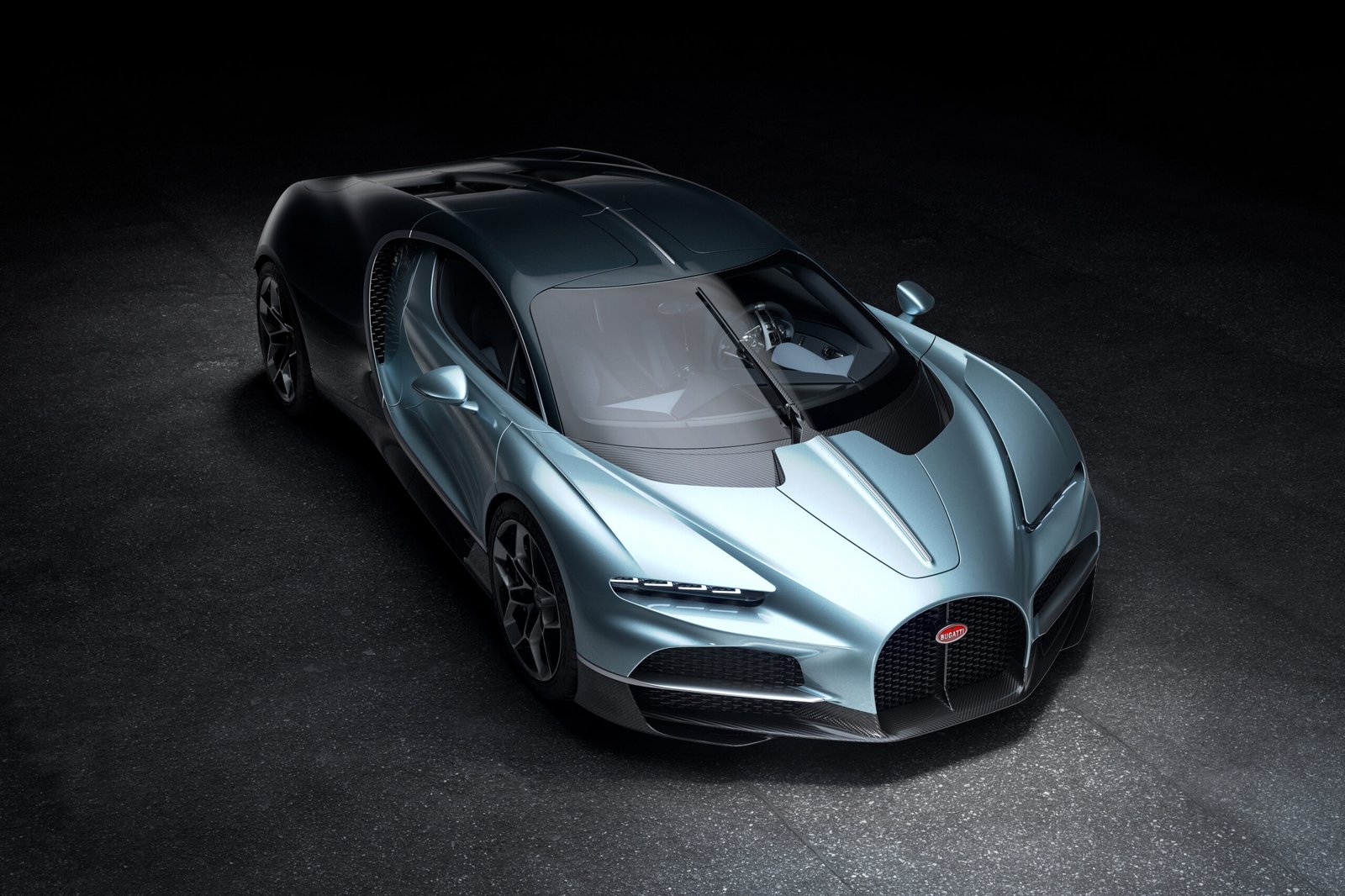
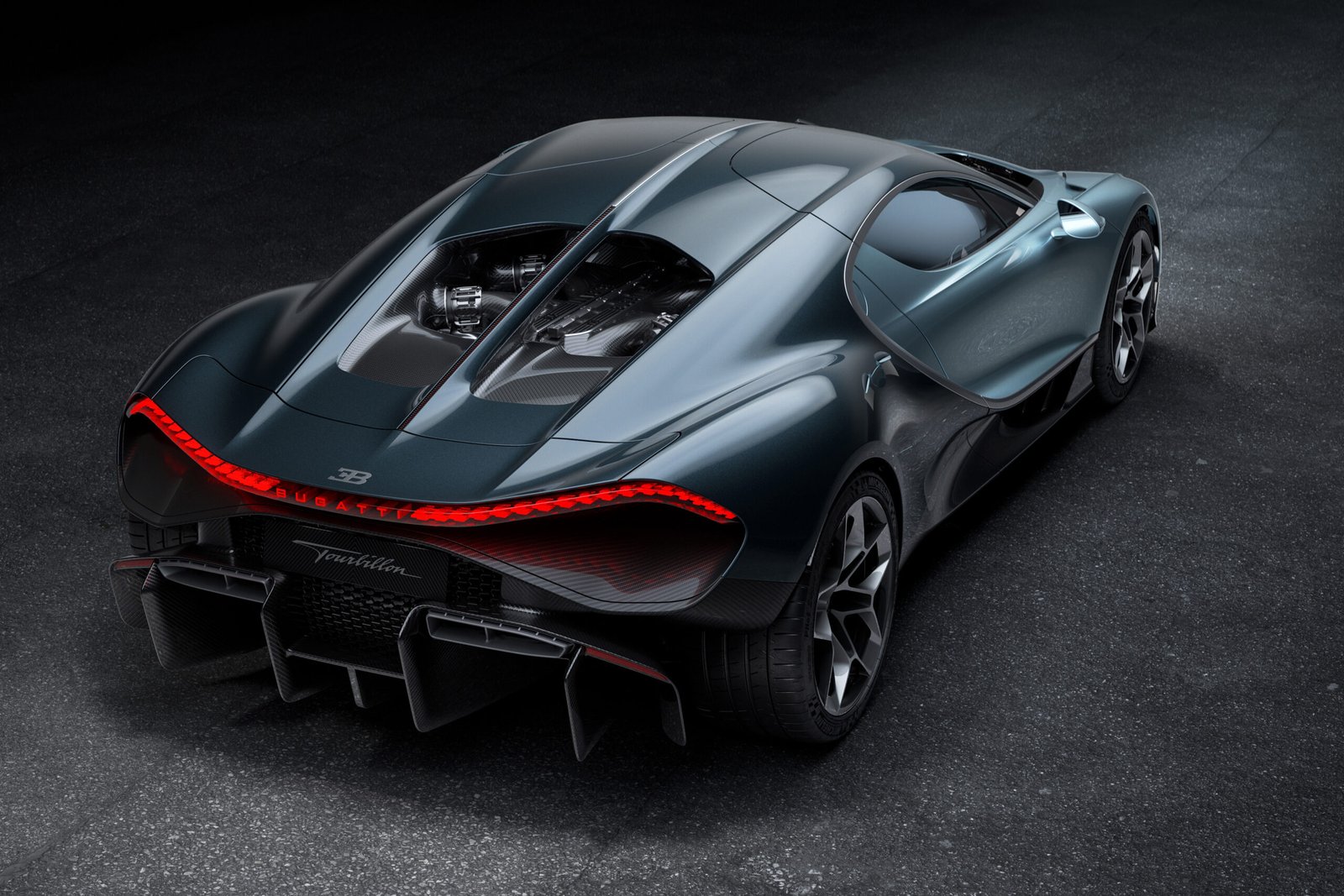
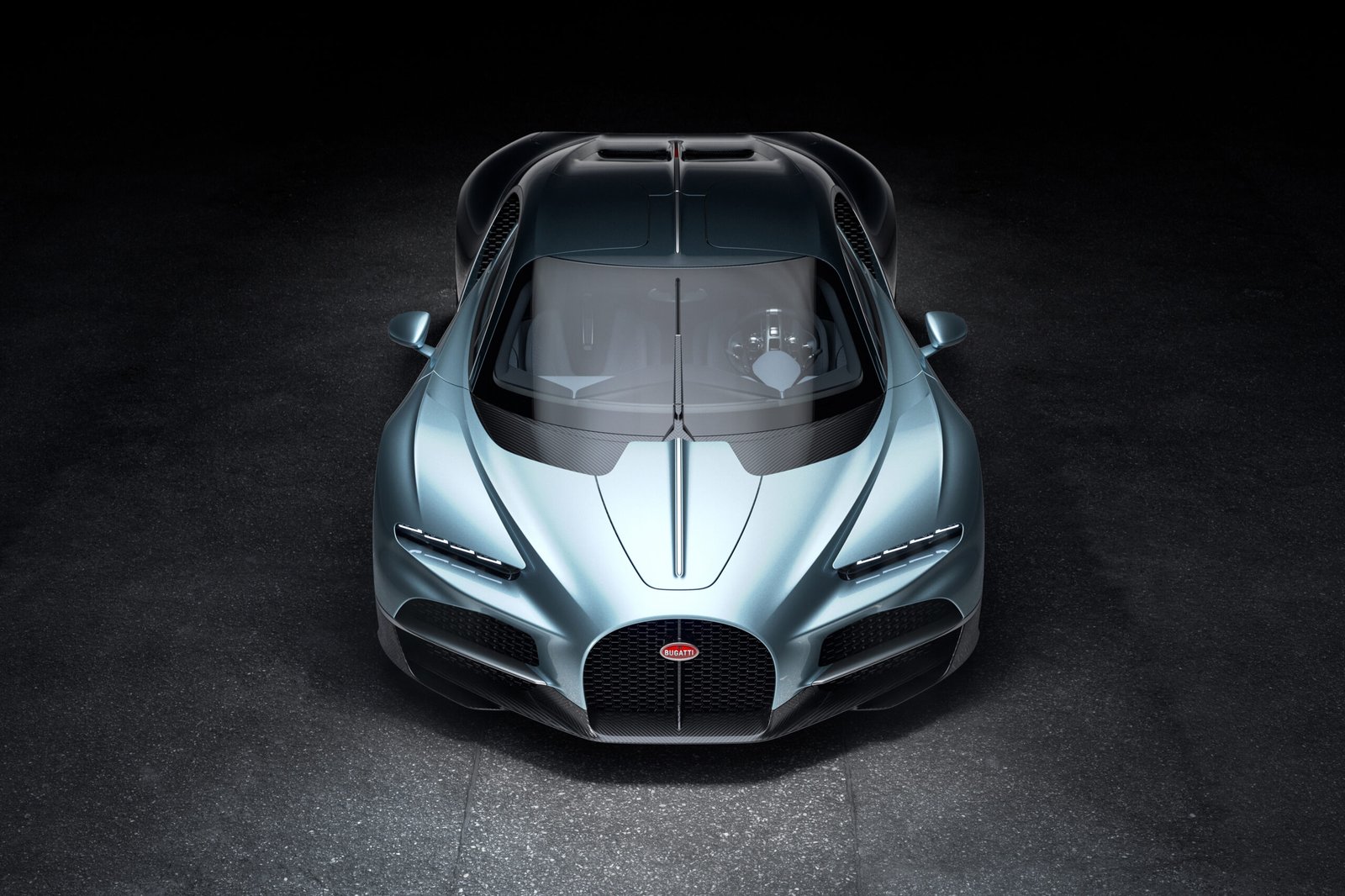
The Tourbillon, by contrast, embraces a different interpretation of modern luxury and performance. Introduced as the successor to the Chiron, it marked the beginning of a new era for the French marque. While still unmistakably Bugatti, the Tourbillon adopts a more refined and sculptural design language.
Its defining features include a wider horseshoe grille, elegant proportions, and a remarkable instrument cluster crafted from titanium and sapphire glass. Inspired by haute horology, the display resembles a mechanical timepiece as much as an automotive component, reinforcing Bugatti’s long-standing relationship with craftsmanship and artistry.
A fusion of these two philosophies could result in something truly extraordinary. Imagine the raw visual aggression of the Bolide combined with the sophistication and technical elegance of the Tourbillon. Such a creation would not simply bridge two models. It would embody the full spectrum of Bugatti’s modern identity.
The Return of a Legend?
Perhaps the most intriguing aspect of the rumored project concerns what lies beneath the bodywork.
Reports suggest the new Programme Solitaire model may once again be built upon the Chiron platform, following the precedent established by previous coachbuilt creations. If true, the car could retain one of the most celebrated powerplants in automotive history: Bugatti’s 8.0-liter quad-turbocharged W16 engine.
For years, the W16 served as the centerpiece of Bugatti’s engineering achievements. It powered landmark models ranging from the Veyron to the Chiron and became synonymous with extraordinary performance. When the company unveiled the Tourbillon, many assumed the chapter had officially closed on the iconic engine.
The Tourbillon introduced an entirely new powertrain architecture centered around a naturally aspirated 8.3-liter V16 engine paired with three electric motors. The hybrid setup represented a bold technological leap forward and signaled Bugatti’s future direction.
Yet Programme Solitaire exists outside the conventional product cycle. Its purpose is not merely to preview future technologies but to fulfill the fantasies of individual collectors. If a client desires a final interpretation of the W16, Bugatti now possesses a platform through which that vision can become reality.
For enthusiasts, the prospect is tantalizing. A bespoke hypercar that combines cutting-edge design influences with one of the greatest combustion engines ever produced would instantly become one of the most significant collector cars of the decade.
The New Currency of Exclusivity
The rise of programs such as Programme Solitaire reflects a broader shift occurring at the highest levels of the luxury market.
For many ultra-high-net-worth buyers, ownership of a limited-production supercar no longer provides sufficient distinction. Even vehicles produced in runs of fewer than one hundred examples can feel commonplace within elite collecting circles.
Coachbuilt commissions offer something far rarer: absolute uniqueness.
By collaborating directly with manufacturers, collectors gain the opportunity to influence everything from design themes and materials to historical inspirations and engineering details. The resulting vehicles become personal statements as much as transportation devices.
This trend has gained momentum across the luxury automotive sector, but Bugatti appears uniquely positioned to capitalize on it. The brand’s heritage is deeply rooted in artistry, craftsmanship, and individuality. Founder Ettore Bugatti famously approached automobile creation as an artistic endeavor, and Programme Solitaire can be viewed as a modern continuation of that philosophy.

A Price Beyond Rationality
As with previous Programme Solitaire projects, pricing remains a closely guarded secret. However, exclusivity on this level rarely comes cheaply.
Industry reports have suggested that the F.K.P. Hommage carried a price tag exceeding $20 million. If the upcoming commission proves even more ambitious, it could command an even greater sum.
Of course, for the individuals capable of commissioning such vehicles, cost is rarely the primary consideration. The true value lies in possessing something that no one else can own.
In a world where luxury increasingly revolves around rarity rather than abundance, a one-of-one Bugatti occupies a category all its own.
Awaiting the Reveal
Fortunately, enthusiasts may not have to wait long to learn more. When Bugatti introduced Programme Solitaire, company executives indicated that the division would likely create just one or two vehicles per year.
That timeline suggests the latest commission could be unveiled before the end of 2026 and potentially much sooner.
Until then, speculation will continue to swirl around what may become one of the most fascinating automotive creations in recent memory. Whether it ultimately emerges as a Bolide and Tourbillon hybrid, a tribute to Bugatti history, or something entirely unexpected, one thing seems certain: the next Programme Solitaire project is poised to push the boundaries of automotive exclusivity even further. For a select few collectors, owning a Bugatti is no longer the ultimate aspiration. Creating one is.
Written By: Lydia Kelly
Published: 9th June 2026