
The exhibition centred on the Cartier house offers visitors an immersive journey into the history, craftsmanship, and cultural influence of one of the world’s most recognisable jewellery maisons. By presenting Cartier not merely as a luxury brand but as a significant cultural force, the exhibition reframes jewellery as both artistic expression and historical artifact.
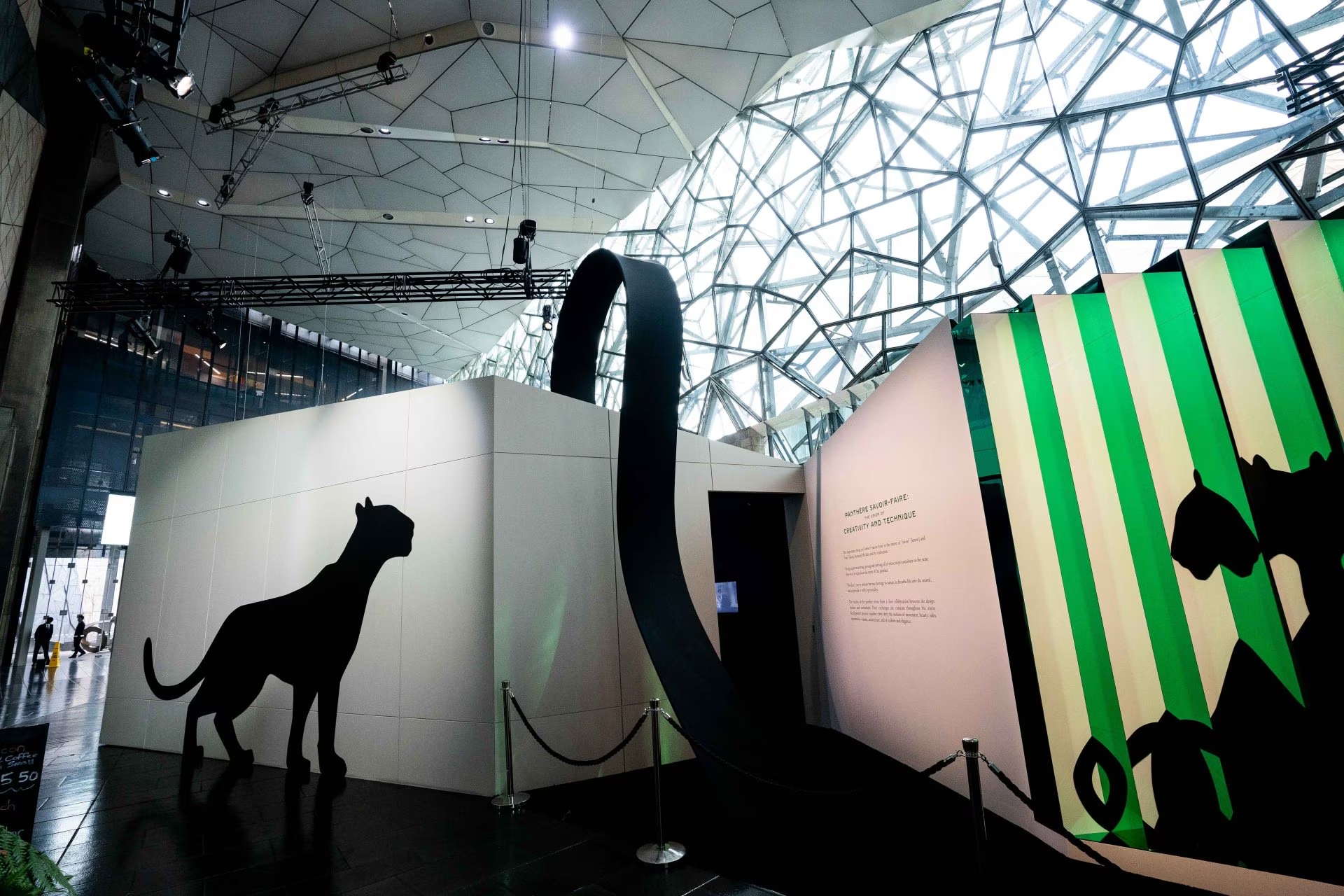
Over the past two decades, the National Gallery of Victoria (NGV) Winter Masterpieces series has transformed how major international collections are experienced in Australia. It has also reshaped Melbourne’s identity as a global cultural hub. Each winter, the NGV presents large-scale exhibitions drawn from leading international institutions, allowing Australian audiences to engage with works that would otherwise require overseas travel. In doing so, the series has become a defining feature of Melbourne’s cultural calendar and reinforces the city’s status as a centre for the arts.
By focusing on Cartier’s legacy, the exhibition elevates jewellery beyond objects of luxury and positions it within broader cultural, technological, and social histories. The evolution of aesthetic styles, innovations in design, and shifting cultural meanings are all revealed through the collection.
The NGV Winter Masterpieces Tradition
The Winter Masterpieces series was established in the early 2000s by the National Gallery of Victoria to attract significant international exhibitions to Melbourne. It has since grown into one of Australia’s most important annual cultural events, developed in collaboration with major institutions such as the Louvre and the Musée d’Orsay.
Unlike standard exhibitions, Winter Masterpieces presentations are large-scale, immersive experiences that often take years of planning. They typically feature canonical works of art history, including Renaissance painting and Impressionism, while also expanding into design, fashion, and decorative arts. This broader scope makes the series particularly well suited to exhibitions such as Cartier, where jewellery, watches, and decorative objects can be understood as expressions of artistic innovation as well as luxury consumption.
Cartier: Modern Luxury and Design
Founded in Paris in 1847, Cartier has long been associated with innovation in jewellery and watchmaking. The house built its early reputation among European aristocracy before expanding into global luxury markets in the twentieth century.
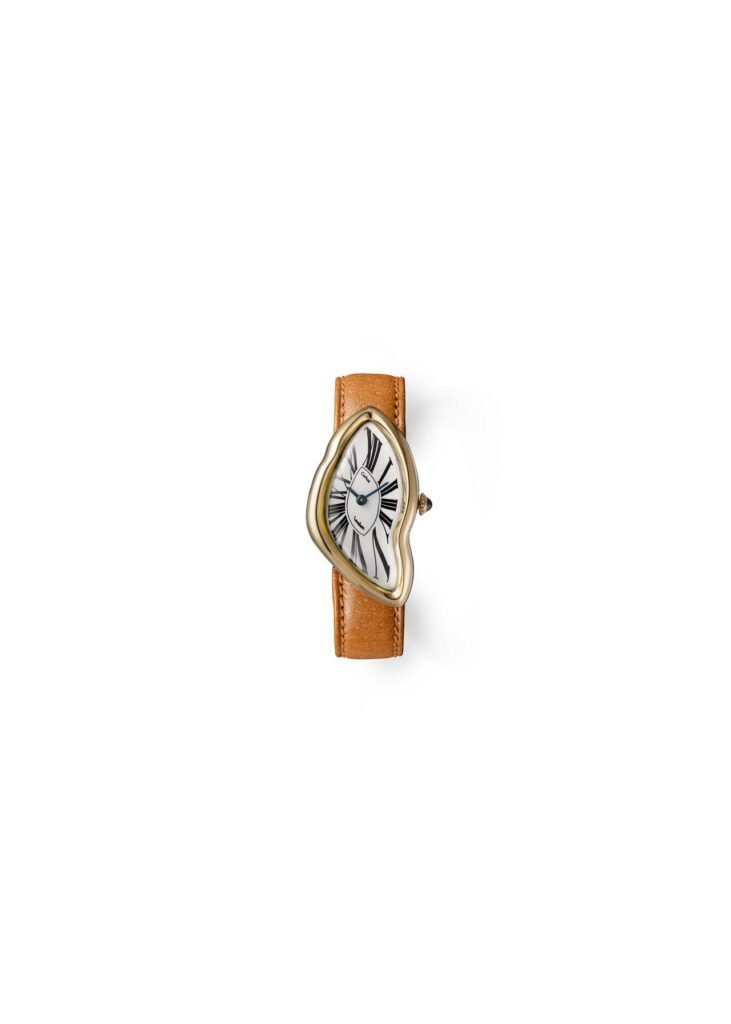
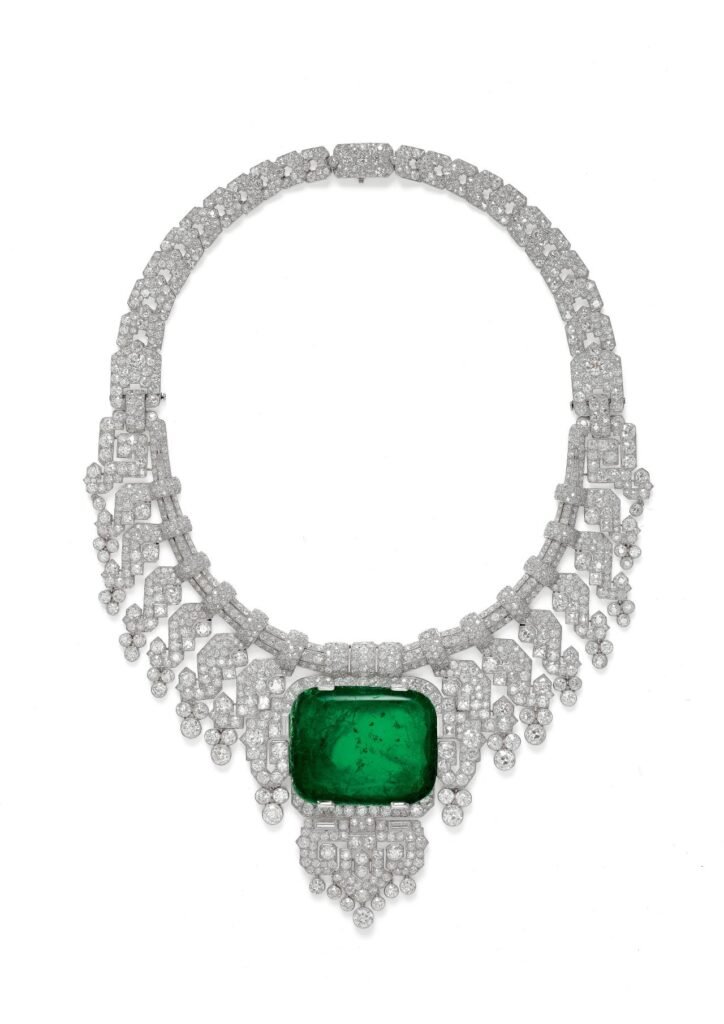
Cartier developed a distinctive design language characterised by geometric forms influenced by Art Deco principles. Its use of colour—particularly emeralds, sapphires, and rubies—was bold and experimental compared to more traditional jewellery styles. At a time when jewellery often followed ornate conventions, Cartier explored abstraction, symmetry, and modernity.
The maison’s international identity was shaped through its workshops in Paris, London, and New York, as well as through its engagement with global design influences. Motifs drawn from Indian Mughal art and Persian aesthetics contributed to its evolving visual vocabulary and helped define a new concept of modern luxury.
Curatorial Concept and Exhibition Vision
The Cartier Winter Masterpieces exhibition is structured as a narrative journey through more than a century of design evolution. It brings together nearly four hundred objects, including watches, clocks, tiaras, jewellery, and archival drawings.
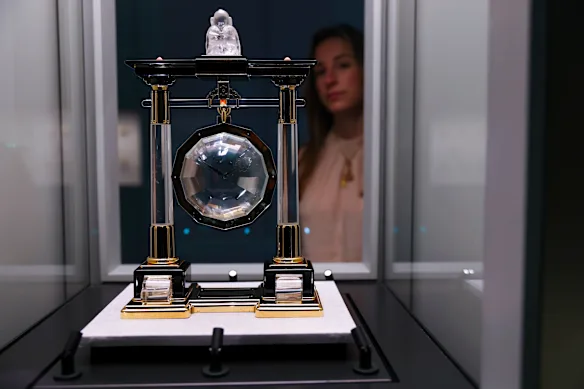
A central curatorial idea is Cartier as a “design laboratory,” where experimentation with materials, forms, and techniques is a continuous process. Iconic creations such as the mystery clock demonstrate this spirit of innovation, with mechanisms that appear to defy conventional understanding and blur the boundary between function and art.
The exhibition also situates Cartier within broader historical and political contexts. Mid-century designs reflect globalisation and cultural exchange, while Art Deco works embody the optimism and modernism of the 1920s. Cartier is presented as a globally networked house, operating across Europe, America, and the Middle East, adapting its designs to different cultural settings while maintaining a coherent identity.
Key Themes Across the Exhibition
The exhibition explores several major themes, including royal patronage, the Art Deco movement, global cultural exchange, innovation in timekeeping, and contemporary brand identity.
Cartier’s early connections to European royalty are represented through ceremonial objects such as tiaras and formal jewellery, highlighting both technical mastery and stylistic experimentation. The Art Deco period stands out as one of Cartier’s most influential eras, defined by strong geometry, contrasting colours, and architectural composition. Materials such as diamonds and onyx are frequently used to create striking visual effects.
Global influences are also a major focus. Indian jewellery traditions, particularly carved gemstones and floral motifs, inspired Cartier’s “Tutti Frutti” style. The exhibition acknowledges both the artistic value of these works and the complex cultural histories embedded within them.
Ornamental clocks and timepieces further demonstrate Cartier’s ability to merge function with sculpture, transforming everyday objects into works of art. The exhibition concludes with contemporary designs that reflect Cartier’s ongoing reinterpretation of its heritage in modern contexts.
Craftsmanship and Technique
A major strength of the exhibition is its emphasis on craftsmanship and production techniques. Visitors are given insight into processes such as stone selection, hand engraving, and setting methods.
Cartier’s workshops combine traditional artisanal expertise with modern technology. While many foundational techniques remain unchanged, advances in gemology and digital modelling have expanded the possibilities of design, creating a dialogue between historical craft and contemporary innovation.
By presenting jewellery as an applied art form, the exhibition highlights its role within broader cultural narratives. These objects function not only as luxury items but also as symbols of identity, memory, status, and artistic expression.
Visitor Experience at the NGV
The exhibition is designed to be immersive, with careful attention to lighting, spatial arrangement, and sound design. Interactive and educational features often include digital gemstone magnification, behind-the-scenes workshop footage, and historical timelines that situate Cartier within global art history.
Visitors are encouraged to engage closely with each object, appreciating scale, detail, and craftsmanship. Through this experience, the NGV reinforces the idea that decorative arts and design deserve the same scholarly attention traditionally reserved for painting and sculpture.
A Winter Masterpiece
The Cartier Winter Masterpieces exhibition challenges conventional boundaries between art, design, and luxury. By situating Cartier’s legacy within the context of the National Gallery of Victoria’s curatorial program, the exhibition invites audiences to reconsider what belongs in museum spaces and what constitutes art.
Ultimately, it presents jewellery not only as a marker of beauty and prestige but also as a powerful cultural document—one that reflects history, identity, and artistic innovation across time.
Written By: Maeve Green
Published On: 11th June 2026