
Artificial intelligence is no longer a futuristic concept for the beauty industry. It is reshaping everything from scientific discovery and product development to personalised shopping experiences and digital creativity. With its landmark collaboration with OpenAI announced at VivaTech 2026, L’Oréal is accelerating a long-term strategy that combines beauty, science and technology to redefine how consumers experience beauty and how innovation reaches the market.
Beauty Tech at the Core of L’Oréal’s Strategy
For more than a century, L’Oréal has built its reputation on scientific research and product innovation. Today, the company’s vision extends well beyond laboratories and cosmetics counters, positioning technology as a driving force behind the next generation of beauty.
At the centre of this evolution is L’Oréal’s Beauty Tech strategy, which focuses on three key principles: personalisation, inclusivity and responsibility. Rather than developing technology for its own sake, the company aims to create digital experiences and scientific solutions that better meet the individual needs of consumers while supporting sustainability and creativity.
This philosophy has already produced a series of groundbreaking innovations. L’Oréal Paris Beauty Genius has introduced AI-powered beauty advice tailored to individual users, while HAPTA has reimagined makeup application with an assistive device designed to improve accessibility for people with limited hand and arm mobility. HairLight Pro, meanwhile, demonstrates how advanced technology can elevate professional hair colour services through greater precision and performance.
Together, these innovations illustrate how Beauty Tech has become a defining pillar of L’Oréal’s long-term strategy rather than a standalone initiative.
A Landmark Collaboration with OpenAI
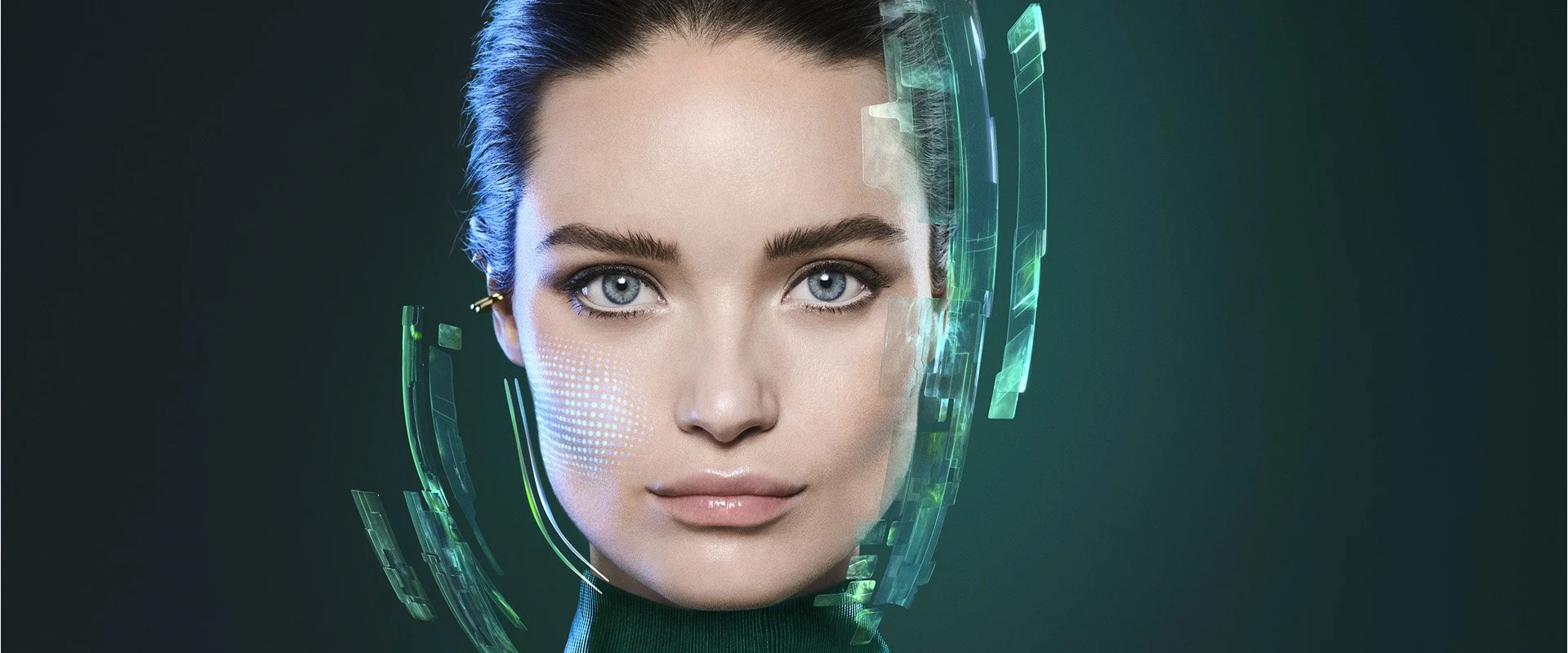
The company’s latest partnership with OpenAI represents one of its most ambitious technology collaborations to date.
Announced during VivaTech 2026 in Paris, the agreement positions OpenAI as a foundational partner in L’Oréal’s Transformative AI roadmap, supporting both consumer experiences and internal innovation across research, marketing and content creation.
The collaboration reflects a broader shift taking place across luxury and beauty, where artificial intelligence is becoming an essential creative and scientific tool. Rather than replacing human expertise, AI is increasingly being used to enhance decision making, accelerate discovery and create more personalised experiences at scale.
For L’Oréal, the partnership supports three long-term priorities: enriching consumer experiences, empowering employees with advanced AI capabilities and embedding artificial intelligence throughout the organisation.
Reinventing the Beauty Shopping Experience
One of the most immediate benefits for consumers will be the integration of L’Oréal’s beauty expertise into conversational AI.
Maybelline New York will introduce its Makeup Virtual Try-On technology directly within ChatGPT, powered by L’Oréal’s ModiFace platform. Consumers will be able to explore makeup looks, receive recommendations and virtually test products through natural conversation, creating an experience that feels more like speaking with a beauty consultant than browsing an online catalogue.
The collaboration also strengthens product discovery for several of L’Oréal’s leading brands, including Lancôme and Kérastase, making it easier for users in the United States to find products through intelligent recommendations within ChatGPT.
This marks an important step towards what the industry increasingly describes as agentic commerce, where AI actively guides consumers through discovery, comparison and purchasing decisions in a highly personalised way.
The approach reflects changing consumer expectations, particularly among digitally connected shoppers seeking tailored recommendations that save time while delivering greater confidence in their purchasing decisions.
The Rise of AI-Native Beauty Marketing
Beyond product discovery, L’Oréal is also exploring how artificial intelligence can reshape digital marketing itself.
Brands including SkinCeuticals, CeraVe and Garnier are participating in ChatGPT’s global advertising pilot, designed to deliver relevant product recommendations when consumers are actively seeking information or considering a purchase.
Unlike conventional digital advertising, AI-native experiences have the potential to provide more meaningful interactions by responding directly to individual questions, skincare concerns or beauty goals. Rather than interrupting the customer journey, these recommendations become part of an ongoing conversation, creating a more intuitive and personalised shopping experience.
As conversational AI continues to evolve, this approach could redefine how beauty brands engage with consumers across digital platforms.
Accelerating Scientific Discovery
While AI is transforming customer experiences, some of its greatest potential lies within scientific research.
L’Oréal is using GPT-Rosalind, OpenAI’s purpose-built reasoning model for life sciences, to analyse the skin microbiome at unprecedented scale. Home to millions of beneficial microorganisms, the microbiome plays a vital role in maintaining healthy skin and has become one of the most exciting areas of dermatological research.
By rapidly processing complex biological data, researchers can identify beneficial bacteria that may support the development of safer, more effective and increasingly natural skincare formulations. Initial research will focus on La Roche-Posay, with discoveries expected to influence future product innovation across L’Oréal’s skincare portfolio.
The project also complements the company’s long-standing commitment to Green Sciences, an initiative that combines biotechnology, agronomy, green chemistry and advanced formulation to develop sustainable beauty solutions. By integrating artificial intelligence with environmental research, L’Oréal aims to accelerate innovation while preserving biodiversity and reducing its environmental footprint.
Empowering Creativity Through Artificial Intelligence
Artificial intelligence is also transforming the creative side of L’Oréal’s business.
Its in-house content platform, CreAItech, will harness OpenAI’s latest models to generate imagery and video that remain faithful to each brand’s heritage and visual identity. Rather than replacing designers, marketers and creative teams, the technology is designed to support them by streamlining production, accelerating concept development and enabling greater personalisation across global campaigns.
For a company managing dozens of internationally recognised brands, AI provides the ability to deliver consistent storytelling across multiple markets while allowing creative professionals to focus on strategy, innovation and brand building.
This philosophy reflects L’Oréal’s broader view that technology should amplify human creativity rather than diminish it.
Building an AI-Ready Organisation
Behind every technological breakthrough is an equally significant investment in people.
L’Oréal has already trained more than 73,000 employees in generative artificial intelligence, equipping teams with internal platforms including L’OréalGPT and personalised AI assistants that support day-to-day work across research, marketing, product development and operations.
The company also continues to strengthen its open innovation ecosystem through collaborations with startups, research institutions and technology partners. Partnerships with organisations such as Station F, Founders Factory and Partech Ventures have helped accelerate new ideas in digital beauty, while regional innovation programmes continue to encourage collaboration with emerging entrepreneurs around the world.
The addition of OpenAI to this growing network reinforces L’Oréal’s commitment to remaining at the forefront of technological innovation while fostering a culture of continuous learning across the organisation.
The Future of Beauty Is Intelligent
As beauty becomes increasingly personalised, connected and science driven, artificial intelligence is emerging as one of the industry’s most powerful catalysts for change.
For consumers, that means smarter recommendations, more immersive virtual experiences and products informed by deeper scientific understanding. For researchers, AI offers the opportunity to unlock discoveries that could transform skincare and sustainability. For creative teams, it provides new ways to tell stories while preserving the craftsmanship and heritage that define some of the world’s most iconic beauty brands.
L’Oréal’s collaboration with OpenAI is more than a technology announcement. It represents the next chapter in a much broader vision where science, sustainability, creativity and artificial intelligence work together to shape the future of beauty. As digital innovation continues to evolve, the company is positioning itself not simply to adapt to change, but to lead it.
Witten By: Lydia Kelly
Published: 30th June 2026