
More than six decades ago, a small Picasso disappeared from a university building in Pittsburgh. There were police reports, an FBI investigation, newspaper coverage and a reward for information. None of it recovered the painting. Then, in 2023, the work resurfaced in the most unlikely of places: the art market. Now, the Solomon R. Guggenheim Foundation is taking the case to court.
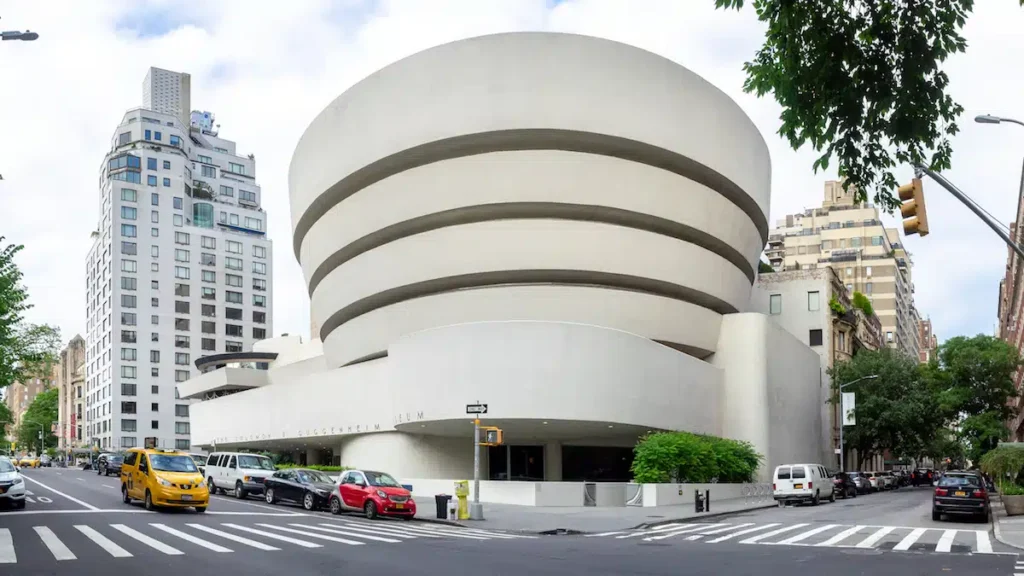
The painting at the centre of the dispute is Pablo Picasso’s Femme dans un fauteuil (Woman in an Armchair), an oil from 1918 that had been lent by the Guggenheim to the University of Pittsburgh. The museum says the work was stolen from the university’s Students Union building on February 6, 1961. More than 60 years later, the Guggenheim has filed a lawsuit in New York seeking its return from the Massachusetts couple who purchased it decades after its disappearance.
The case is a remarkable reminder that in the art world, a work can disappear physically without ever disappearing from its history. Provenance, the documented chain of ownership surrounding an artwork, can remain embedded in catalogues, archives and institutional records long after the object itself has vanished.
A Picasso disappears in Pittsburgh
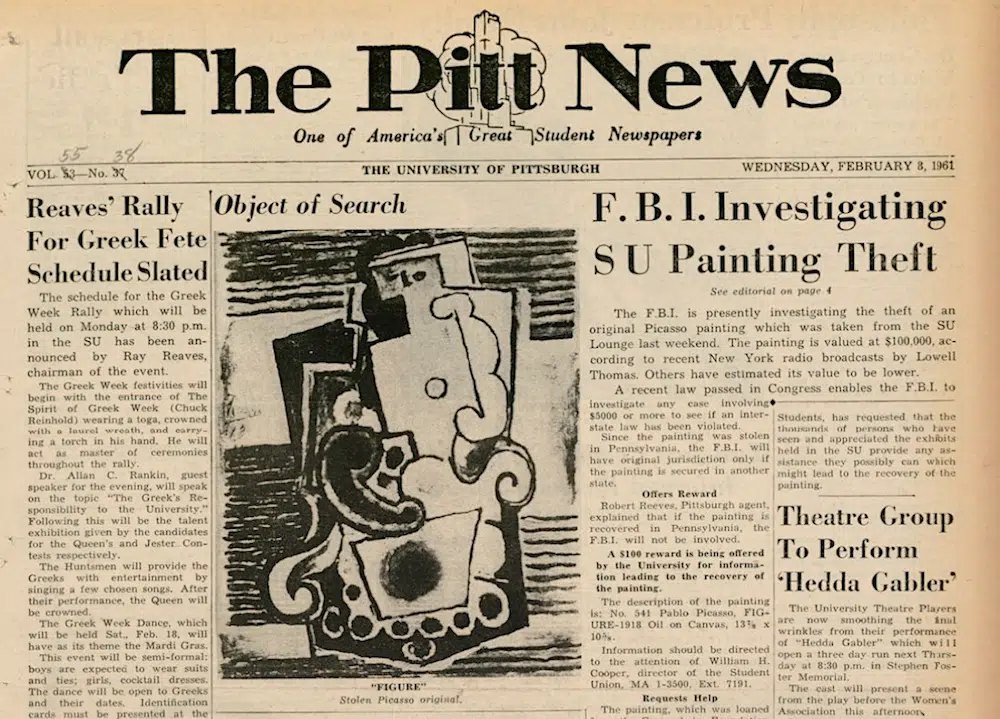
The story begins in the winter of 1961. Femme dans un fauteuil, painted in 1918, was on loan from the Guggenheim to the University of Pittsburgh for an exhibition during the autumn semester. The modestly sized painting measures approximately 13.5 by 10.5 inches and was scheduled to return to the museum later that month. Instead, it disappeared from the university’s Students Union building.
A graduate student and dormitory aide reported the painting missing on February 6. The theft was immediately treated as a serious matter. Pittsburgh police investigated, and the FBI became involved. News reports circulated, museums and other institutions were alerted, and a reward was offered for information.
There was no dramatic recovery, no suspect publicly identified and no explanation for how the Picasso had left the building. For decades, the painting effectively became an art-world ghost: a work that was known to exist, recorded in institutional histories, but absent from view.
A work from Picasso’s early years
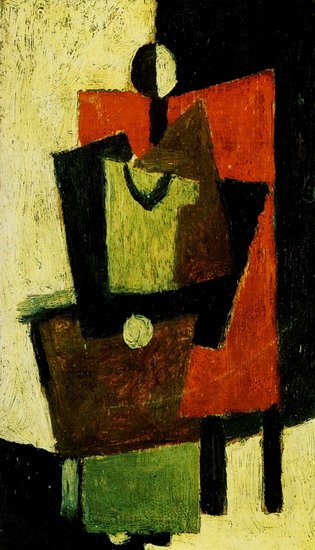
Femme dans un fauteuil dates to 1918, a period when Picasso was moving between different artistic languages following the radical innovations of Cubism.
The painting belongs to the artist’s explorations of the female figure and the seated woman, a subject he would return to repeatedly throughout his career. Its creation also places it within a particularly interesting moment in Picasso’s life.
He had married the Russian ballerina Olga Khokhlova earlier that year, and the couple spent part of their honeymoon near Biarritz. According to the Guggenheim’s history of the work, the painting was made during this period.
The subject is familiar within Picasso’s oeuvre: a woman transformed through the artist’s increasingly fragmented approach to form. But the significance of this particular painting is not simply its place in Picasso’s artistic development. Its provenance is unusually well documented.
Solomon R. Guggenheim, the industrialist and collector whose collection became the foundation of the Guggenheim institution, acquired the work in 1936 from Gallery Zwemmer in London. The painting was subsequently recorded as belonging to Guggenheim in Christian Zervos’s catalogue raisonné of Picasso’s work, published in 1949.
The painting reappears
For more than 60 years, there was apparently no confirmed public trace of Femme dans un fauteuil. Then came July 2023. A researcher at Christie’s was examining the painting in connection with a potential private sale when the work’s provenance raised a crucial question. The painting was identified as the missing Picasso, and the Guggenheim was alerted.
The discovery transformed a decades-old mystery into a modern ownership dispute. The current owners are Lawrence Jay Handler and Wendy Cohen Handler, Massachusetts residents who, according to the Guggenheim’s lawsuit, purchased the painting from Beadleston Fine Art, a Manhattan gallery, in 1999. That means the couple acquired the work nearly four decades after it vanished from Pittsburgh.
The circumstances surrounding how the Picasso travelled from its 1961 disappearance to the New York gallery remain unclear. The Guggenheim’s legal action does not establish that the Handlers or Beadleston Fine Art knew the painting had been stolen when it was purchased. The Manhattan gallery has since closed. That uncertainty is central to the case. The question is not necessarily whether the current owners participated in the original theft. Rather, the dispute concerns ownership and whether a stolen artwork can acquire a legitimate new title simply by passing through subsequent transactions.
The museum demands its Picasso back
After learning where the painting was, the Guggenheim acted quickly. In August 2023, the foundation sent the owners a formal demand for the painting’s return. According to court filings, that request was rejected. The work has remained at Christie’s while the dispute has unfolded. The Guggenheim subsequently attempted to resolve the matter without litigation, according to a museum spokesperson, but those efforts did not produce an agreement.
This month, the institution escalated the dispute by filing suit in New York State Supreme Court. The foundation accuses the defendants of unlawfully withholding the painting, interfering with the museum’s ownership rights and benefiting from possession of property that was stolen. The lawsuit seeks the return of the Picasso as well as $3.5 million in damages, according to reports.
The museum’s position is straightforward: it owned the painting before the theft, never sold or transferred it, and therefore remains its rightful owner. A Guggenheim spokesperson told Hyperallergic that the institution had attempted to settle the matter with the individuals holding the work and remains committed to recovering it.
Why provenance matters so much
The story illustrates one of the art market’s most complicated issues: provenance. It can establish where an artwork has been, who owned it and how it moved between collections and institutions. A clean provenance can enhance an artwork’s value and credibility. A gap can raise questions. And a documented history of theft can create an ownership problem that does not simply disappear because the work changes hands.
This is particularly significant for stolen art. A painting can pass through a respected gallery or appear in a private collection without necessarily becoming legitimate property. If the original owner can demonstrate that the work was stolen and never voluntarily relinquished, the subsequent sale may not erase the original claim. That is why the records created decades ago can suddenly become decisive.
In the case of Femme dans un fauteuil, the Guggenheim can point to its acquisition history, its loan to the University of Pittsburgh and its appearance in Zervos’s catalogue as evidence of its relationship to the painting. The work may have disappeared, but its paper trail did not.
The strange life of stolen masterpieces
The art world has seen countless stories of works that vanished only to reappear years or even decades later. Sometimes they are found in private homes. Sometimes they surface through auction houses, dealers or estate sales. Occasionally, the people holding them have no idea that the work has a problematic history. The discovery can therefore create an immediate collision between two very different concepts of ownership.
The 2023 discovery of the Guggenheim Picasso demonstrates how modern scholarship and market research can uncover stories that seemed permanently lost. It also shows why auction houses and dealers play such an important role in tracing artworks before they change hands.
A small painting with a very large history
There is something particularly striking about the physical scale of Femme dans un fauteuil. At roughly 13.5 by 10.5 inches, it is relatively small compared with many of the monumental paintings associated with Picasso. Yet its history has expanded enormously around it. The lawsuit’s $3.5 million damages claim illustrates the financial stakes, but the Guggenheim’s case is fundamentally about more than a dollar figure. The museum is seeking recognition of its continuing ownership of an artwork it says was taken from it without permission.
What happens next?
The lawsuit now moves the story from the world of art detection into the courts. The central questions will include whether the Guggenheim can establish its continuing ownership, how the painting moved through the market, and what legal consequences follow from its theft more than 60 years ago. The current owners’ purchase in 1999 is particularly important. By the time they acquired the Picasso, the original theft was already nearly four decades old. Whether the circumstances surrounding that transaction affect the legal outcome will form part of the broader dispute.
For now, the painting remains at Christie’s, caught between its rediscovered identity and its unresolved ownership. The case also arrives at a moment when museums, collectors and the wider art market are paying increasing attention to provenance and restitution. Institutions around the world are reassessing the histories of works in their collections, while new technologies and increasingly sophisticated databases make it harder for objects with complicated pasts to remain invisible.
The return of a vanished work
The story of Femme dans un fauteuil is ultimately about the extraordinary persistence of art history. A painting can disappear from a gallery wall, a museum loan or a university exhibition. It can spend decades outside public view. It can move through private hands and emerge generations later.
But ownership, provenance and institutional memory can follow it. For the Guggenheim, the rediscovery is both a triumph and a challenge. The foundation now knows where its missing Picasso is, but knowing its location is not the same as getting it back.
More than 60 years after Femme dans un fauteuil disappeared from Pittsburgh, Picasso’s small painting has finally returned to public attention.
Written By: Leah Kim
Published On: 17th August 2026