
There aren’t many places in France where art, nature and personal history sit as close together as they do at Château Rosa Bonheur, in the quiet village of Thomery on the edge of the Forest of Fontainebleau. It was the home of one of the nineteenth century’s most celebrated painters, but calling it that undersells it. The château gives you an intimate look at a woman whose talent ran up against just about every artistic and social convention of her time.
A personal atmosphere
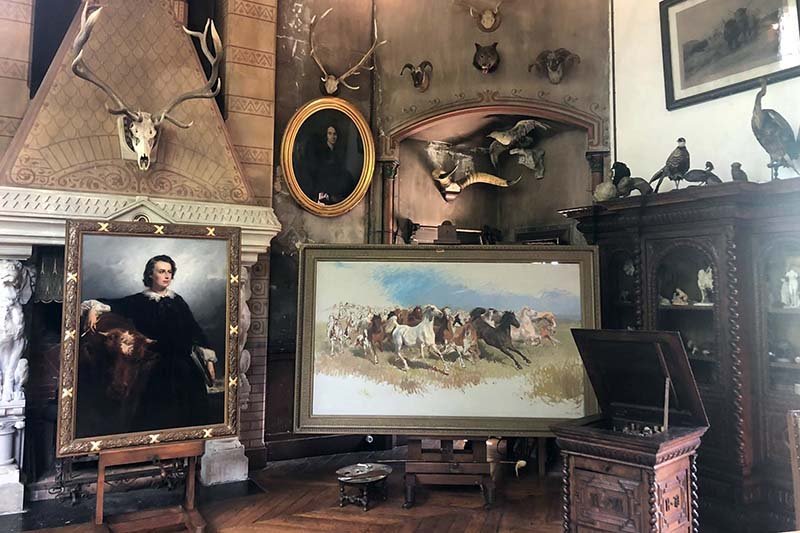
Walk in today, and you notice fairly quickly that this isn’t a grand palace built to preserve some distant history. It feels personal. Bonheur’s studio still has her brushes and easels sitting where she left them, unfinished thoughts and all, and the gardens and surrounding woodland still carry something of the landscapes and animals that shaped her best work. Touring the house feels less like visiting a museum and more like wandering into someone else’s world mid-thought. By the time this became her home, Bonheur was already one of Europe’s most acclaimed artists.
About Bonheur
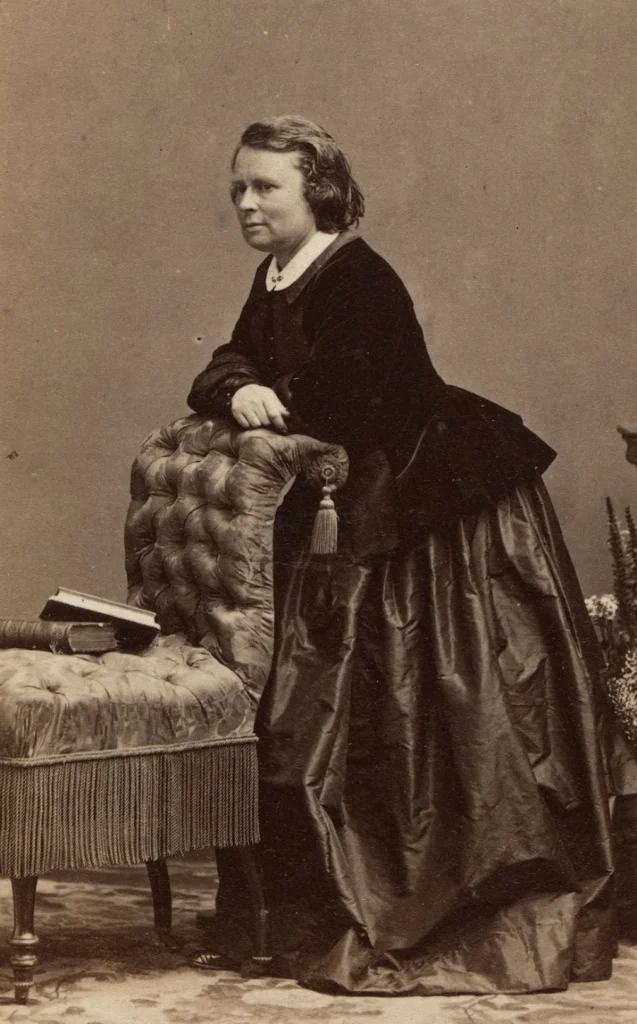
She was born in Bordeaux in 1822, into a family that took art seriously. Her father, Raymond Bonheur, was a painter and drawing teacher, and he clocked his daughter’s ability early. The art academies of the time mostly shut women out, especially from studying live animal anatomy, which was essential if you wanted to paint animals with any realism. So she taught herself. She sketched constantly and studied animals wherever she could find them.
Her interest in animals went past the aesthetic. She wanted to understand how they moved, how they behaved, how they were built, before she’d trust herself to paint them. That took her to farms, horse markets, slaughterhouses and livestock fairs, where she’d watch closely and record what she saw with something close to scientific precision. Half naturalist, half painter, and the paintings that came out of it had a kind of life to them that was hard to fake.
That’s what set her apart from most of her contemporaries. While historical and mythological subjects still dominated European painting, Bonheur turned her attention to working animals and gave them real dignity on canvas. Horses, cattle, sheep, deer, wild creatures. She painted them with empathy, not sentimentality.
Her rise
Her big break came in 1853 with The Horse Fair, a huge canvas showing powerful horses being led through the Paris horse market. The scale of it, and the sheer physical energy captured in the brushwork, wasn’t something many artists attempted, let alone a woman working in the nineteenth century. Critics loved it, collectors fought over her work, and Bonheur became one of the very few female artists of her era to achieve genuine worldwide fame.
That fame reached well beyond France. Collectors across Europe and the United States wanted her paintings, and Queen Victoria was among her admirers. The money that came with it gave Bonheur something most women of her era never had: financial independence, and enough of it to buy the property in Thomery that became both her retreat and her workplace.
How the château reveals more about her life
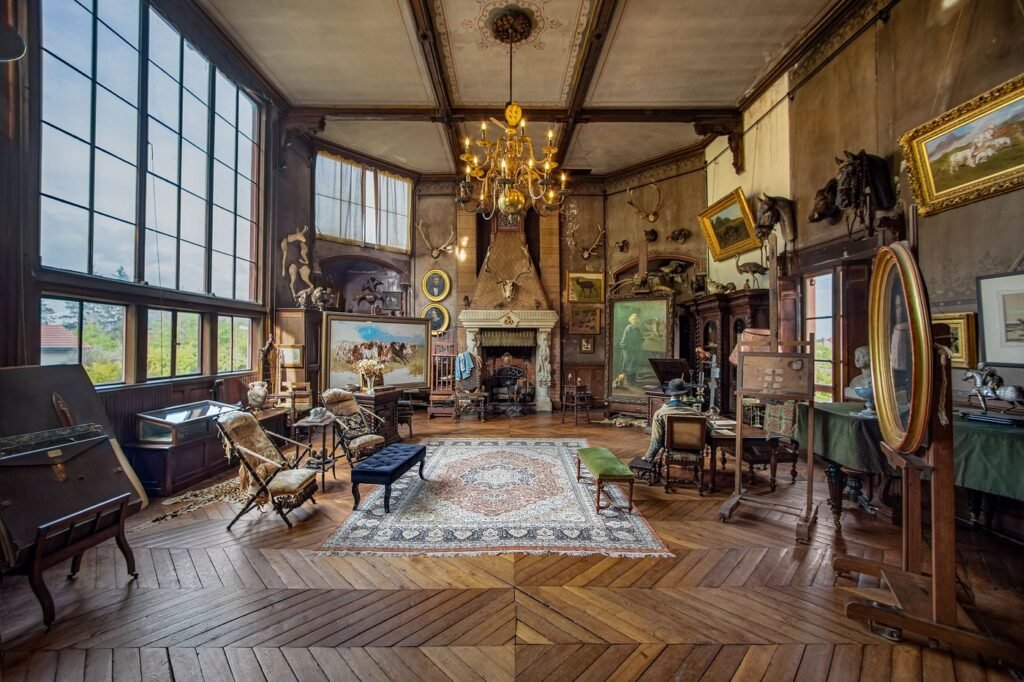
The château suited her perfectly. It sat near the Forest of Fontainebleau, with woodland right at her doorstep and wildlife and changing light close at hand. She built a large studio there, made for big canvases, with wide windows that let the light pour in.
The place reflected how she lived, too. Dogs ran loose through the house, horses stayed in the nearby stables, and other animals came and went as companions as much as subjects for her work. Some accounts even mention lions she kept and studied to get their movement right on canvas. Her home worked almost like a lab, where watching an animal and painting it were part of the same process.
going against the norm
Her determination showed up in smaller ways as well. To move freely through livestock markets, she often wore trousers rather than the dresses expected of women at the time. French law required women to get police permission to wear men’s clothing in public, so she got it, and renewed it for years, because it let her work among animals without the practical hassle her wardrobe would otherwise have caused.
That choice has since become one of the clearest symbols of her independence, though Bonheur herself never framed it as a political statement. It was practical. She wanted to do her job well, and the clothes she was supposed to wear got in the way. That it also pushed against expectations of women at the time was almost beside the point to her, even if it wasn’t beside the point to everyone else.
ignoring convention
Her personal relationships followed a similar pattern of quietly ignoring convention. She spent decades of her life with fellow artist Nathalie Micas. After Micas died, American painter Anna Klumpke became her close companion and later documented Bonheur’s life, helping keep her legacy intact after her death in 1899. It was a life built around her own priorities: creative work, loyalty, people who understood both.
Bonheur was hugely popular in her own lifetime, but her reputation cooled through much of the twentieth century as tastes moved toward modernism and abstraction. Her precise realism started to look old-fashioned to some critics, even though nobody seriously questioned her technical skill.
That’s shifted in recent decades. Museums and art historians have come back around to Bonheur, not just as a skilled painter but as someone whose career reshaped what was possible for women in professional art. Her work now gets read in that fuller context.
The authenticity of the château
The place has stayed remarkably authentic. Rather than reconstructing rooms based on guesswork, much of the house remains close to how Bonheur actually left it. Her studio is still the heart of the property. The scale of her ambition comes through in the enormous canvases and equipment sitting there in a way no photograph quite manages.
You don’t just see the finished paintings, you see the work behind them. Sketches, studies, personal objects, all of it points to an artist who never stopped observing and refining. The workshop makes clear how deeply she studied each animal, down to the structure of a hoof or the tension in the muscle under a horse’s skin.
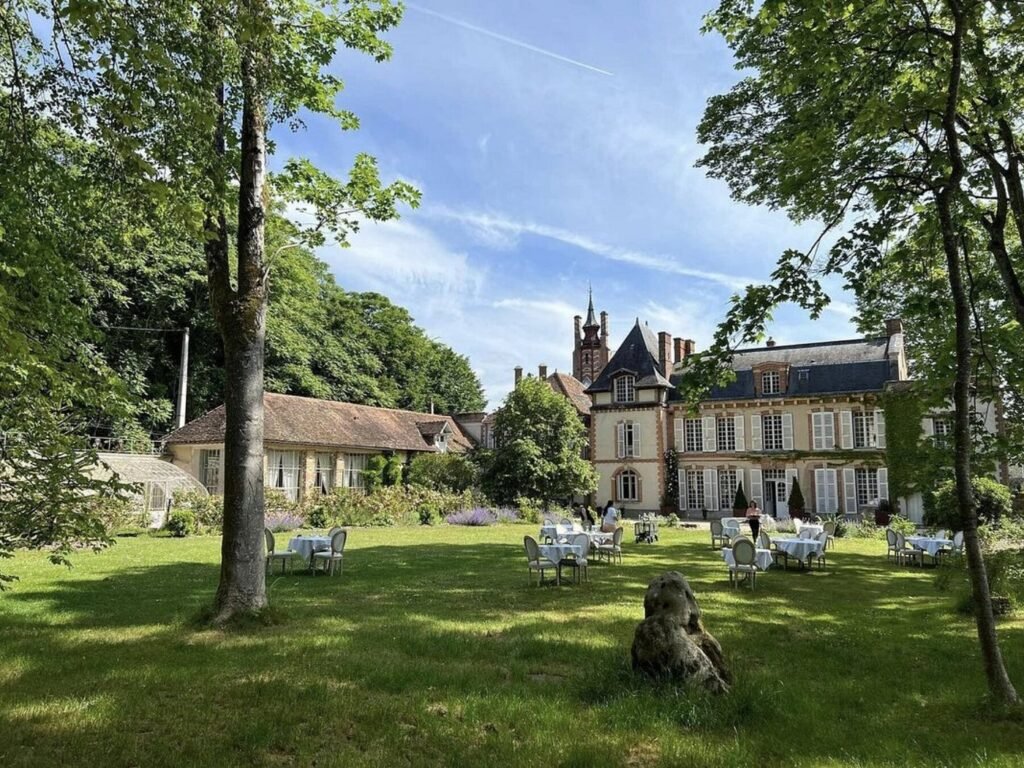
Outside, the gardens are worth slowing down for. Mature trees, flowering paths, quiet corners- the kind of setting that clearly fed her imagination. The Forest of Fontainebleau, long a favourite of landscape painters, still forms the backdrop, much as it did in her day.
The château hasn’t stayed frozen either. Alongside guided tours, it hosts concerts, exhibitions, readings and seasonal events, so it functions as a living part of the local culture rather than a museum you walk through once and forget. It fits, given how much energy Bonheur herself brought to the place.
Travelling to the château
If you’re exploring the wider Fontainebleau region, the château makes a good counterpoint to the nearby royal palace. Château de Fontainebleau tells you about French monarchs. Bonheur’s home tells a smaller, more personal story about a woman who built her career and her life on her own terms.
It’s an easy trip from Paris, too. A little over an hour gets you from the city’s traffic to riverside villages and forest walks, and to a museum that rewards you for slowing down, which feels fitting given how much Bonheur herself valued careful attention.
What the château does best, maybe, is make an artist who can otherwise seem larger than life feel human. The fame and the royal admirers are impressive on paper, but standing in the studio where she actually worked, day after day, tells you more about her than any of that. It was patience and curiosity and a lot of hours, not some inborn gift that arrived fully formed.
Beauty beneath her paintings
Her paintings still land because of what she chose to see in her subjects. She never treated animals as decoration. She painted them as intelligent, individual creatures with their own presence, worth looking at for their own sake rather than what they were useful for. That way of seeing feels more relevant now than ever, given how much more we think about our relationship with the natural world.
More than a century after her death, Rosa Bonheur still has something to say to anyone trying to live life on their own terms. She didn’t let convention decide her career or her identity. She just kept working, stayed close to the animals and landscapes she loved, and let the rest sort itself out.
Visiting the château isn’t really about ticking off a museum on a list. It’s closer to spending an afternoon with someone who turned careful looking into real art, in a house that still carries her independence and her curiosity. You leave knowing more facts about Rosa Bonheur, sure, but you also leave understanding why people still bother to visit, and why this quiet corner of France is worth the trip.
Written By: Leah Kim
Published On: 3rd August 2026