
Not many jewellery designs reach the kind of timeless status Tiffany & Co.’s Bird on a Rock has. It’s instantly recognisable, and yet it’s been reinterpreted so many times it never feels stuck in one era. More than six decades after the first bird landed on its first gemstone, the design’s getting a real expansion, one built for how collectors buy jewellery today.
The new pieces show how Tiffany keeps balancing its own history with something new. The work still holds close to Jean Schlumberger’s original vision, but there are fresh gemstone pairings, sharper craftsmanship and a lot more versatility built in, which is a big part of why the collection still feels alive instead of just preserved.
Luxury buyers want pieces with a real story behind them now more than ever, and Bird on a Rock makes a good case that a true design icon doesn’t stay still. It keeps moving.
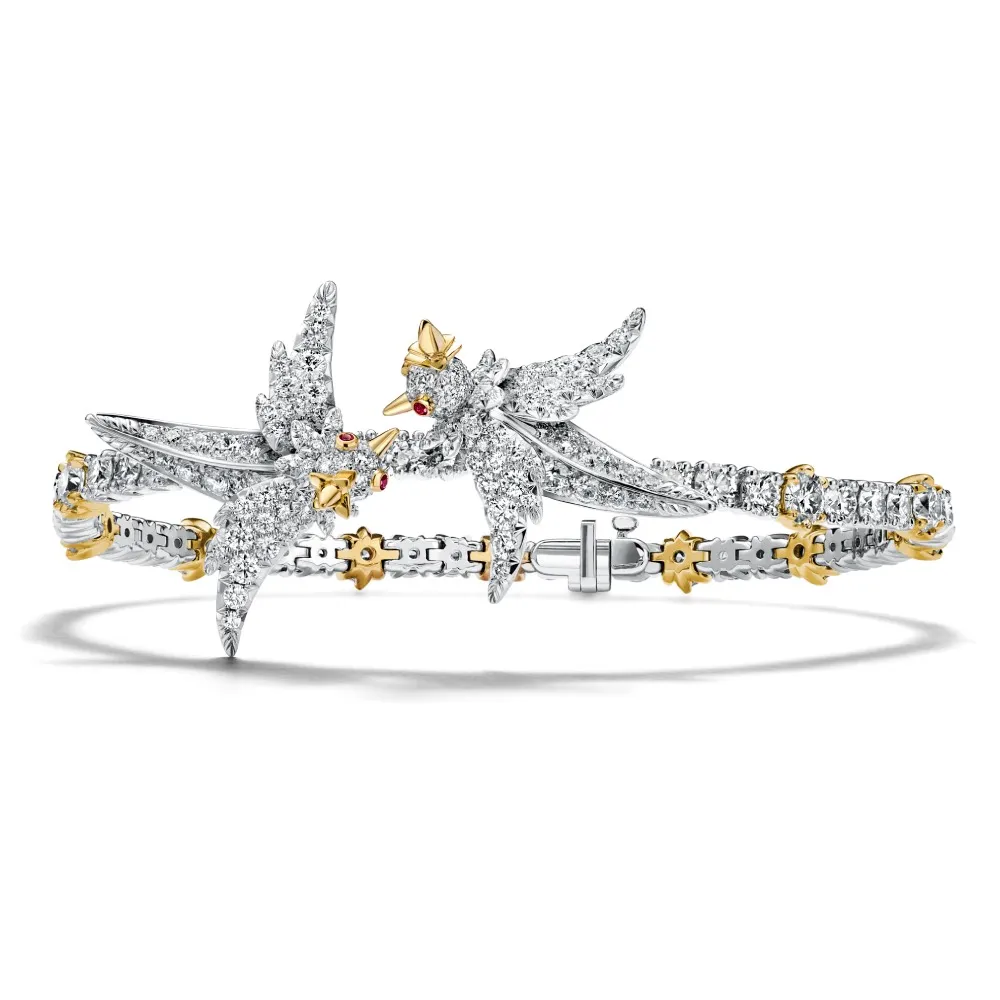
An Icon Born from Imagination
The story starts with Jean Schlumberger, the French designer whose imagination reshaped Tiffany’s creative identity in the middle of the twentieth century. Schlumberger pulled a lot from the natural world, and he built a visual language that mixed whimsy with genuinely careful craftsmanship. Birds, flowers, sea creatures, plants, all showed up across his work, brought to life through intricate goldwork and colourful stones. Bird on a Rock might be his best-known idea. Instead of putting all the attention on the centre stone, he imagined a tiny diamond bird perched on top of it. That small shift turned a fairly traditional setting into something with real personality, something that felt curious and alive. It pushed against the usual jewellery conventions while still letting the gemstone underneath shine on its own. Over the decades it’s become one of Tiffany’s most recognisable pieces, tied to some of the house’s rarest diamonds and admired by collectors everywhere.
A Contemporary Evolution
The newest collection shows Tiffany trying to respect Schlumberger’s legacy without just repeating it. Rather than reproducing old designs exactly, the house has widened the motif into a much bigger range of high jewellery and fine jewellery, with more variety in scale and how wearable each piece actually is.
The bird itself is still unmistakable, but now it shows up across necklaces, rings, earrings, bracelets and brooches. Each version keeps that same balance between sculpture and jewellery that made the original stand out. It’s a collection that speaks to longtime collectors while also giving a younger crowd a way into the design, one that still feels personal even with the heritage attached.
Celebrating Extraordinary Gemstones
Every Bird on a Rock piece is built around a serious gemstone. Historically, the design has carried some of Tiffany’s finest colored stones and diamonds, each one picked for its own colour, clarity and character. This new collection keeps that going, working through tourmalines, rubies, aquamarines, tanzanites, morganites and colored diamonds alongside Tiffany’s signature white diamonds.
The bird doesn’t compete with the stone. It works more like a companion piece, pulling your eye toward the gem while adding its own bit of charm. Because every stone has its own natural quirks, no two Bird on a Rock pieces end up quite the same, and that’s become one of the collection’s biggest draws now that collectors care so much about rarity and individuality.
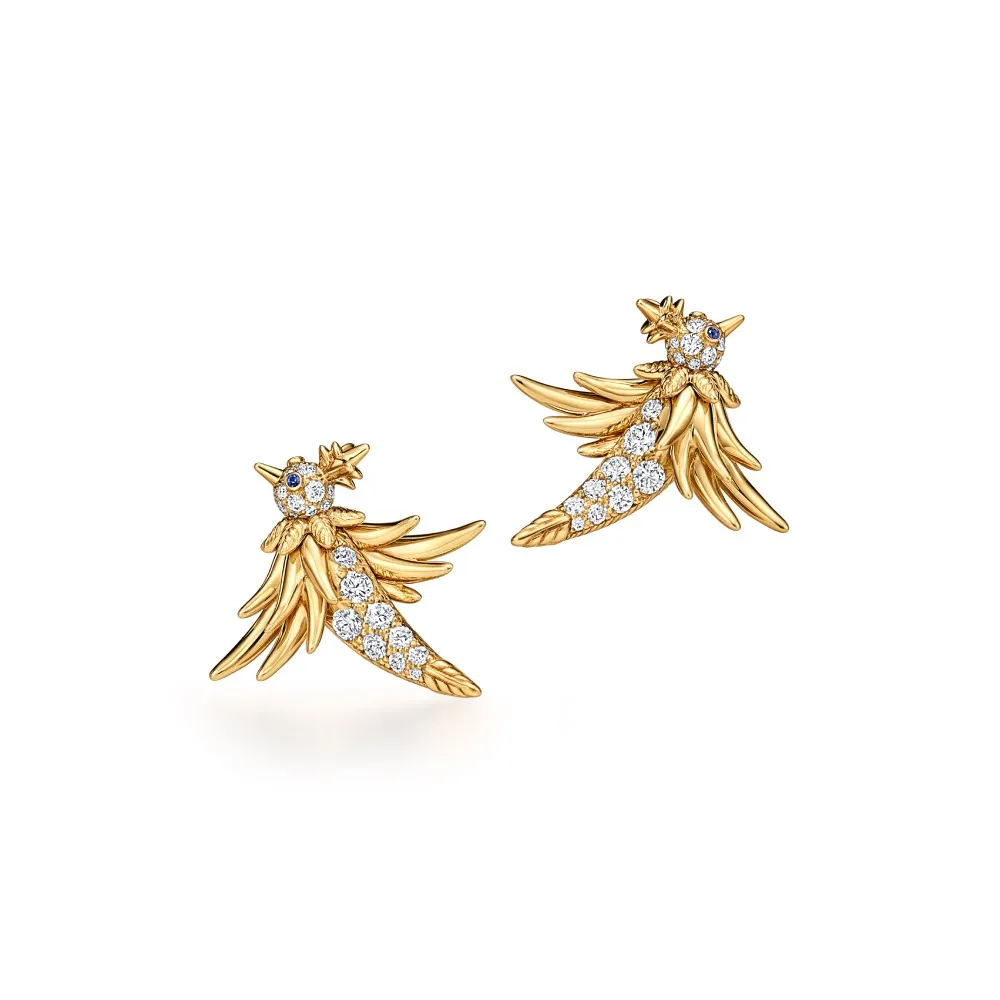
Craftsmanship at the Highest Level
Making a Bird on a Rock piece takes a lot more skill than the finished bird lets on. Every feather, claw and beak is shaped carefully to look effortless, and getting that illusion right takes real time. The artisans making these spend hours shaping metal and setting diamonds so the bird sits naturally on the stone without pulling focus from it.
The bird has to look alive and light while still being structurally solid. Every angle gets thought through for how it catches light and how it sits against the gemstone. That level of care runs through everything Tiffany makes, and it’s a big part of why this design has held up as long as it has.
Jewellery That Tells a Story
Part of why Bird on a Rock still connects with people is the emotional side of it. A lot of high jewellery leans on symmetry or abstract shapes. This design leans into story instead. The little bird looks curious, playful, almost alive, and people tend to read their own meaning into it. Some see optimism. Some see freedom. Others see it as a symbol of change or a chance moment. Because the design doesn’t force one meaning, it’s worked across cultures and generations without losing anything. That’s what pushes it past decorative jewellery into something closer to wearable art.
Bridging Fine Jewellery and High Jewellery
For a long time, Bird on a Rock lived mostly in Tiffany’s highest jewellery tier. That’s changed with this expansion. Alongside the museum-level pieces built around exceptional stones, Tiffany’s is now offering more wearable fine jewellery versions that keep the spirit of the design while making it easier to wear day to day.
That shift tracks with where buyers are these days. People want jewellery that moves between a formal event and a normal Tuesday, not something locked away for special occasions only. Spreading Bird on a Rock across different price points and categories lets a lot more people actually own one of Tiffany’s most iconic designs without cutting corners on the craft.
Honouring Jean Schlumberger’s Legacy
More than fifty years after his original work debuted, Jean Schlumberger’s still one of the most influential names in jewellery. His work keeps shaping Tiffany’s direction, not because it gets copied endlessly, but because it invites new interpretation. Bird on a Rock is a good example of exactly that. Each new collection builds on his original idea while bringing in new stones, new techniques, new design choices. Tiffany’s letting the motif grow with changing tastes instead of freezing it as a museum piece, and that’s exactly why it hasn’t gone stale. It’s still one of the house’s most active creative platforms.
A Symbol of Modern Luxury
Buyers today tend to care more about authenticity, heritage and real craftsmanship than whatever’s trending. Bird on a Rock has all three. Its appeal isn’t only the stones; it’s the history sitting behind every piece. Collectors know they’re buying into one of Tiffany’s defining artistic ideas, not just a piece of jewellery. That also lines up with a bigger shift in luxury, where iconic designs tend to hold their value better than trend-chasing pieces do. Anything with real provenance and a design language people actually recognise tends to keep both its emotional pull and its resale value, which makes it appealing to more experienced buyers. Bird on a Rock sits right in that spot.
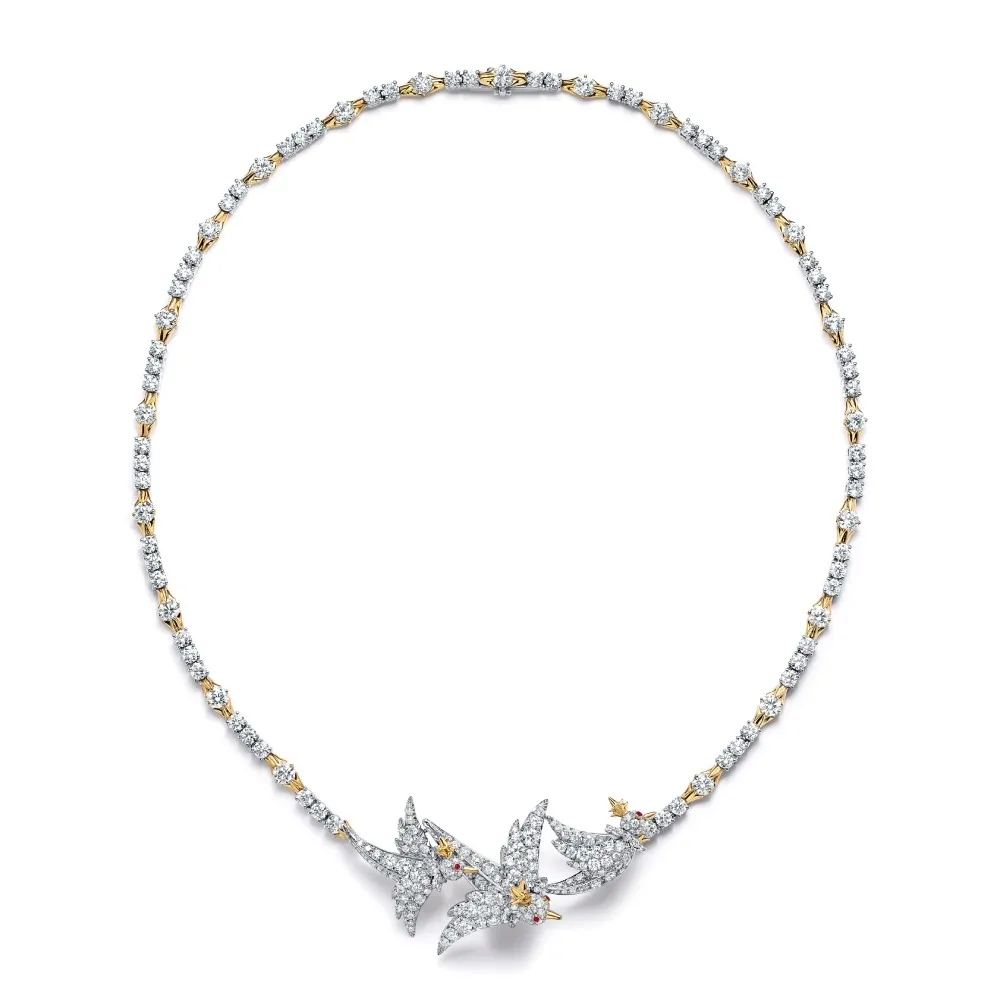
The Enduring Magic of an Icon
Not many jewellery designs have the staying power Bird on a Rock has. The mix of great stones, a real story, and genuinely careful craftsmanship has let it stay relevant across generations without losing what made it interesting in the first place.
As Tiffany keeps pushing Bird on a Rock into new territory across high jewellery and fine jewellery, it’s really just holding onto the same principles that made it work in the first place: creativity, craftsmanship, and a real willingness to keep pushing the idea forward. More than sixty years after Jean Schlumberger first imagined a small bird resting on a gemstone, that idea is still finding new people to capture.
Written By: Leah Kim
Published On: 7th August 2026