
There’s a certain irony in the Hennessey Blackbird selling out almost immediately after its public debut. Hybrid powertrains and sophisticated electronics increasingly define the world’s most expensive performance cars and computer-controlled everything. Hennessey’s newest hypercar goes the other way entirely.
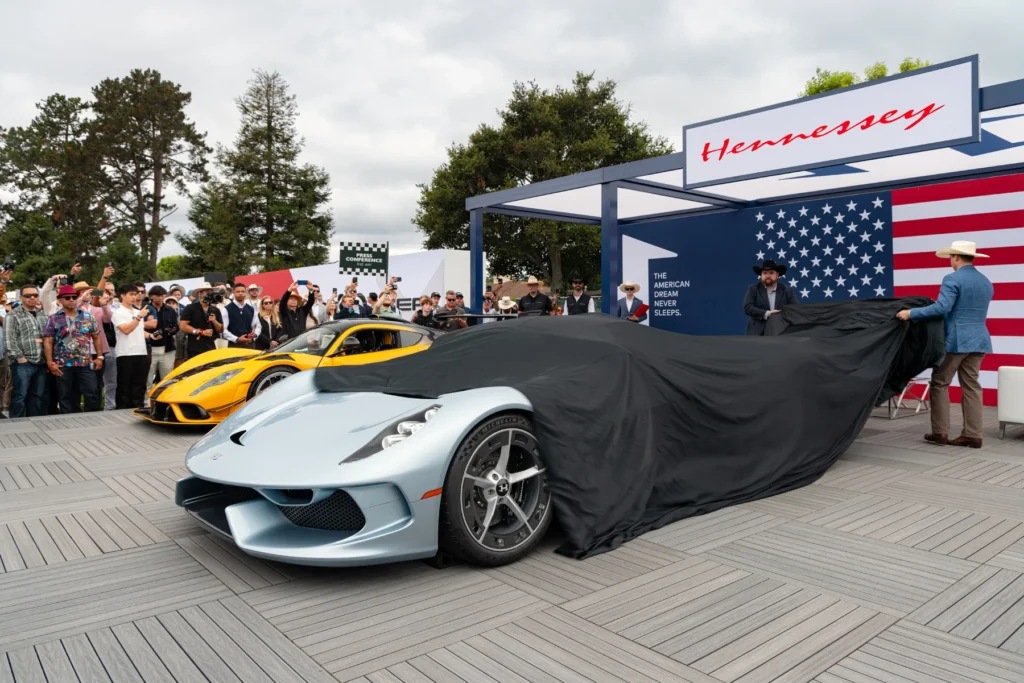
The Blackbird costs from $2.5 million before taxes, uses a naturally aspirated V8, and sends its power through a six-speed manual transmission. There’s no screen in sight, which has become almost unheard of in a modern car. Only 71 examples are being built, and every one is now spoken for. Hennessey says the final 11 build slots disappeared within four hours of the car’s public unveiling at The Quail during Monterey Car Week.
That sales performance is impressive on its own. The more interesting story is what it says about the people willing to spend millions on a new hypercar right now.
A hypercar built around the driver
The Blackbird is Hennessey Special Vehicles’ third all-new hypercar, after the Venom GT and Venom F5. Those cars established the Texas company as a serious player in extreme performance, with the Venom F5 in particular built around power and outright speed.
The Blackbird takes a different approach. Hennessey calls it a touring hypercar, putting less emphasis on chasing a speed record and more on the connection between driver and machine. The spec sheet backs that up: rear-wheel drive, a gated six-speed manual, and an analogue-focused cabin with no infotainment screens.
At this end of the market, buyers can already pick from an enormous range of cars with four-figure horsepower. Electrification has made instant acceleration easier to achieve than ever. So the real challenge for manufacturers isn’t making a car faster anymore. It’s making the experience memorable, and Hennessey’s answer is putting mechanical interaction back at the centre of it.
An all-new naturally aspirated V8
The engine is the clearest sign of how unconventional this project is. Power comes from an all-new 6.2-litre naturally aspirated V8 developed with Ilmor Engineering. Hennessey is targeting 800 to 850 horsepower, with the engine expected to rev past 9,000 rpm. No turbocharging, no hybrid assistance.
Inspired by an aviation legend
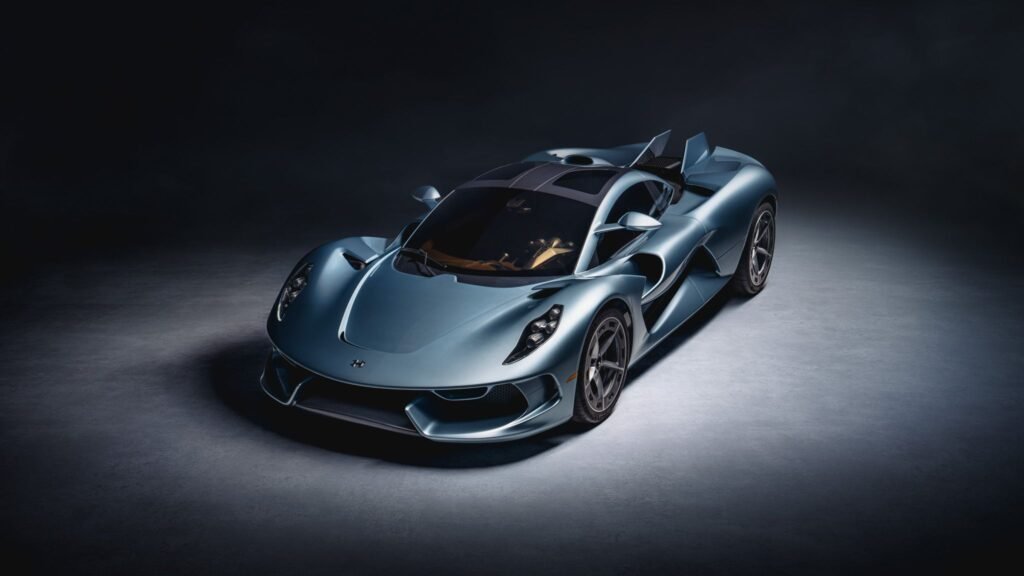
The Blackbird’s name and look come from the Lockheed SR-71 Blackbird, the legendary American reconnaissance aircraft. It’s not just a borrowed name. Hennessey has worked aerospace-inspired shapes and surfacing into the car, with active vertical stabilisers reinforcing the aircraft theme.
Carbon fibre and a focus on usability
Even though this is built as a driver’s car, Hennessey hasn’t ignored practicality. The Blackbird uses a bespoke full-carbon tub and carbon-fibre bodywork, targeting a weight under 3,000 pounds. Adaptive suspension, ABS, traction control and Michelin Pilot Sport Cup 2 tyres round out the chassis.
Those choices suggest Hennessey doesn’t want this to be a car that only makes sense on a racetrack. Calling it a touring hypercar is the key detail here. The goal isn’t just something spectacular sitting in a collection. It’s a car its owner can actually drive, over real distances, while still delivering the intensity people expect from a limited-production hypercar.
That’s a hard balance to strike. Extreme cars usually sacrifice comfort for performance. The Blackbird’s spec suggests Hennessey wants to hold onto some of the grand-touring qualities that made earlier exotic cars appealing, wrapped in modern carbon-fibre engineering.
The four-hour sellout
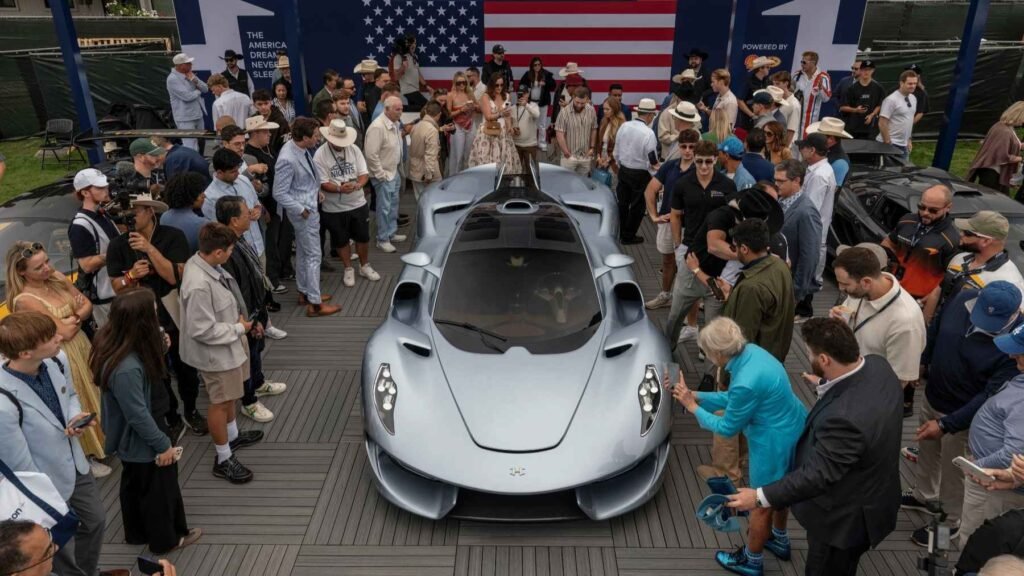
The most remarkable part of this story is that most of the cars were already spoken for before the public had even seen the production-intent vehicle. According to Hennessey, 60 of the 71 available examples sold before the Blackbird’s public unveiling. That left 11 build slots when the car appeared during Monterey Car Week, and those went in four hours.
That kind of confidence says a lot about the credibility Hennessey has built with collectors and high-end performance buyers. It also shows the strength of the limited-production model: with only 71 cars available worldwide, hesitating could mean losing the chance entirely. Scarcity is powerful in the collector-car world, but scarcity alone doesn’t explain the appeal here. A $2.5 million car still needs a reason to exist.
Why the manual gearbox matters
No single component captures the Blackbird’s philosophy better than its manual transmission. A six-speed manual isn’t the obvious choice for a 2026 hypercar. Automated dual-clutch transmissions shift faster and more consistently. Hennessey chose a gated manual anyway.
That makes sense once you look at the rest of the car. The Blackbird isn’t trying to win a numbers contest. It’s trying to preserve a kind of interaction that’s getting harder to find: the driver selecting gears, managing the clutch, working with the engine’s naturally aspirated power delivery.
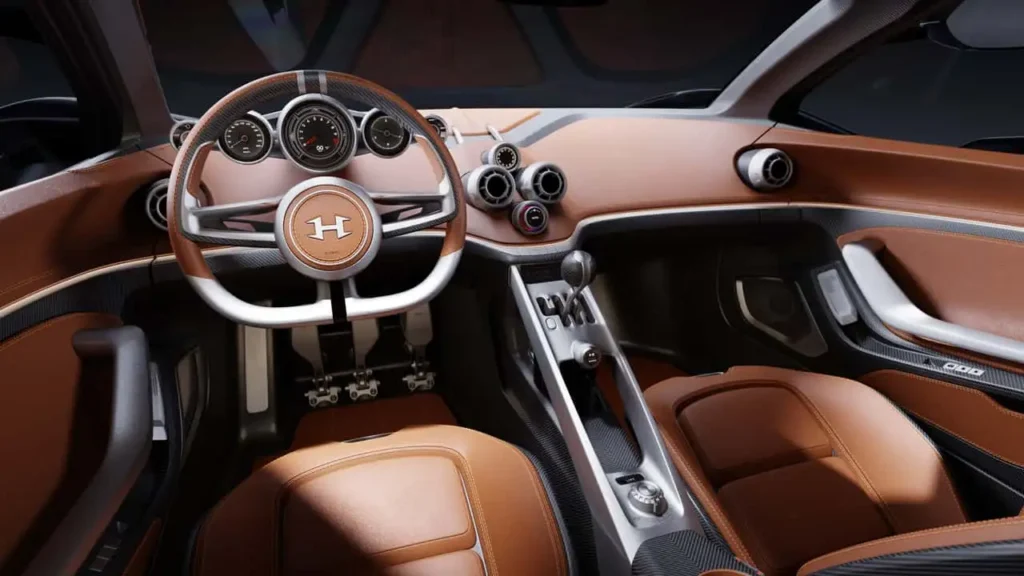
The cabin follows the same idea. Hennessey says it uses analogue controls, a large central tachometer and a physical key, with no screens anywhere. For some buyers, that might sound like a step backwards. For collectors who already own cars capable of absurd acceleration, it might be exactly the opposite. The Blackbird turns the act of driving itself into the feature.
A different kind of exclusivity
Capping production at 71 cars also lets Hennessey position the Blackbird differently from the Venom family. The Venom F5 is fundamentally about extreme speed and massive power. Hennessey measures the Blackbird differently, around the relationship between driver, machine and road. That gives the company room to grow its identity. Instead of making every new model more powerful than the last, Hennessey can now offer different interpretations of what a hypercar should be. The Blackbird is the analogue, touring-oriented version, and with every build slot claimed, seeing one outside a private collection or a major automotive event is going to be rare.
Production is still ahead
One important caveat: customers bought allocations for a car that’s still being developed. Hennessey expects production and deliveries to start around 2029, and some of the headline performance figures are still development targets, meaning the final spec could shift as engineering continues. This makes the sellout even more striking. These buyers aren’t able to recieve the car as soon as possible. Instead, they’re buying into a future project whose appeal rests almost entirely on its philosophy and promised specs.
The real significance of the Blackbird
The four-hour sellout is more than a story about wealthy collectors buying an expensive car. It’s evidence that, even as the industry races toward electrification, automation and digital interfaces, there’s still a real appetite for mechanical involvement.
Written By: Leah Kim
Published On: 24th August 2026