
Luxury’s most influential group has delivered a first-quarter performance that reflects both endurance and unease. LVMH reported marginal growth overall, yet a notable contraction in its flagship fashion and leather goods division. Beneath the surface, shifting regional demand, creative transitions, and global instability are reshaping the industry’s trajectory.
A Subtle Shift in Momentum
For decades, LVMH has stood as the definitive barometer of the global luxury market. Its ability to consistently deliver growth, even amid uncertainty, has long reassured investors and competitors alike. The first quarter of 2026, however, suggests a more nuanced reality.
The group reported a 1 percent increase in organic revenue, reaching €19.12 billion. While technically positive, this figure signals a deceleration when compared to the high-growth years that followed the pandemic recovery. More striking is the performance of the fashion and leather goods division, widely considered the heart of LVMH’s empire. Sales in this category declined by 2 percent to €9.25 billion.
Though the drop marks an improvement from the previous quarter’s 3 percent decline, it fell short of market expectations. Analysts had anticipated a softer contraction, reinforcing the sense that even the strongest players are not immune to broader market headwinds.
Brand Performance Reveals Divergence
Within the group’s portfolio, performance varied significantly. Flagship houses continued to demonstrate relative resilience, albeit at differing speeds.
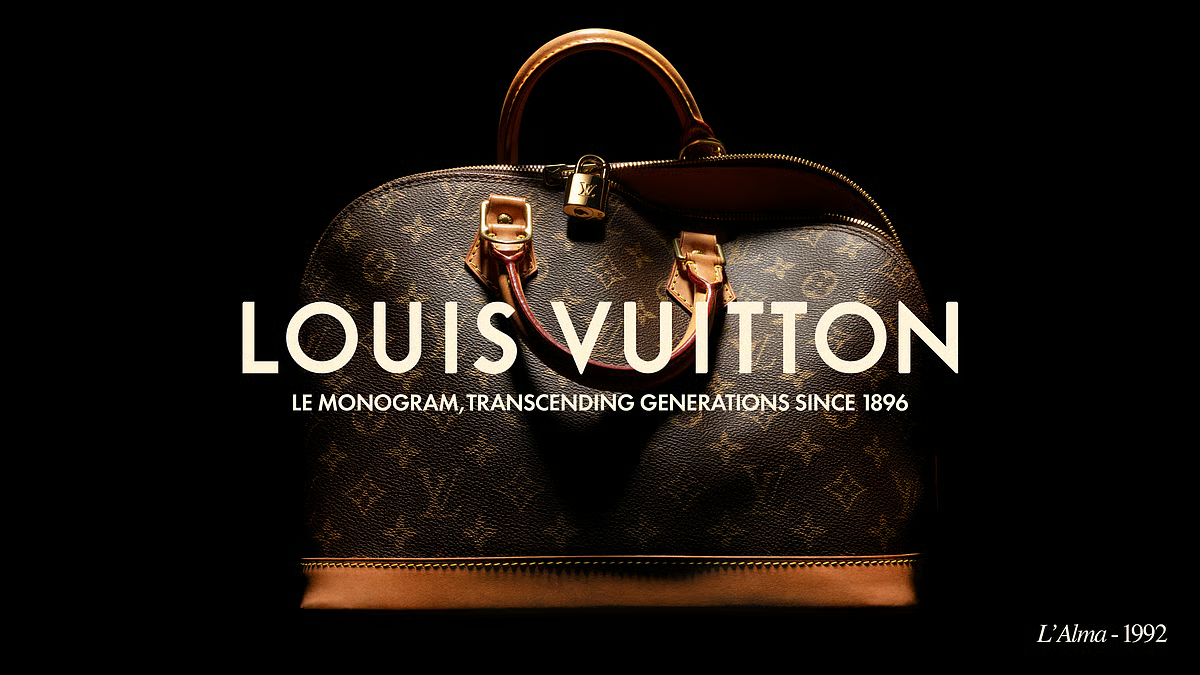
Louis Vuitton maintained its position as a stabilising force, outperforming the divisional average. Dior, meanwhile, showed signs of recovery after a more challenging period, buoyed in part by renewed creative direction. Early releases from its new creative leadership have begun to reach stores, with further product categories expected to follow in coming months.
Elsewhere, quieter success stories emerged. Loro Piana delivered double-digit growth, underscoring sustained appetite for understated luxury and exceptional craftsmanship. Rimowa also exceeded expectations, benefiting from a resurgence in global travel and demand for premium mobility goods.
However, not all brands shared in this momentum. A number of labels within the division lagged behind, contributing to the overall decline and highlighting an increasingly polarised performance landscape.
Creativity and Experience Drive Engagement
Despite the mixed results, LVMH executives emphasised strong consumer response to innovation and retail experience. Across its largest brands, investments in product newness, immersive store environments, and elevated customer engagement have translated into improved conversion rates.
This strategic focus reflects a broader shift within luxury. As aspirational consumers become more selective, brands are leaning into storytelling, exclusivity, and experiential retail to maintain relevance. The emphasis is no longer solely on product, but on the holistic journey surrounding it.
The phased rollout of new collections, particularly at Dior, illustrates this approach. Rather than relying on singular headline launches, brands are increasingly adopting a cadence of continuous novelty, sustaining consumer interest over longer periods.
Regional Dynamics Tell a Complex Story
Geography played a decisive role in shaping first-quarter outcomes. Performance across regions was uneven, revealing both opportunities and vulnerabilities.
The United States delivered a modest 3 percent increase, suggesting stable demand among American consumers despite economic pressures. Asia, excluding Japan, emerged as the strongest-performing region with 7 percent growth, aided by seasonal factors such as the Chinese New Year and a gradual recovery in domestic spending within China.
In contrast, Europe and Japan both recorded declines of 3 percent. These results reflect softer local demand as well as shifting tourist flows, which remain below pre-pandemic levels in key luxury shopping destinations.
Chinese tourism, while improving, has yet to fully rebound. This continues to weigh on global luxury hubs that have historically relied on international shoppers to drive sales.
The Impact of Global Instability
External factors also played a significant role. The ongoing conflict in the Middle East had a measurable impact on LVMH’s performance, reducing overall organic growth by approximately 1 percent.
The region accounts for around 6 percent of the group’s total sales, with a slightly higher contribution to fashion and leather goods. During March, demand in affected areas dropped sharply, with declines ranging from 30 to 70 percent depending on location and retail environment.
Crucially, this loss has not yet been offset by increased spending elsewhere. Executives noted that while underlying wealth remains intact, there has been no immediate redistribution of demand to other regions. This suggests that geopolitical uncertainty can temporarily suppress consumption, even among high-net-worth individuals.
Strength Beyond Fashion
While fashion and leather goods faced challenges, other divisions provided a counterbalance.
Watches and jewellery recorded a robust 7 percent increase, driven by strong performances from key maisons. The continued appeal of high jewellery and heritage timepieces underscores the enduring value placed on craftsmanship and investment-worthy luxury.
Selective retailing, including beauty-focused operations, grew by 4 percent, reflecting consistent demand for premium cosmetics and fragrance. Meanwhile, the wines and spirits division rose by 5 percent, supported by a strong start to the year for champagne and a seasonal boost in cognac sales linked to Chinese New Year celebrations.
Perfumes and cosmetics remained flat overall, suggesting a stabilisation following periods of rapid growth.
Investor Sentiment and Market Outlook
Despite signs of resilience, investor sentiment remains cautious. The modest growth figures and underperformance in key divisions have not been sufficient to inspire full confidence.
Market observers note that while LVMH has improved on its late-2025 trajectory, the current pace of recovery may not yet justify a decisive shift in outlook. The broader luxury sector appears to be entering a phase of normalisation, where double-digit growth is no longer guaranteed.
Upcoming earnings reports from other major players will provide further context. The performance of rival conglomerates and independent houses will help determine whether LVMH’s results are indicative of a systemic slowdown or more company-specific dynamics.
A Measured Path Forward
Looking ahead, LVMH remains focused on controllable factors. The group continues to invest in creativity, product development, and retail excellence, confident that these elements will sustain long-term desirability.
At the same time, the current environment demands adaptability. Regional volatility, shifting consumer behaviour, and geopolitical uncertainty require a more agile approach than in previous years.
The first quarter of 2026 may not have delivered the unequivocal strength that markets have come to expect from LVMH. Yet it offers a more instructive narrative, one that reflects a luxury industry in transition.
Growth is no longer uniform, demand is more selective, and external forces carry greater weight. In this evolving landscape, success will depend not only on heritage and scale, but on the ability to respond with precision, creativity, and restraint.
Written By: Lydia Kelly
Published: 14th April 2026