
In April 2026, Florence became the stage for a revival that refused to sit quietly within the conventions of opera. At the Maggio Musicale Fiorentino, director Luca Guadagnino reimagined The Death of Klinghoffer not as a static work of controversy, but as a living, breathing confrontation with the most uncomfortable corners of modern history. The production did not ask for passive admiration. It demanded intellectual participation. It asked its audience to sit inside contradiction, to feel the tension between beauty and brutality, and to reckon with the uneasy coexistence of empathy and judgment.
The Stage as a Site of Conflict
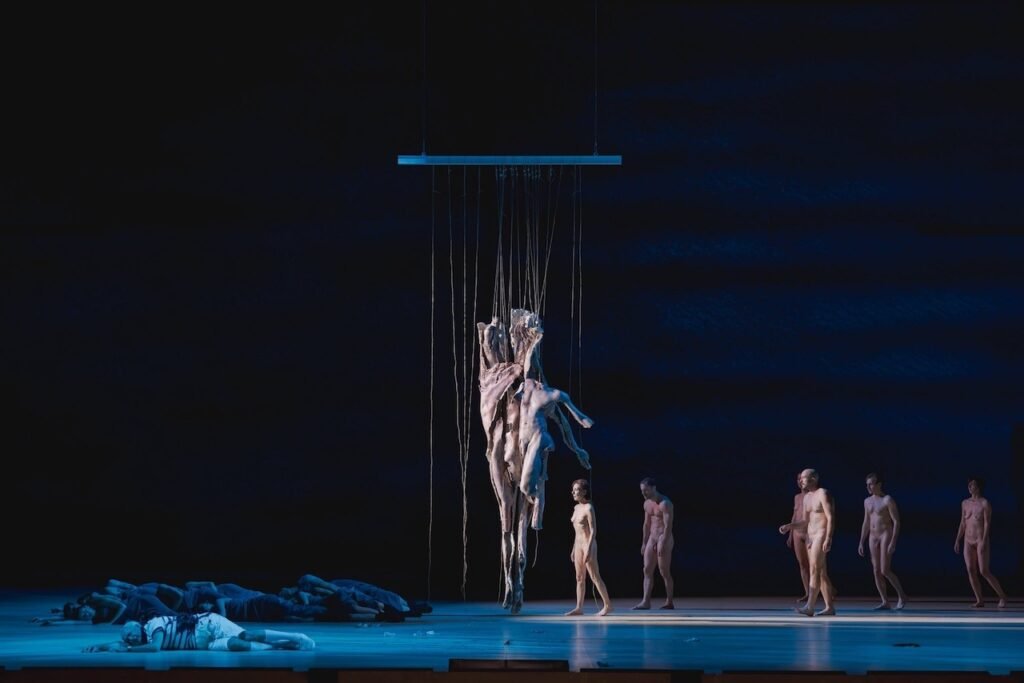
Guadagnino’s vision transformed the opera into something closer to a philosophical arena than a traditional performance. The staging was spare yet deliberate, drawing attention not to spectacle but to the charged interactions between characters and ideas. Every visual choice seemed calibrated to provoke thought rather than provide resolution. The set evoked a liminal space, neither fully grounded in realism nor abstract enough to detach from the historical weight of the story. This ambiguity mirrored the opera’s central tension, the impossibility of clean moral lines.
The narrative, based on the 1985 hijacking of the Achille Lauro and the murder of Leon Klinghoffer, carries with it decades of political and emotional baggage. Guadagnino leaned into this history rather than attempting to neutralize it. The production acknowledged the discomfort many feel toward the work, particularly its portrayal of both victims and perpetrators with a degree of humanity that can feel unsettling. Instead of resolving this tension, the staging amplified it. Characters were not framed as symbols to be decoded but as individuals whose motivations and suffering resist simplification.
This approach positioned the opera as a space of active engagement. The audience was not guided toward a singular interpretation. Instead, they were left to navigate a complex web of perspectives. In this sense, the performance functioned as a kind of intellectual battlefield, where competing narratives collided and no definitive victor emerged. The luxury of the experience lay not in opulence or excess, but in the rare opportunity to confront such complexity in a setting designed for reflection.
Beauty against Brutality
One of the most striking aspects of this revival was the tension between the music’s lyricism and the harshness of its subject matter. The score retained its hypnotic, almost meditative quality, with choral passages that seemed to suspend time. Yet this beauty was constantly undercut by the knowledge of what the story represents. Guadagnino emphasized this contrast, allowing moments of musical transcendence to coexist with visual and narrative reminders of violence and loss.
The result was an experience that felt both seductive and unsettling. The audience was drawn in by the elegance of the composition, only to be confronted with the ethical implications of their own emotional response. Is it possible to appreciate the beauty of the music without feeling complicit in the suffering it depicts? This question lingered throughout the performance, never fully answered but impossible to ignore.
Guadagnino’s direction made clear that this tension was not a flaw to be resolved but a feature to be explored. By refusing to separate aesthetics from ethics, the production highlighted the unique capacity of opera to engage with difficult subjects in a way that is both visceral and intellectual. The stage became a space where beauty did not offer escape, but rather a deeper entry into discomfort.
This interplay between attraction and repulsion is what elevated the production into the realm of luxury. Not luxury as material excess, but as the privilege of engaging with art that challenges rather than reassures. In a cultural landscape often dominated by easily digestible narratives, this kind of experience feels increasingly rare. It requires time, attention, and a willingness to sit with uncertainty.
Moral Ambiguity as Experience
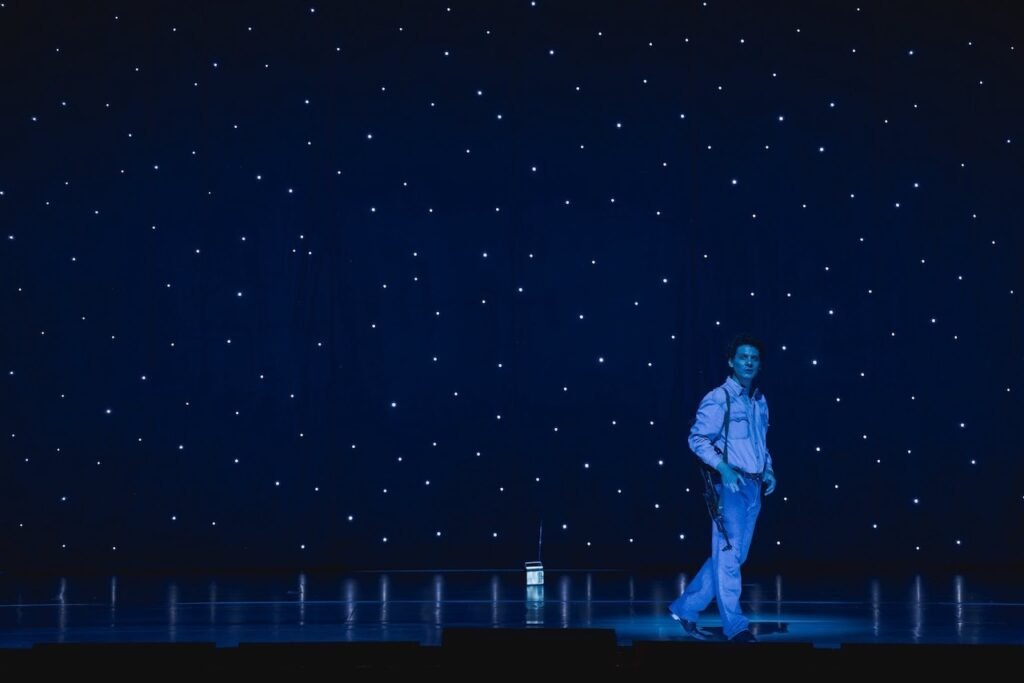
Perhaps the most defining feature of this revival was its refusal to provide moral clarity. The opera has long been criticized for its portrayal of the hijackers, which some view as overly sympathetic. Guadagnino did not attempt to sidestep this controversy. Instead, he leaned into the ambiguity, presenting the characters in a way that emphasized their humanity without absolving their actions.
This approach created a space where empathy became a complicated and sometimes uncomfortable act. The audience was invited to understand the perspectives of all involved, but not to excuse or justify them. This distinction is subtle but crucial. It transforms empathy from a passive feeling into an active, and often difficult, process.
The portrayal of Klinghoffer himself was equally nuanced. Rather than being reduced to a symbol of victimhood, he was presented as a fully realized individual, whose presence resonated even in absence. His voice, both literal and metaphorical, served as a counterpoint to the narratives surrounding him. This balance prevented the production from tipping into moral relativism, maintaining a sense of gravity that anchored the more ambiguous elements. In this context, opera became more than a form of entertainment. It became a medium for exploring the complexities of human experience in a way that few other art forms can achieve. The performance did not offer solutions or easy answers. Instead, it provided a framework for questioning, for reflection, and for dialogue.
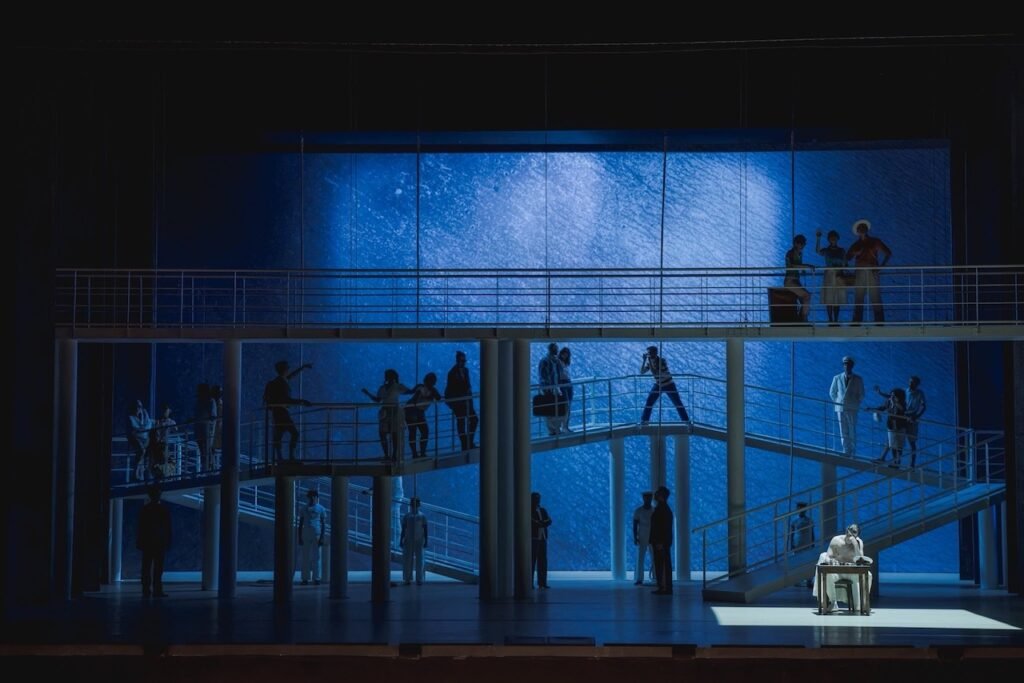
The luxury of this experience lies in its depth. It is not about comfort or escapism, but about the opportunity to engage with something that demands attention and thought. In a world where so much is designed to be consumed quickly and forgotten just as fast, this kind of sustained engagement feels almost radical.
By the time the final notes faded, what remained was not a sense of closure, but a lingering unease. The questions raised by the production continued to echo, extending the experience beyond the walls of the theater. This is perhaps the greatest achievement of Guadagnino’s revival. It transformed The Death of Klinghoffer into an event that exists not only in time, but in thought.
Written By: Mia Quisumbing
Published On: 24th April 2026