
Porsche’s motorsports programme has been built on a rather simple philosophy: provide private teams with machinery capable of winning races while remaining reliable, accessible and cost-effective. This philosophy has helped Porsche cement itself as a dominant figure in global GT competition, forming the basis for their success with the 911 Cup cars and Cayman-based GT4 racers.
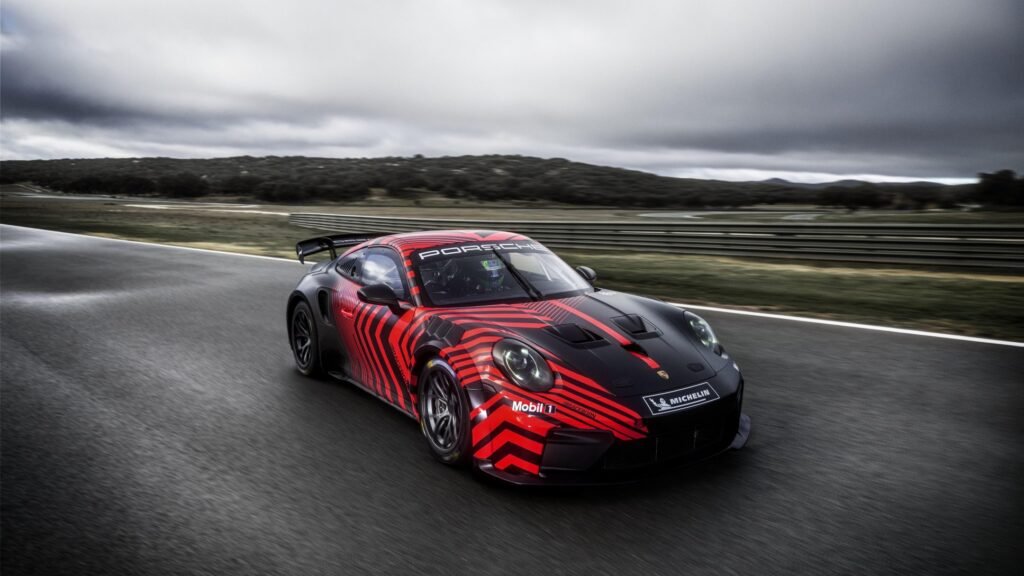
However, now they’re taking a leap with its newly unveiled Porsche 911 GT4 R, which represents a significant shift in the company’s approach to customer racing. Rather than continuing with a mid-engined Cayman platform that has become synonymous with GT4 competition over the past decade, Porsche has moved its entry-level GT racing programme onto the legendary 911. This shift promises greater performance and stronger ties to Porsche’s flagship racing models, representing the evolution of their customer racing model. Consequently, the 911 GT4 R is more than a replacement for the outgoing Cayman GT4 RS Clubsport, instead marking the start of a new era of Porsche motorsport.
A Historic First
The arrival of the 911 GT4 R marks the first time Porsche has built a GT4 race car inspired by its most famous sports car. Since the inception of the modern GT4 regulations, Porsche’s cars have revolved much around the Cayman, a platform that delivered balance, better-manageable operating costs and impressive competitiveness. Since 2016, over 1.5k Cayman-based GT4 race cars have been produced, making the move to the 911 a fundamental change in Porsche’s GT4 programme. Rather than treating GT4 as a separate branch of customer racing, Porsche is aligning its development more closely with its flagship 911 race cars. This new GT4 R shares much of its DNA with the latest 911 GT3 Cup, creating stronger technical continuity across Porsche Motorsport’s customer offerings.
Built on Proven Foundations
To improve efficiency, Porsche’s engineers developed the new GT4 R using the existing 992.2-generation 911 Cup car as a base model, which offered the team several advantages. For example, the existing chassis has already been extensively tested under racing conditions, while many other components have also accumulated experience across thousands of competitive kilometres. Consequently, rather than introducing an entirely new platform, they have refined and adapted an existing package to comply with the GT4 regulations, making the model reliable and effective.
Power in this new vehicle is generated from a naturally aspirated 4.0-litre flat-six boxer engine derived from the current 911 Cup racer. In unrestricted form, this can develop up to 382 kW, with actual results varying depending on Balance of Performance regulations. This is part of GT4 regulations, where organisers use performance-balancing measures to ensure close, fair racing regardless of car manufacturer, meaning horsepower is not the mere indicator of success. Consequently, drivability, consistency and durability are seen as more valuable over the race weekend.
Designed for Racing
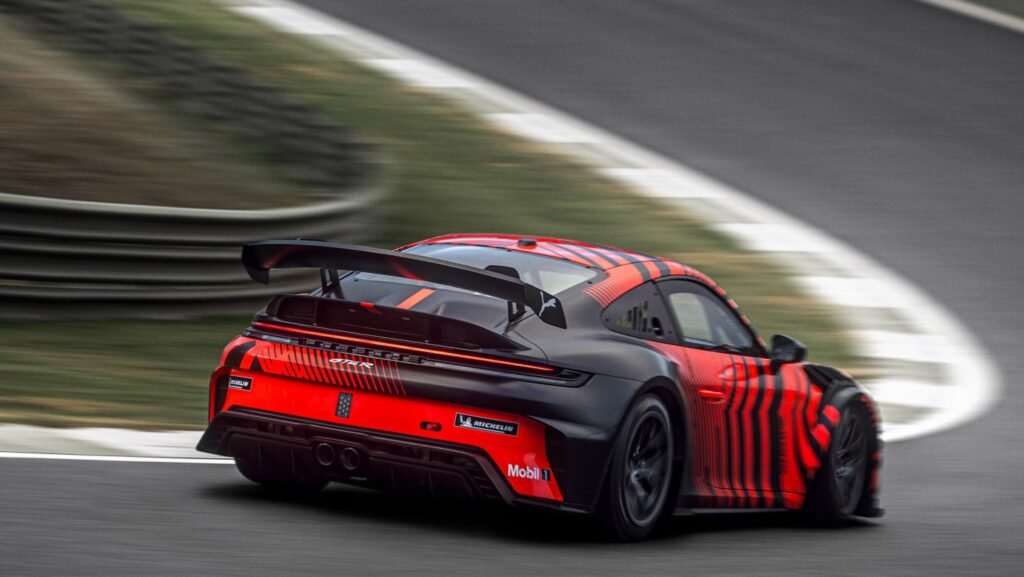
The 911 GT4 R may share its platform with the Cup car, but Porsche has made numerous alterations specifically fitted for GT4 competition. One major difference lies in the wheels, as unlike the centre-lock wheels used for the Cup racer, this GT4 R adopts a more conventional five-stud hub to assist servicing and ensure they are in line with GT4 regulations. Additionally, the car’s suspension has also received alterations, as drivers and engineers have access to dual-adjustable dampers and multiple spring rate options, which enables the team to tailor the car to suit different circuits and driving styles. Finally, the inclusion of a manually adjustable rear wing creates aerodynamic differences between the two car models, which gives GT4 teams increased flexibility.
Lightweight Thinking
One of the more interesting aspects of the GT4 R is Porsche’s continued commitment to sustainable materials. Rather than using conventional materials such as carbon fibre, which is popular for its lightweight yet sturdy composition, numerous panels and interior components, such as the cockpit and doors, are made of natural-fibre reinforced composites bonded together by epoxy resin. Though weight reduction remains the primary objective due to its relationship with speed, the new materials reflect Porsche’s efforts to be more environmentally conscious in its motorsport programmes, while highlighting that speed is not the sole focus in modern racing.
Why GT4 Matters
Though GT3 gains major headlines for its illustrious endurance races like the 24 Hours of Spa or the Nürburgring 24 Hours, GT4 is cementing its place in motorsport and is now one of the fastest-growing racing categories. For many drivers, GT4 serves as the first step into professional racing, being an ideal platform for drivers and customer teams looking to compete at a high level without the devastating financial demands associated with GT3. Porsche understands this importance, viewing GT4 as more than an entry-level space, and instead recognising its place as a central pillar of customer motorsport strategy.
A More Connected Motorsport Ladder
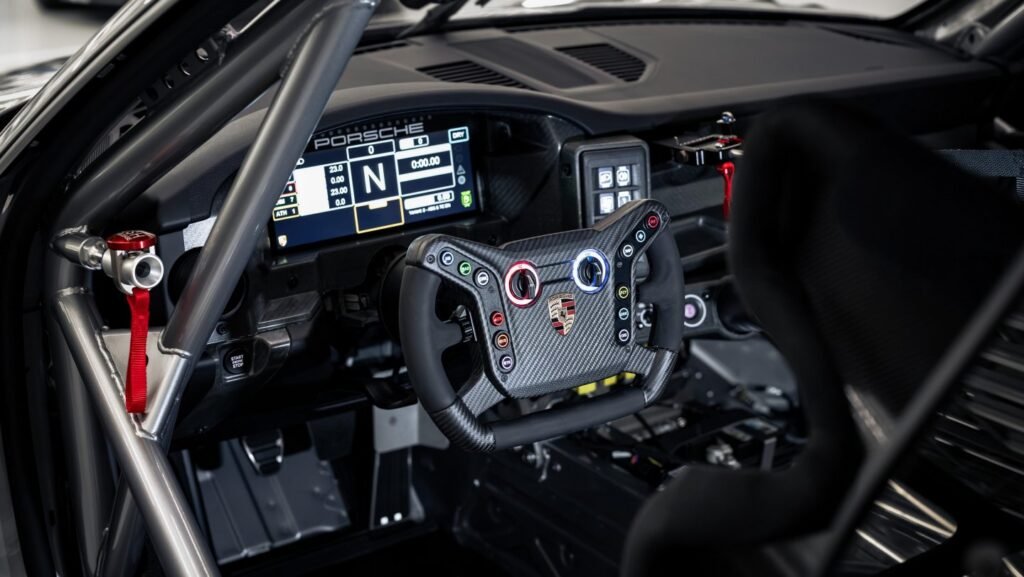
One of the biggest advantages of the new GT4 R lies in how it integrates into Porsche’s broader racing ecosystem. Previously, drivers started in the 911 GT3 Cup before progressing into the Cayman-based GT4 machinery or upgraded directly into GT3 competition. This new GT4 R helps build greater continuity, as now drivers can develop their skills within successive generations of 911-based cars, helping them become familiar with similar cockpit layouts and vehicle behaviour. This type of continuity and familiarity could provide substantial benefits for junior drivers wanting to progress towards international GT3 programmes where competition is fierce. Additionally, beyond driver benefits, Porsche reaps operational efficiency and effectiveness, benefiting from increased car part commonality and shared engineering knowledge across the different categories.
Balancing Performance and Accessibility
Despite GT4 R’s impressive specifications, it has not been developed purely as a factory team, where, like every Porsche customer race car, it is intended for independent teams. Consequently, reliability and maintenance remain a major priority. Consequently, the long service intervals, proven mechanical components from previous models, and pre-established motorsport electronics work together to reduce operating costs over a racing season. Being able to keep cars consistently on track without malfunctions is often a key determinant of long-term success.
Looking Towards 2027
The 911 GT4 R is scheduled to make its competitive debut during the 2027 racing season, where it is expected to appear in leading GT4 championships around the world. It is expected to appear in series such as the GT4 Europe, ADAC GT4 Germany, IMSA Michelin Pilot Challenge and numerous national championships. This new car will need to compete with other established car brands such as BMW, Mercedes-AMG, Aston Martin, Toyota, McLaren and Ford, who are also continuing to invest heavily in GT4 machinery, making the category one of the most closely contested forms of production-based racing.
Written By: Leah Kim
Published On: 6th July 2026