
Art being perceived as a reflection of wealth and power is not new to the contemporary world. Rather, the possession of art and portraiture is historically rooted in nobility and wealth, being preserved solely for monarchs and lords during the 14th century. Despite technological advancements and the evolution of modern expression, high-quality and expressive art remains a symbol of wealth. Despite this, only a few works actually embody luxury and prestige as profoundly as Leonardo da Vinci’s Salvator Mundi. With a deep, long history, once believed to be lost, later mistakenly dismissed as a copy, and then ultimately sold for a record-breaking price of $450.3 million USD, the painting has become far more than simply a Renaissance masterpiece, existing as one of around 20 artworks painted by da Vinci.
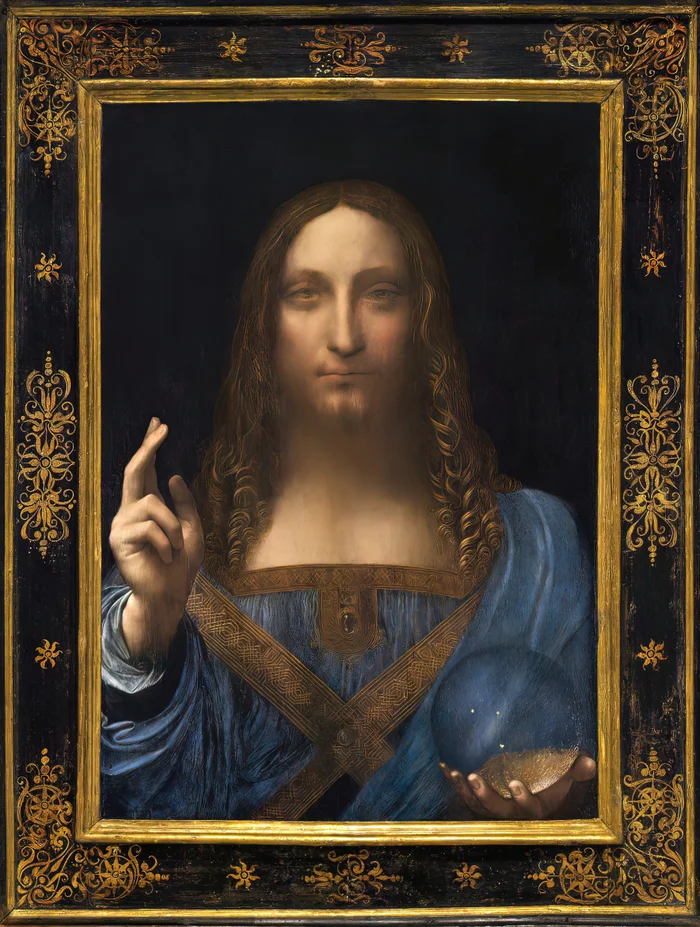
The artwork is commonly referred to as the “male Mona Lisa”, where this masterpiece illustrates Christ as the Saviour of the World, dressed in deep blue robes and with his right hand raised. Painted around 1500, the work embodies da Vinci’s masterful skills, exemplifying his signiture delicate transitions of light and depth. Today, however, its significance transcends its Renaissance origins.
A Masterpiece Lost and Rediscovered
The story of Salvator Mundi exists beyond the painting itself. The journey of this masterpiece is quite eventful, starting once as part of the royal collections; the painting eventually disappeared from the public eye.
By the 20th century, it had been heavily overpainted and damaged, being widely believed to be a copy rather than the original piece by da Vinci himself. Consequently, for decades, it remained in obscurity, being passed around various people without attracting attention.
Its modern rediscovery arose in 2005, when it was purchased at a regional auction in the United States, selling for merely a few thousand dollars and still being perceived as a duplicate.
Following extensive conservation work and scholarly analysis, a group of international experts began suspecting that the artwork was, in fact, the original version. Though the verdict amongst the art world remained divided, adding a layer of intrigue that has greatly contributed to its modern identity.
The Moment That Changed Art History
In November 2017, Salvator Mundi was dramatically sold in an auction at Christie’s in New York. After 19 minutes of bidding, the final auction price was $450.3 million USD, setting a world record for the most expensive artwork ever sold at auction.
Unlike other luxury goods, Salvator Mundi is, at its core, irreplaceable and completely unique. There is only one Leonardo da Vinci work in private hands, and in total, fewer than twenty paintings are generally believed to be authentically painted by him. In a world of ultra-high-net-worth collecting, rarity and exclusivity are currency, and in this case, there is only one piece of this work.
The Psychology of a $450 Million Painting
Part of what makes a singular artwork valued at $450.3 million lies in authorship. Da Vinci is largely regarded as one of the greatest artistic minds in history. Owning one of his pieces can be seen as owning a fragment of cultural civilisation itself. Though even beyond authorship, Salvator Mundi represents prestige and exclusivity. In contemporary luxury culture, ownership is no longer the sole marker of status. Access and rarity, rather, help define exclusivity. Few objects embody this shift more clearly than an artwork that has been seen by very few people in recent years. Its near-mythical visibility has transformed it into something almost conceptual, becoming a masterpiece that exists in reputation.
Provenance and Power
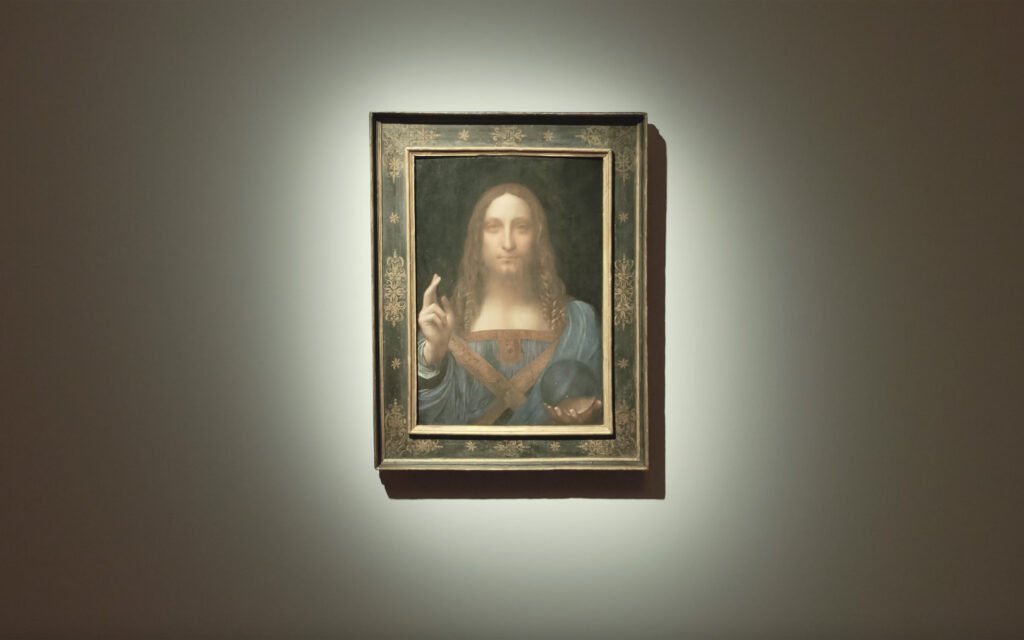
A deeper layer of its value lies in provenance. The painting’s historical ties to European royalty, such as King Charles I, reinforce its long-standing association with power.
For art collectors, the painting’s origins and chain of custody become capital, where the artwork’s story is its identity and extends desirability beyond its physical form.
Because of this, Salvator Mundi acts as a document capturing centuries of prestige which has moved through the powerful hands of kings, collectors, and institutions.
Its mystery has elevated its status
Following its record-breaking sale, Salvator Mundi has largely disappeared from the public eye, with its current location remaining uncertain. With very few discussions on its whereabouts, it has not been publicly shown in years.
This mystery and absence have furthered its legend, particularly in a modern world defined by digital saturation and constant visibility. Unlike most masterpieces housed in public museums, Salvator Mundi exists in secrecy.
Redefining Luxury in the Modern Art World
More than five centuries after da Vinci painted Salvator Mundi, its meaning continues to evolve. What initially began as a devotional Renaissance work has become a symbol of modern wealth and exclusivity.
Written By: Leah Kim
Published On: 15th June 2026