
For more than two decades, Bugatti’s W16 engine has defined the pinnacle of automotive engineering. It powered some of the fastest, most extravagant cars ever built and became a symbol of mechanical excess done with absolute precision. Now, with the Bugatti Mistral roadster, that legendary engine makes its final appearance. Limited to just 99 units and priced in the multi-million dollar range, the Mistral is more than a hypercar. It is a farewell to an engineering masterpiece that helped reshape the limits of performance and luxury in the modern automotive world.
The Legacy of the W16 Engine
When Bugatti introduced the W16 engine in 2005 with the Veyron, the automotive industry witnessed something unprecedented. The engine featured sixteen cylinders arranged in a unique W configuration, combined with four turbochargers to produce immense power. At a time when many manufacturers were focusing on efficiency and downsizing, Bugatti moved in the opposite direction. The W16 was unapologetically excessive and technically ambitious.
Over the years the engine evolved across multiple Bugatti models including the Veyron and later the Chiron. Power outputs climbed from 1001 horsepower in the original Veyron to well over 1500 horsepower in later Chiron variants. The W16 became synonymous with speed records, engineering milestones, and a level of craftsmanship that very few manufacturers could attempt. Each engine was assembled by hand, requiring meticulous attention to detail and hundreds of hours of work.
Beyond raw power, the W16 came to represent Bugatti’s philosophy of pushing boundaries. It demonstrated what was possible when engineering ambition was paired with virtually unlimited resources and technical expertise. For enthusiasts and collectors, the engine itself became an icon. The sound, the complexity, and the sheer scale of its performance elevated it to legendary status within automotive history.
The Birth of the Bugatti Mistral
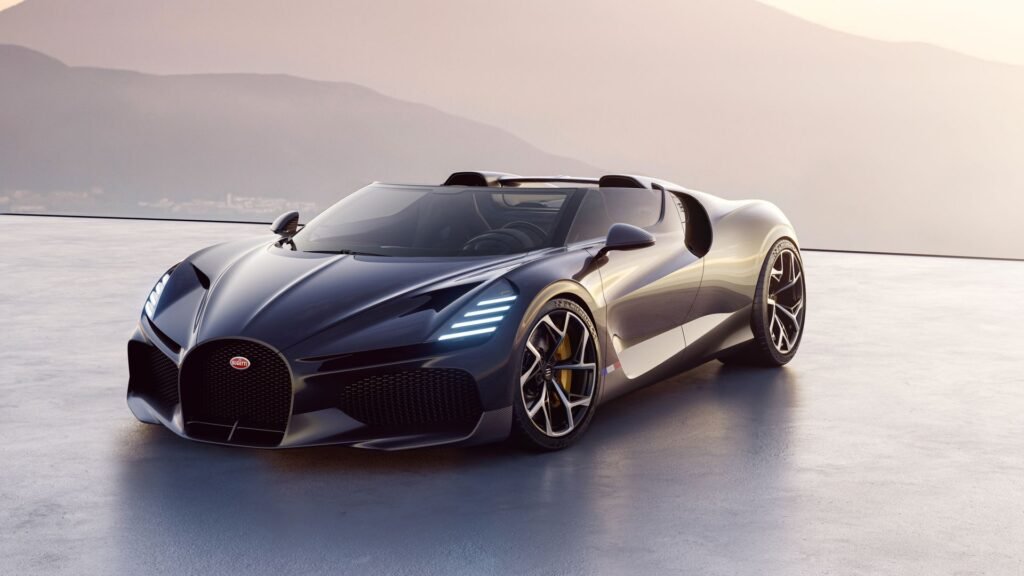
The Bugatti Mistral was created as the ultimate celebration of that legendary engine. Unlike most modern Bugatti models, the Mistral is a roadster with a fully open roof. Removing the roof was not simply a design choice. It required significant engineering adjustments to maintain structural rigidity and ensure the car could safely handle the immense power of the W16.
Bugatti based the Mistral on the Chiron platform but redesigned the bodywork to create a unique visual identity. The car features flowing aerodynamic lines that guide air through sculpted channels along the body. Large air intakes behind the seats feed the W16 engine, turning a functional requirement into a striking visual element.
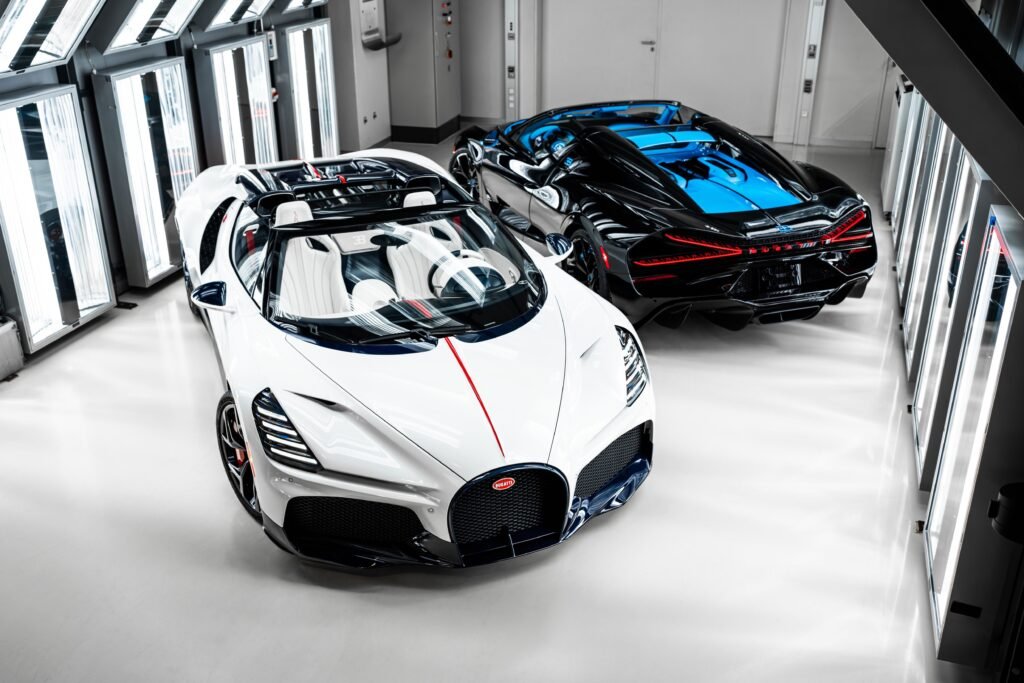
Inside, the cabin blends extreme luxury with hypercar performance. Materials include leather, aluminum, carbon fiber, and carefully machined metal components. In a nod to Bugatti’s artistic heritage, the gear selector even contains an amber insert sculpted with the famous Bugatti dancing elephant, a tribute to the brand’s early twentieth century history. The result is a machine that feels both futuristic and nostalgic. It carries the latest Bugatti technology while also honoring the company’s long tradition of craftsmanship and artistic design.
Performance at the Absodlute Limit
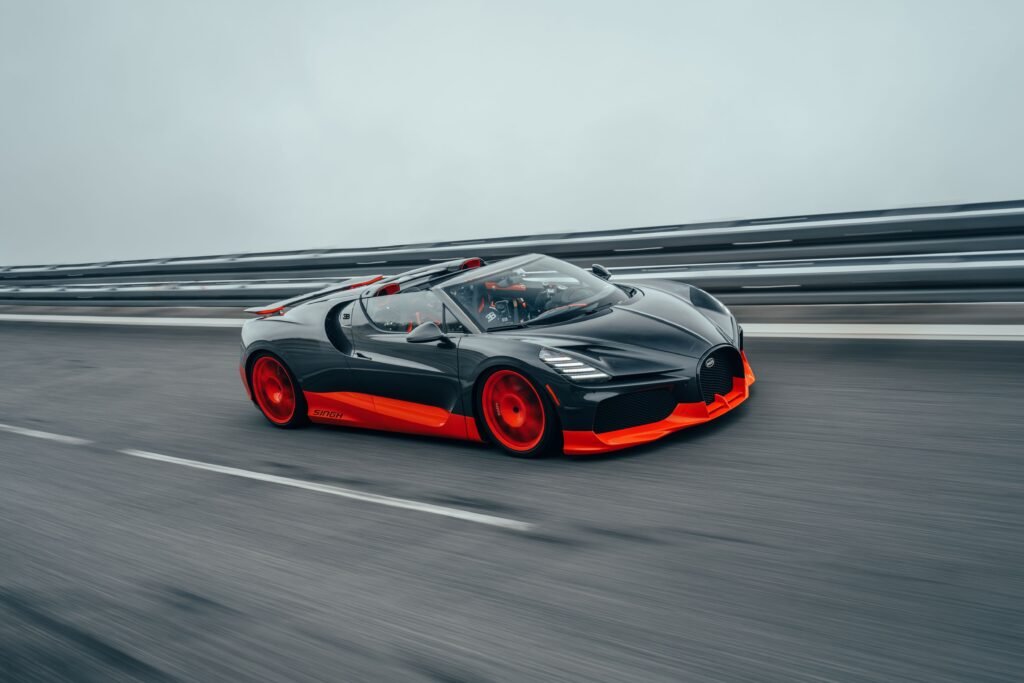
Despite its role as a commemorative model, the Mistral is far from a symbolic farewell. It remains one of the most powerful roadsters ever built. Equipped with the 1600 horsepower version of the quad turbocharged W16 engine, the car delivers performance figures that place it firmly among the fastest vehicles in existence.
Bugatti has indicated that the Mistral is designed to become the fastest open top production car in the world. Engineers carefully optimized the aerodynamics to allow the vehicle to reach extraordinary speeds while maintaining stability. Even minor changes to airflow, cooling systems, and body structure required extensive testing due to the intense forces generated at extreme velocity.
Acceleration is immediate and relentless. The engine delivers massive torque across a wide power band, pushing the car forward with astonishing force. Yet the Mistral also aims to preserve the refinement expected from a Bugatti. Advanced suspension systems and precise engineering ensure that even at high speeds the car remains composed and controllable. For drivers fortunate enough to experience it, the Mistral offers something rare in the modern automotive landscape. It combines brutal mechanical power with elegance and craftsmanship, creating a driving experience that is both exhilarating and luxurious.
The End of the W16 Era
The Bugatti Mistral marks the final chapter for the W16 engine. Future Bugatti models will move toward hybrid technology developed in partnership with Rimac, reflecting the industry’s shift toward electrification and new performance architectures. While these upcoming vehicles promise remarkable performance, they will represent a different technological philosophy.
The W16 belongs to a unique moment in automotive history when engineering ambition pushed combustion engines to their most extreme form. It was an era defined by record breaking speed, massive horsepower figures, and the pursuit of mechanical perfection without compromise.
For collectors, the Mistral represents the ultimate expression of that era. With only 99 units produced and all reportedly sold before production even began, the car instantly became one of the most desirable modern Bugattis. It offers not only exceptional performance but also historical significance. More importantly, the Mistral serves as a tribute to the engineers, designers, and craftsmen who spent nearly twenty years refining the W16 platform. Their work produced some of the most extraordinary machines ever built. As the automotive world transitions toward electrification, the Bugatti Mistral stands as a final celebration of a legendary engine and the bold vision that brought it to life.
Written By: Mia Quisumbing
Published On: 6th March 2025