
Milan is about to become the centre of the haute horlogerie world this autumn, as Patek Philippe brings its Watch Art Grand Exhibition to Italy for the first time. Running October 2 to 18, 2026, the seventh edition will fill the historic CityOval, formerly Palazzo delle Scintille, in Milan’s CityLife district with watchmaking, craftsmanship, history and art.
It’s also the largest edition Patek Philippe has staged: roughly 500 watches and historic objects across more than 2,500 square metres. This is split into fifteen themed areas that move from the maison’s current collections into its archives, museum pieces, manufacturing processes and specialised crafts.
For a brand whose appeal has never rested purely on telling time, the exhibition is a chance to explain what actually separates a Patek Philippe from a luxury accessory.
A European return with a new scale
The Watch Art Grand Exhibition series started in Dubai in 2012, then travelled to Munich in 2013, London in 2015, New York in 2017, Singapore in 2019 and Tokyo in 2023. Each edition adapts to its city while keeping the same goal: to give the public an unusually complete look at Patek Philippe.
London, the last European edition, drew about 42,500 visitors to the Saatchi Gallery in 2015 with around 400 pieces on display. Tokyo, the most recent stop, showcased nearly 500 timepieces across 2,500 square metres and drew more than 60,000 guests. Milan marks a return to Europe after an 11-year gap, where the scale and scope have both grown considerably.
The exhibition recreates parts of Patek Philippe’s Geneva world, including spaces modelled on its historic Rue du Rhône salon, its manufacturing environment and the Patek Philippe Museum. Rather than lining up watches in glass cases, the format is built to show how design, engineering, decorative arts and traditional craft intersect.
From the contemporary collection to centuries of watchmaking
One of the exhibition’s strongest draws is the contrast between Patek Philippe’s current catalogue and its historical holdings. Visitors will see contemporary collections, the Calatrava, Nautilus and Aquanaut, alongside World Time watches, Complications and Grand Complications. Additionally, the exhibition reaches much further back, drawing on pieces from the Patek Philippe Museum in Geneva. More than 90 museum pieces are expected in Milan, several of which are chosen specifically for their ties to Italy.
These pieces are a useful reminder that Patek Philippe’s story predates the modern luxury-watch market by generations. Placing vintage pieces alongside contemporary ones lets visitors trace how techniques, aesthetics and mechanical ideas have actually evolved, rather than treating the old watches as static artefacts.
The spectacle of complicated watchmaking
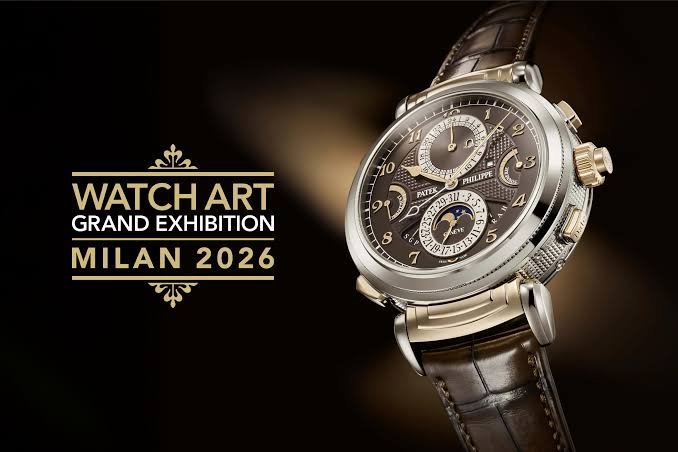
Some of the strongest displays for enthusiasts will centre on Patek Philippe’s complicated watches: the Calibre 89, a landmark pocket watch with 33 complications, the Grandmaster Chime Ref. 5175, with 20, and the Star Calibre 2000.
The point of showing watches like these isn’t the spec sheet. Perpetual calendars, minute repeaters, astronomical indications and chiming mechanisms show just how much knowledge it takes to fit multiple functions into an extraordinarily small mechanical space.
Milan also has a dedicated “Master of Sound” area built around some of the maison’s most sophisticated chiming watches. Hearing a minute repeater or grande sonnerie in person is nothing like seeing a photo of one, and the exhibition treats sound as part of the experience rather than an afterthought, something that photographs alone can’t capture.
Rare Handcrafts take centre stage
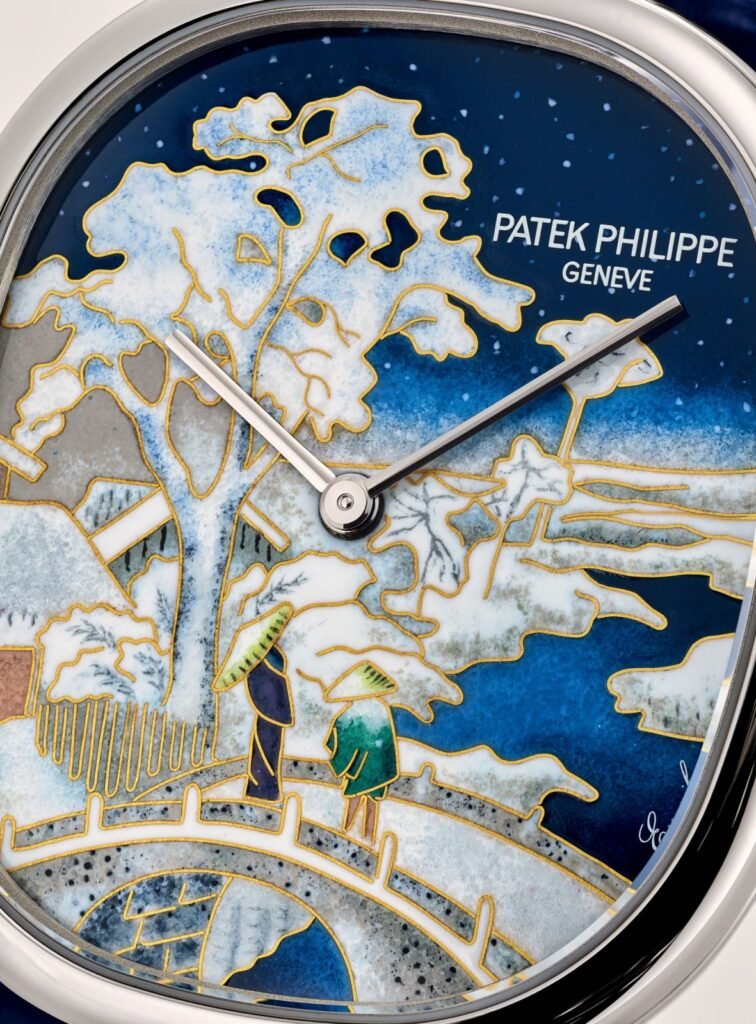
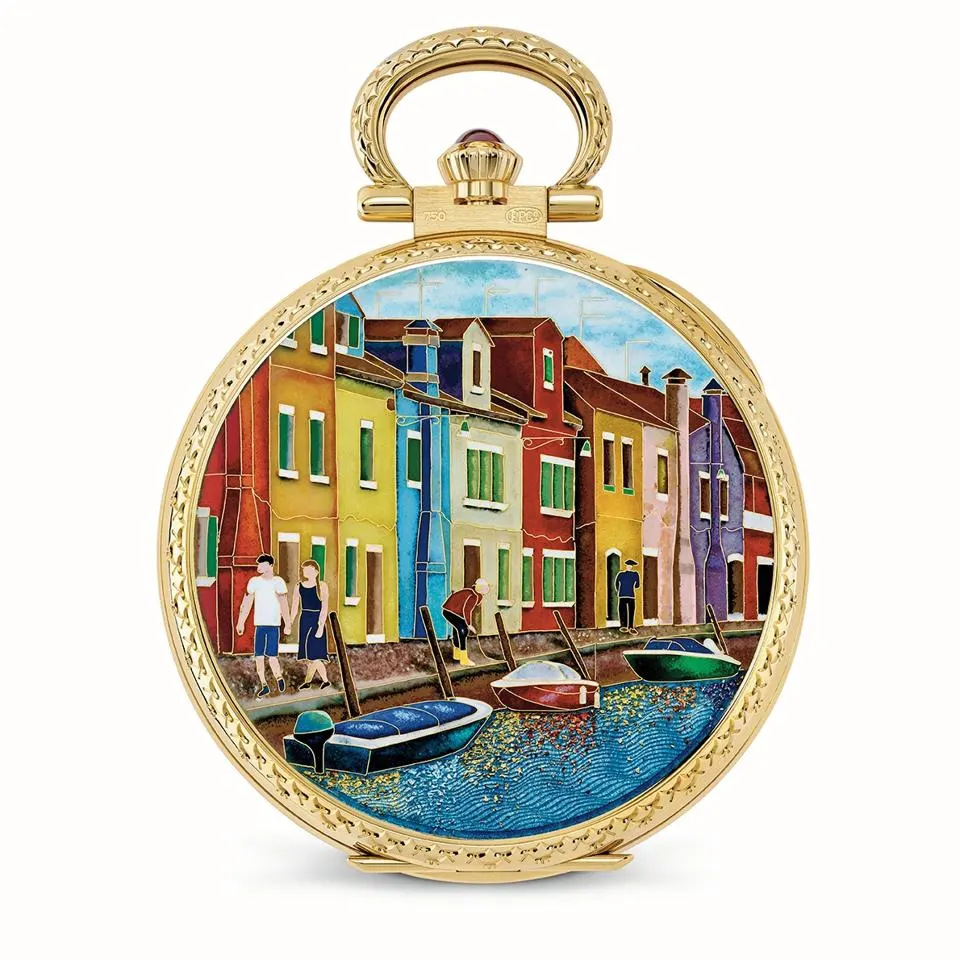
If the complications show off mechanical expertise, the Rare Handcrafts section shows a different side of the house entirely. For Milan, Patek Philippe has prepared 27 Rare Handcrafts pieces, built with cloisonné enamelling, engraving, guilloché, miniature painting and gem-setting. Among them is the unique Burano pocket watch, Ref. 992/193J-001, inspired by the Venetian island of Burano. The yellow-gold piece uses cloisonné enamel in 70 colours, with guilloché work underneath creating the impression of water, and a stand set with 108 spinels and 102 sapphires.
Another Italian-inspired piece is the Sicilian Oranges dome table clock, Ref. 20179M-001, depicting orange trees and a miniature view of Palermo in Grand Feu cloisonné enamel, built from an intricate network of gold wire and dozens of enamel colours, with repeated firings needed to finish it.
Pieces like these are why “watchmaking” can feel too narrow a word for Patek Philippe’s highest level of craft. These are horological objects and works of decorative art at once, and they make visible something usually hidden behind the prestige of a finished watch: time itself is one of the ingredients. Working faster doesn’t necessarily improve an object like this. Often the opposite is true. Patience, repetition and accumulated skill are what make the result possible.
Why Milan makes sense
Milan sits at the intersection of design, fashion, architecture and manufacturing, which makes it a natural setting for a brand that treats watchmaking as both engineering and applied art.
Italy has a real history with Patek Philippe, too. The museum pieces chosen for Milan give that relationship tangible form, while the Italian-themed Rare Handcrafts link the house’s Geneva traditions directly to the country’s own artistic heritage.
The venue adds another layer. The CityOval, inside the former Palazzo delle Scintille in CityLife, offers a large space under its dome that will function as a temporary Patek Philippe world, part museum, part workshop, part immersive experience, rather than a conventional retail or trade-show setup. Admission is free, which fits the exhibition’s stated goal of making fine watchmaking accessible to a wider public rather than treating it as a sales event.
Opening the doors to a wider audience
Maybe the most interesting part of the Milan exhibition is its attempt to bridge the gap between collectors and people who know little about mechanical watches.
A Patek Philippe Grand Complication can be intimidating to anyone unfamiliar with horology. Technical terms, historical references and extraordinary prices can make high watchmaking feel like a closed world. This format offers a way in.
Visitors can watch artisans work, see movements and decorative techniques explained, compare contemporary watches against historical ones, and encounter pieces normally difficult to see outside the Geneva museum. Ideas like hand-finishing, enamelling and mechanical complexity become tangible instead of abstract.
That educational angle has been part of the concept since Dubai. Over the years it’s grown into an increasingly ambitious attempt to communicate the full breadth of Patek Philippe, not just its most commercially recognisable watches.
A temporary museum for Milan
The Milan exhibition is less about any single watch than about the ecosystem that makes a Patek Philippe possible in the first place. It brings together museum pieces and current collections, centuries-old techniques and modern manufacturing, mechanical ingenuity and miniature painting. The scale is impressive, but the real purpose is more intimate: showing how much knowledge fits inside an object small enough to wear on a wrist.
From October 2 to 18, the CityOval becomes a destination for anyone interested in mechanical watches, decorative arts, or craftsmanship generally, with around 500 timepieces and objects, museum rarities, live demonstrations and Italian-inspired creations on show. After more than a decade away from Europe, Patek Philippe isn’t just bringing the exhibition back. It’s bringing a considerably larger version of its world, inviting Milan to see time not just as something measured, but as something crafted, preserved and passed on.
Written By: Leah Kim
Published On: 21st August 2026