
New discoveries at the Aswan necropolis shed light on burial practices spanning centuries of Egyptian history. Archaeologists have uncovered a series of ancient tombs filled with remarkably preserved pottery and jewelry at Qubbet Al-Hawa in southern Egypt. The discoveries, announced by Egypt’s Supreme Council of Antiquities, include chambers containing 160 inscribed vessels and courtyards brimming with Middle Kingdom adornments. The finds offer fresh insight into how the necropolis evolved from the Old Kingdom through the Roman period.
A Major Discovery in Upper Egypt
A research mission led by Supreme Council of Antiquities has revealed new archaeological treasures at Qubbet el-Hawa, a sprawling necropolis located on the west bank of the Nile near Aswan.
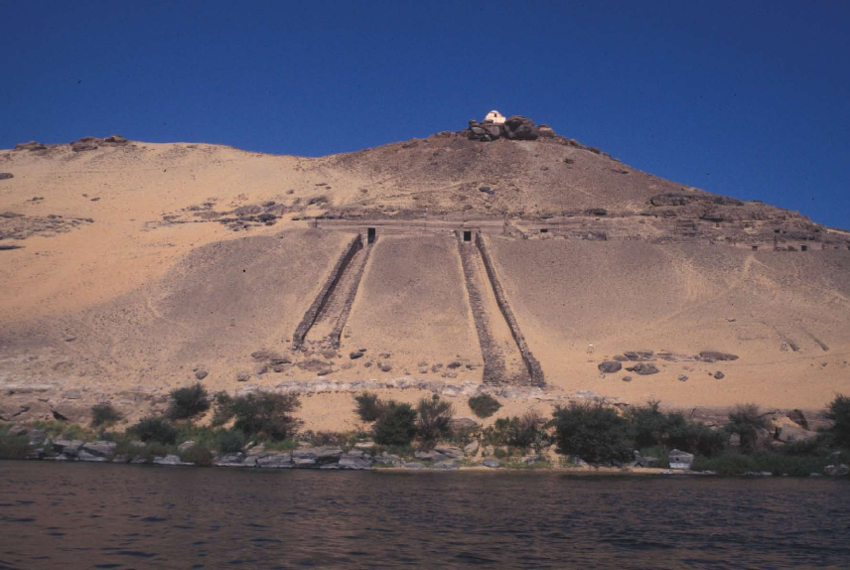
Long known as one of Upper Egypt’s most significant burial sites, Qubbet Al-Hawa contains approximately 100 rock cut tombs carved into sandstone cliffs. These tombs were originally constructed for local governors, dignitaries and priests, reflecting the site’s importance as a provincial power center during ancient times.
The latest excavation focused on rock cut burial shafts and chambers that had not previously been fully explored. What archaeologists found inside has deepened understanding of funerary customs and the long term reuse of tomb complexes.
Chambers Filled With Inscribed Pottery
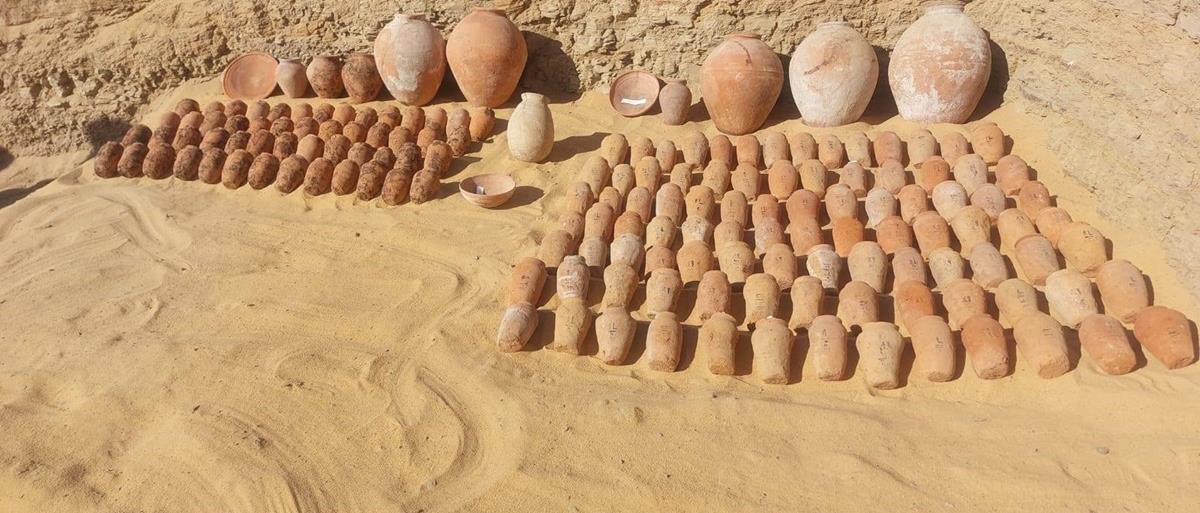
Among the most striking discoveries were two burial chambers containing a total of 160 pottery vessels. Many of the jars are covered with inscriptions and remain exceptionally well preserved despite their age.
Researchers believe the vessels were used to store grain and liquids, possibly as offerings for the deceased in the afterlife. The variety in shapes and sizes suggests multiple functional purposes, while the inscriptions may provide clues about ownership, contents or ritual significance.
The preservation of organic storage containers is rare in many archaeological contexts, making this cache particularly valuable. The pottery offers tangible evidence of daily life, trade and provisioning practices in ancient Egypt.
Jewelry and Personal Adornments From the Middle Kingdom
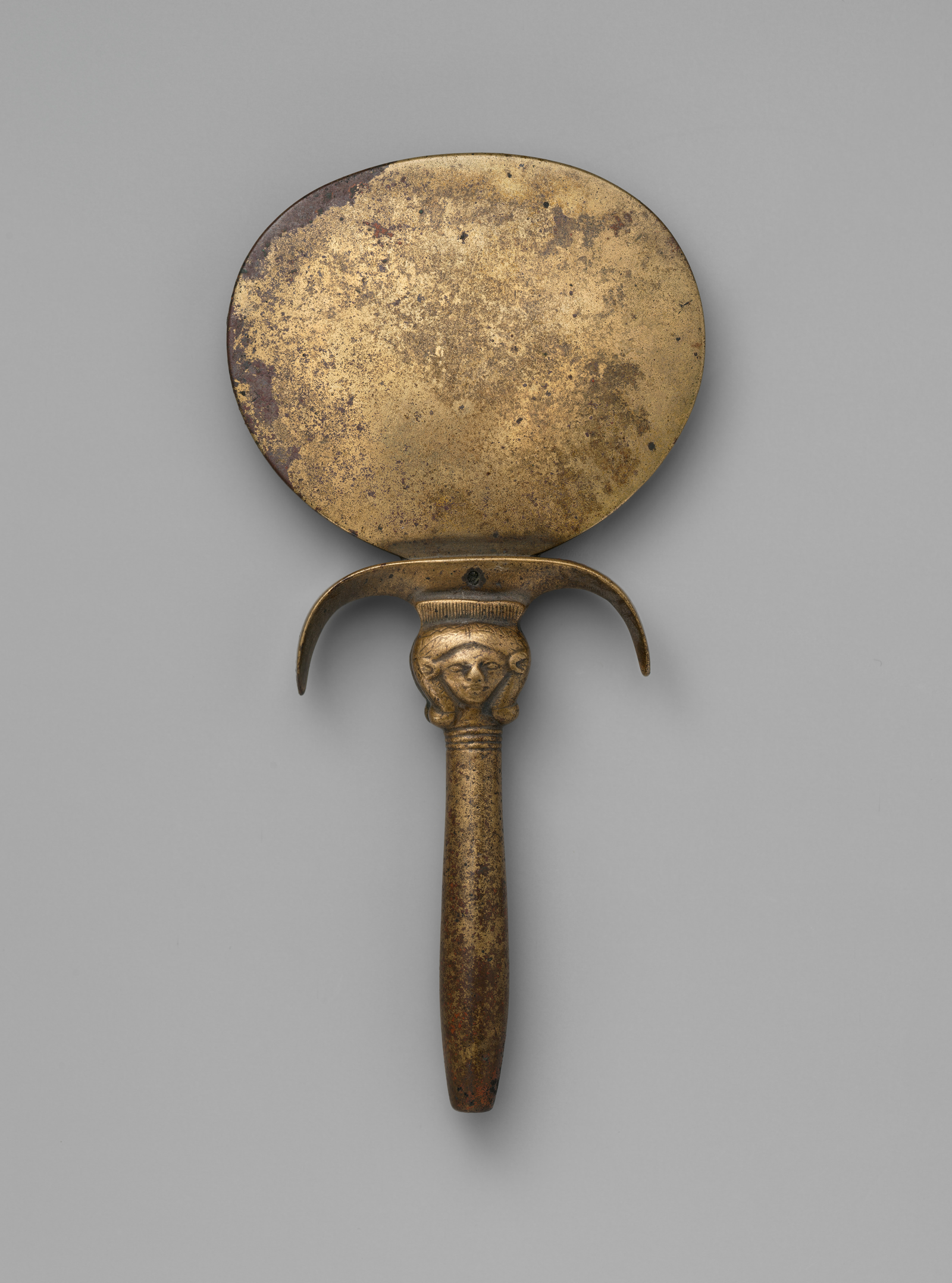
In another tomb within the complex, archaeologists uncovered an outer courtyard filled with personal adornments dating to the Middle Kingdom. Items included bronze mirrors, kohl containers used for eye cosmetics, and intricately beaded necklaces.
These objects highlight the cultural and symbolic importance of personal grooming and ornamentation in ancient Egyptian society. Jewelry and cosmetic tools were often buried with the dead to ensure status, beauty and protection in the afterlife.
The presence of Middle Kingdom artifacts within a site that originated in the Old Kingdom underscores how Qubbet Al-Hawa remained an active burial ground for centuries. Rather than serving a single era, the necropolis evolved alongside Egypt’s shifting political and cultural landscape.
A Site Spanning Millennia
Archaeological evidence suggests that the tomb complex at Qubbet Al-Hawa was first used during the Old Kingdom, approximately 2700 to 2200 BCE. Over time, it continued to function as a burial site through successive periods, eventually remaining active into the Roman era.
This continuity of use makes the site especially significant. Tombs were not static monuments but dynamic spaces that were adapted, reused and reinterpreted by later generations.
Hisham El Leithy, secretary general of the Supreme Council of Antiquities, emphasized that ongoing study of the rock cut tombs will aim to clarify how they were used and reused over time. Careful documentation of architectural changes, burial goods and inscriptions may reveal patterns of social hierarchy, religious transformation and regional governance.
A History of Ongoing Discoveries
Qubbet Al-Hawa was first excavated in the late 1880s, yet it continues to yield remarkable finds. In recent years, archaeologists have uncovered 10 mummified crocodiles in 2019, six flat roofed mud brick graves in 2020, and three Old Kingdom tombs containing human remains in 2025.
These discoveries demonstrate that even well known archaeological sites can hold untapped secrets. Advances in excavation techniques, conservation methods and documentation technology have enabled researchers to revisit areas previously thought to be fully explored.
In late 2015, the Egyptian Museum and Papyrus Collection in Berlin partnered with the Aswan Inspectorate, part of Egypt’s Ministry of Tourism and Antiquities, to document and conserve a newly discovered necropolis about a mile north of Qubbet Al-Hawa. That ongoing project has uncovered nine tombs within a burial complex spanning nearly 300,000 square feet.
Together, these efforts are reshaping scholarly understanding of funerary landscapes in Upper Egypt.
Insights Into Daily Life and Belief
Beyond their visual appeal, the newly discovered artifacts provide a window into the practical and spiritual lives of ancient Egyptians. Storage vessels filled with grain or liquids speak to agricultural systems and food security, while inscribed pottery may reference administrative or ritual practices.
Similarly, jewelry and cosmetic items reveal how individuals expressed identity, status and devotion. The inclusion of such objects in burials reflects the deeply held belief that life continued after death, and that material goods could support the deceased in the next world.
By examining the distribution and dating of artifacts across different tombs, researchers can trace changes in craftsmanship, trade networks and religious symbolism over centuries.
Continuing the Story of Qubbet Al-Hawa
The latest announcement from the Supreme Council of Antiquities reinforces Qubbet Al-Hawa’s status as one of Egypt’s most important archaeological sites. Its cliffside tombs, overlooking the Nile near Aswan, stand as enduring reminders of regional power and spiritual devotion in antiquity.
As excavations continue, scholars hope to refine the chronology of the site and better understand how communities interacted with these burial spaces across generations. Each newly opened chamber adds another layer to a story that spans more than two thousand years.
For now, the discovery of pottery filled chambers and jewelry laden courtyards offers a vivid glimpse into the complexity of ancient Egyptian burial traditions. At Qubbet Al-Hawa, the past continues to emerge from the rock, revealing not only treasures but the lived experiences and enduring beliefs of a civilization that still captivates the modern world.
Written By: Lydia Kelly
Published: 24th February 2026