
For years, the European art market operated within a complex and often inconsistent system of value added tax. Dealers navigated differing national rules, collectors calculated cross border implications and governments balanced cultural ambition with fiscal policy. With the implementation of Directive 2022 542 on January 1, the European Union introduced a significant reform designed to simplify this landscape. What followed has been more than administrative adjustment. It has quietly redefined Europe’s competitive art ecosystem.
The directive allows member states to apply reduced VAT rates on art sales, provided those rates remain above five percent. It also dismantles older mechanisms that had created uneven conditions between countries. While the goal was harmonisation, implementation has varied across the bloc, revealing both ambition and hesitation among member states.
France and Germany Move Quickly
France and Germany responded swiftly to the directive. France adopted a simplified VAT rate of 5.5 percent, replacing its more complex margin based system. Germany reduced its rate dramatically from 19 percent to 7 percent, a change that many in the industry had long advocated.
These adjustments were not symbolic. Dealers have repeatedly emphasised that even marginal differences in tax rates can influence where collectors choose to purchase works. In a market where transactions often involve six or seven figure sums, a shift of several percentage points translates into substantial financial impact.
Germany’s previous 19 percent VAT had been widely viewed as a disadvantage, particularly in comparison with other art capitals. The reduction to 7 percent is expected to stimulate both domestic and cross border activity. France’s simplified structure, meanwhile, enhances transparency and predictability, strengthening Paris’s standing as a major art hub.
Uneven Responses Across the Union
Not all member states followed the same trajectory. The Netherlands signalled plans to raise VAT on art transactions, prompting concern among dealers. Belgium initially proposed a rate as high as 21 percent before industry pressure led to a reduction to 6 percent for most art sales.

Italy’s response was initially slower. After months of debate and advocacy from galleries and cultural stakeholders, the Italian government ultimately reduced its VAT rate on art sales to 5 percent, now the lowest in the European Union.
This divergence underscores the tension between fiscal caution and cultural strategy. While the directive creates room for flexibility, national priorities continue to shape policy outcomes.
Why VAT Matters in the Art World
Art operates within a uniquely mobile market. Collectors can purchase works in Paris, Berlin or Milan with relative ease. Art fairs and galleries attract international buyers who are acutely aware of cost differences.
Lower VAT rates influence not only direct sales but also where galleries choose to establish presence and where art fairs flourish. A two or three percent differential may seem modest, yet in competitive global markets such margins can redirect capital flows.
Supporters of reduced VAT argue that art is not merely a commercial commodity. It is a cultural asset with broader economic spillover. Museums, tourism, hospitality and creative industries all benefit from a vibrant art market. In this view, lower VAT rates function as investment rather than concession.
Paris Strengthens Its Position
Early indicators suggest that France’s simplified 5.5 percent VAT rate is reinforcing Paris’s appeal. International galleries have increasingly cited administrative clarity and favourable tax conditions as factors in their decision making.
The city’s recent resurgence as a global art centre has been supported by infrastructure investment, institutional programming and policy alignment. The VAT reform adds another layer of competitiveness.
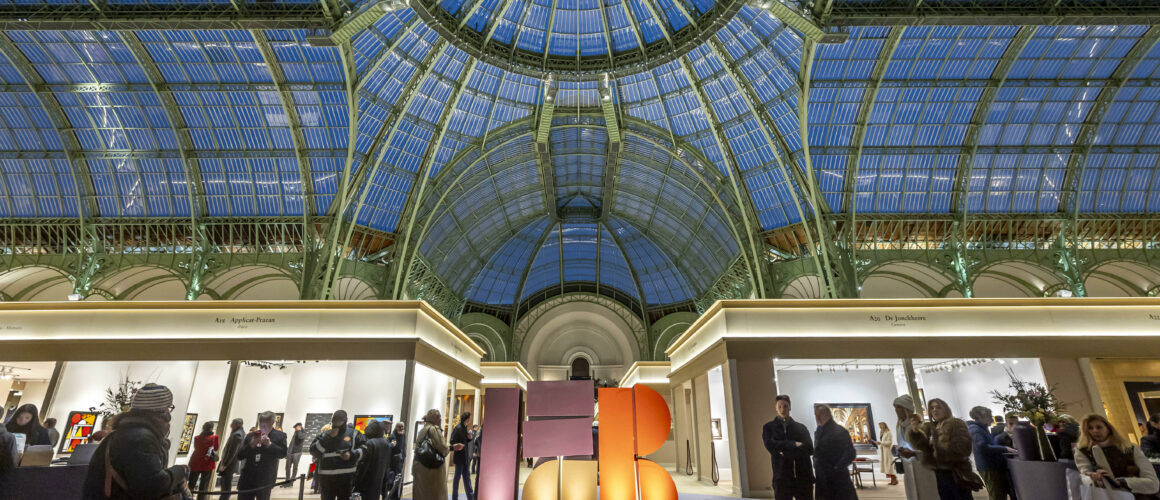
Events such as major art fairs hosted at the Grand Palais reflect this momentum. Dealers report that streamlined tax procedures reduce uncertainty and facilitate smoother transactions.
Germany Reclaims Competitiveness

Germany’s reduction to 7 percent represents a structural shift. For years, its comparatively high VAT had been viewed as a constraint. The new rate positions Germany closer to its European counterparts, encouraging activity that may previously have migrated elsewhere.
Dealers anticipate that this recalibration will attract collectors who once looked beyond Germany’s borders. It may also encourage domestic galleries to expand operations with renewed confidence.
In a market shaped by perception as much as policy, the reduction signals that Germany intends to compete assertively within Europe’s cultural economy.
Italy Embraces Cultural Strategy
Italy’s eventual decision to set VAT at 5 percent carries symbolic and practical weight. As the lowest rate within the European Union, it positions the country strategically within the art market.
Italian art fairs and galleries have already reported positive sentiment following the reform. Collectors respond to predictability and financial advantage. The lower rate may enhance Italy’s attractiveness not only to domestic buyers but also to international collectors.
This shift aligns with Italy’s broader efforts to leverage cultural heritage as economic driver.
The Broader Economic Debate
Critics of reduced VAT caution against potential revenue losses. Governments must weigh fiscal stability against market stimulation. Yet advocates argue that cultural goods generate indirect economic benefits that extend beyond immediate tax receipts.
Art markets contribute to tourism, employment and international prestige. Lower VAT rates may stimulate higher transaction volumes, offsetting reduced percentages with increased activity.
The directive thus reflects a nuanced economic philosophy. It acknowledges that cultural sectors operate differently from standard consumer markets.
A New Competitive Landscape
The uneven implementation of Directive 2022 542 reveals both opportunity and competition. Member states now operate within a framework that allows strategic positioning. Countries that embrace reduced rates may gain advantage, while those that hesitate risk marginalisation.
The European art market, once constrained by fragmented systems, now faces a recalibrated environment. Dealers, collectors and institutions must adapt to this new landscape.
The directive does not impose uniformity. Instead, it creates a field where policy choices shape cultural influence.
Art, Tax and the Politics of Perception
Perhaps the most intriguing aspect of this reform is its public framing. Tax policy rarely generates excitement. Yet within the art world, these changes have been discussed with unusual intensity.
By linking fiscal reform with cultural vitality, the European Union has reframed taxation as instrument of artistic competitiveness. In doing so, it has rendered a technical directive unexpectedly consequential.
What once appeared as bureaucratic adjustment now stands as catalyst for structural change.
A Market in Motion
As the first year of implementation unfolds, the long term effects of reduced VAT rates will become clearer. Early signals suggest increased activity in key markets such as France and Italy. Germany’s adjustment may redirect flows that had previously favoured neighbouring countries.
The European Union’s effort to simplify and recalibrate art taxation reflects recognition of culture’s economic significance. Directive 2022 542 may not have been designed to inspire excitement. Yet in reshaping incentives and competitive dynamics, it has undeniably influenced the art world.
Tax reform, rarely described as elegant, has in this instance altered the aesthetic and economic landscape of European art.
Written by: Linh Giang Nguyen
Published on: 2rd March 2026