
At LVMH’s latest annual general meeting, Bernard Arnault reaffirmed his long-term vision while confronting a more volatile global landscape. With each of his five children stepping into the spotlight, the event doubled as a subtle signal of generational transition. Yet, for all the speculation, Arnault made one thing clear: he remains firmly in command.
A Stage Set Beneath the Louvre
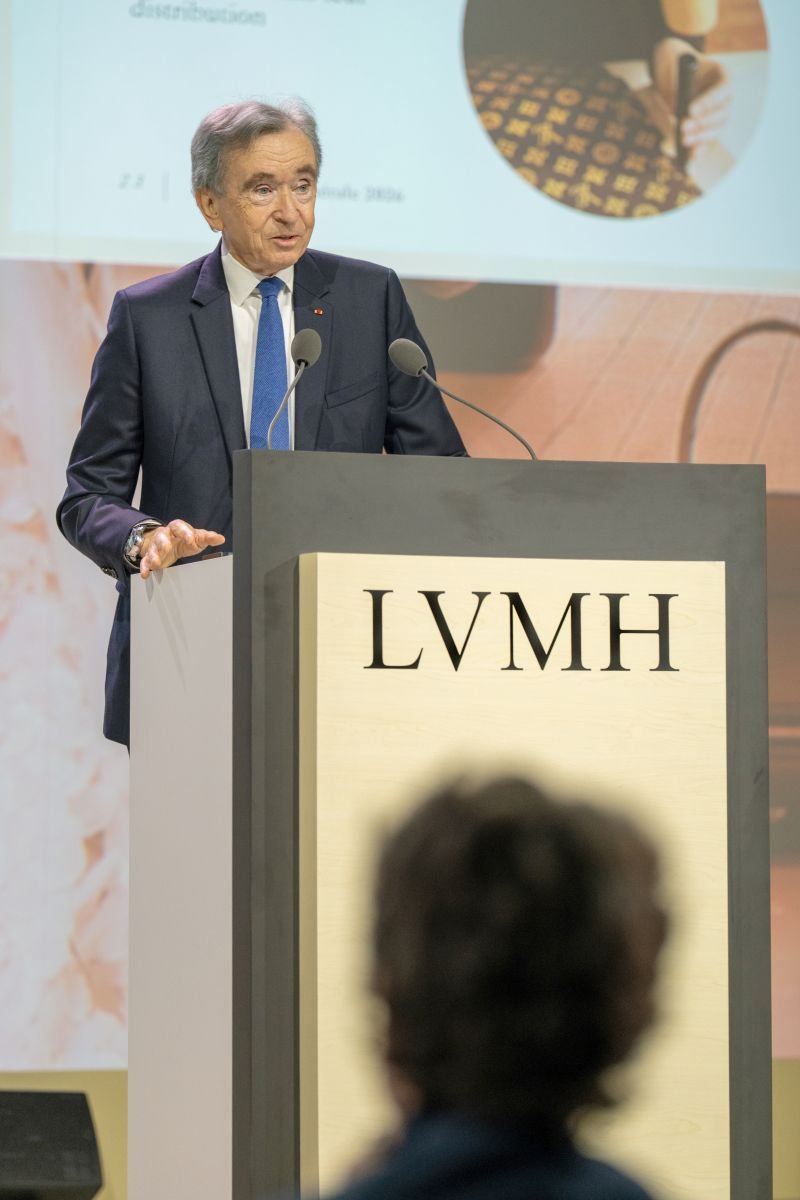
On a brisk Thursday morning beneath the glass and steel canopy of the Carrousel du Louvre, anticipation hummed through a crowd more accustomed to art than earnings. This was no ordinary corporate gathering. Shareholders, analysts, and observers assembled not merely for financial disclosures, but for a glimpse into the thinking of the man who has come to define modern luxury: Bernard Arnault.
The setting itself felt symbolic. Just steps away from some of the world’s most revered masterpieces, Arnault delivered his own meditation on creation, endurance, and value. Quoting Einstein, he reminded the room that imagination outweighs knowledge, a philosophy that has long underpinned LVMH’s ascent. Yet the tone this year carried a new undercurrent.
Navigating a More Fragile Market
After decades of near uninterrupted growth, the world’s largest luxury conglomerate now faces softer demand, geopolitical tensions, and shifting consumer expectations. The numbers told part of the story. A modest decline in activity and a share price that has retreated significantly since the start of the year have injected a note of caution.
The ongoing conflict in the Middle East, coupled with currency pressures and a cooling Chinese market, has created an environment far removed from the buoyant years that defined the post pandemic luxury boom. Arnault did not dismiss these challenges. Instead, he framed them as cyclical, even inevitable.
His message was consistent: LVMH has weathered storms before and emerged stronger. Patience, he suggested, remains the ultimate luxury in business. It is a philosophy he practices as much as he preaches, noting with characteristic understatement that he continues to buy shares in his own company.
The Arnault Children Take the Floor
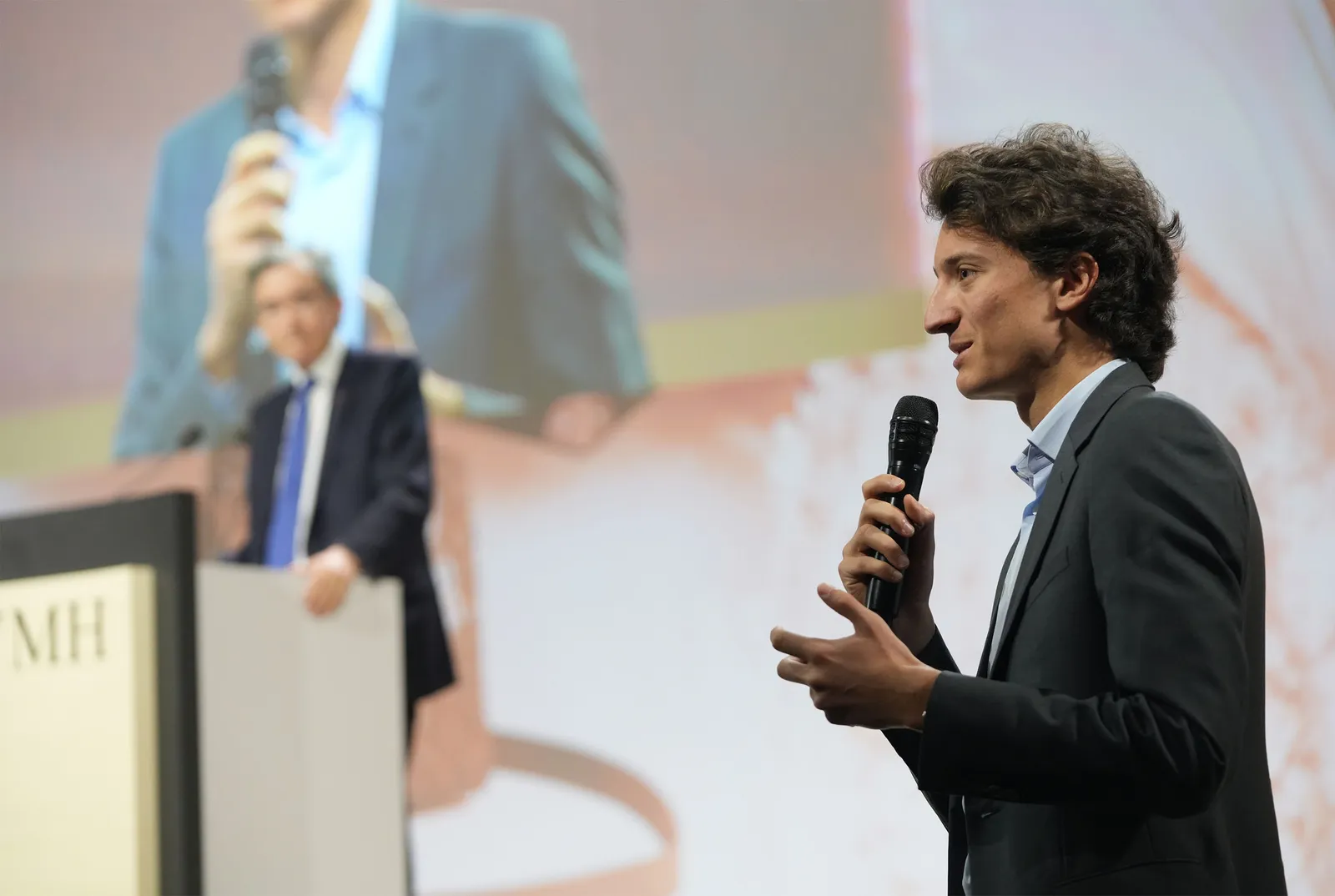
Yet beyond financial resilience, the real intrigue of the morning lay elsewhere. For the first time, all five of Arnault’s children took to the stage, each presenting insights from their respective domains within the empire. It was a carefully orchestrated moment, neither overtly declarative nor entirely incidental.
Jean Arnault, the youngest, spoke with precision about watchmaking, highlighting the craftsmanship behind Louis Vuitton’s horological ambitions. Frédéric Arnault turned attention to Loro Piana, emphasizing the quiet power of heritage and material excellence. Alexandre Arnault, now embedded in the wines and spirits division, outlined the untapped potential of emerging markets, particularly in Africa.
Delphine Arnault, at the helm of Dior, delivered perhaps the most commercially charged update, citing strong demand for the house’s latest creative direction. Antoine Arnault, ever the steward of image and communication, closed with a broader perspective on brand equity and cultural engagement.
Individually, their contributions were measured and professional. Collectively, they formed a tableau that was difficult to ignore.
A Succession Story Without an Ending
This was not merely a family presence. It was a generational relay, unfolding in real time. And yet, if observers were expecting clarity on succession, Arnault offered none.
When pressed, he deflected with a blend of humour and authority. His mandate, he reminded shareholders, had been overwhelmingly renewed. Any discussion of what comes next, he implied, remains firmly on his own timetable.
This duality defines Arnault’s leadership at this stage. On one hand, there is an unmistakable acknowledgement of continuity through his children, each of whom now occupies a meaningful position within the group. On the other, there is an equally strong insistence on present control.
The Changing Face of Luxury
Beyond governance, the meeting also underscored the evolving dynamics of the luxury market itself. Arnault spoke candidly about China, once an engine of seemingly effortless growth. Today’s Chinese consumer, he noted, is more discerning, more informed, and less easily persuaded by branding alone.
This shift, rather than a threat, aligns with LVMH’s long standing emphasis on quality, authenticity, and storytelling. Elsewhere, optimism persists. Dior’s recent collections have exceeded expectations, to the point of straining supply. Sephora continues to expand its global footprint, demonstrating that accessibility and aspiration can coexist within the same portfolio.
Even more experimental ventures, such as immersive retail spaces and hospitality projects, hint at a future where luxury extends beyond products into experiences.
Europe, China, and the Global Balance
Arnault’s remarks on Europe carried a sharper edge. Comparing the speed of development in China to the bureaucratic inertia of his home continent, he painted a picture of contrasting energies. It was a rare moment of pointed critique.
Even as LVMH remains deeply rooted in French heritage, its growth increasingly depends on global dynamism. China remains central, not as an easy win, but as a sophisticated and demanding market that rewards excellence.
Reimagining Legacy Assets
And then there was La Samaritaine. Once a symbol of Parisian retail grandeur, its revival has faced challenges. Rumours of a potential sale have circulated, but Arnault dismissed them outright. The store, he insisted, is an extraordinary asset that will find its footing. It was a statement less about immediate performance and more about belief in long term transformation.
The Long View
This emphasis on the long view is perhaps the most consistent thread running through Arnault’s tenure. While markets fluctuate and headlines speculate, his focus remains fixed on what LVMH will look like five or even ten years from now. It is a perspective that allows for both ambition and restraint, for bold investments alongside patient execution.
Business as Usual, For Now
As the meeting drew to a close, the atmosphere shifted subtly. The questions had been asked, the answers delivered, yet the central tension remained unresolved. The presence of the next generation was undeniable, but so too was the authority of the patriarch.
In many ways, this is precisely how Arnault intends it. By keeping succession an open question, he preserves both flexibility and control. By elevating his children without anointing a successor, he ensures that the focus remains on performance rather than politics.
For shareholders, it is a reassuring if enigmatic stance. For the industry, it is a reminder that in luxury, as in art, timing is everything. And for Bernard Arnault himself, it is simply business as usual.
Written By: Lydia Kelly
Published: 28th April 2026